
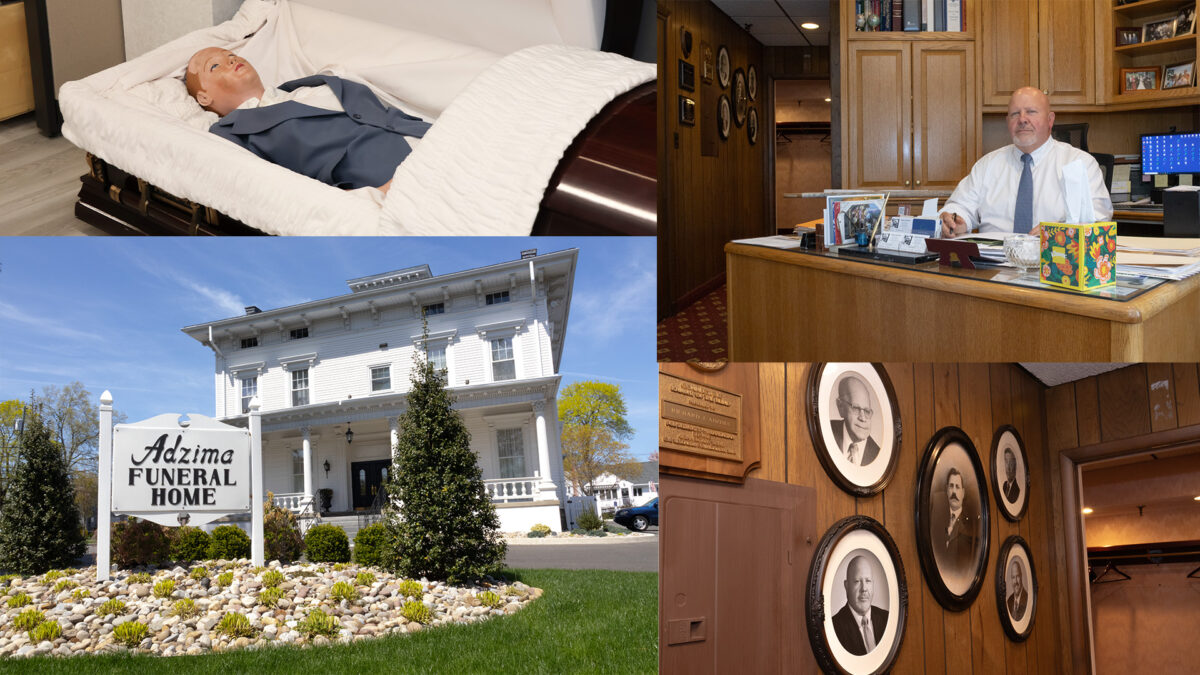
When Tracey Roballey of Shelton lost her mother in March 2019, a to-do list suddenly appeared in her hand as she had to work through one of life’s toughest losses.
At the drop of a hat, Roballey and her family not only had to grieve but plan all of the funeral arrangements, including services and a burial.
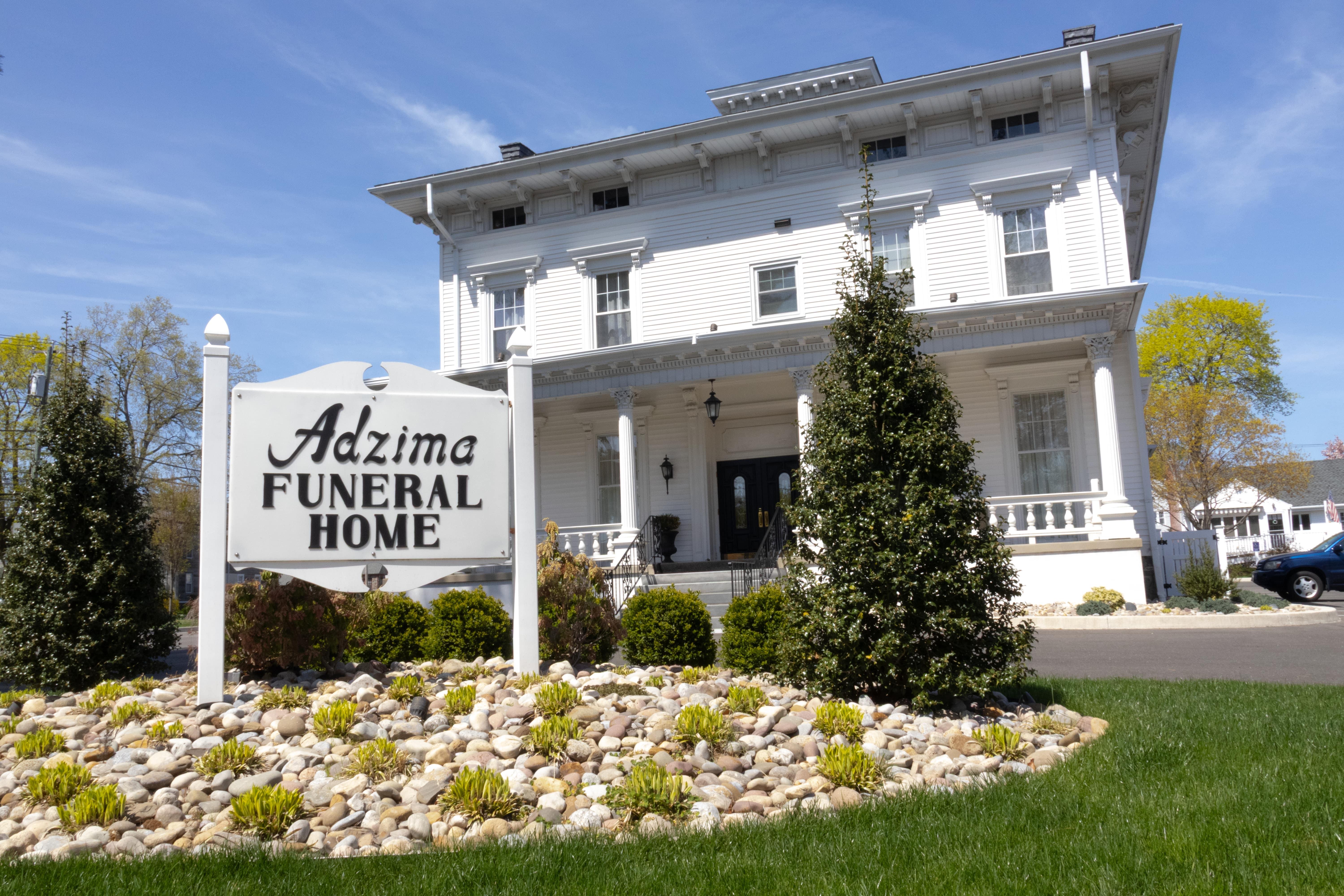
There was no other choice they would have wanted to make. They went to the Adzima Funeral Home in Stratford.
“You just can’t think of anywhere else that you’d rather go,” Roballey said. “They’ve carried on a legacy of caring and handling these situations just as if they were really your own family.”
Like many others, she didn’t necessarily choose to visit a funeral home, at least not frequently. People usually end up there, mostly under unfortunate circumstances.
It’s where people see the physical image of their deceased loved ones for the final time. It’s where they comfort their closest friends after they’ve lost a family member. It’s where every detail is uncannily pristine, and there’s that one smell that’s impossible to put their finger on (it’s most likely a combination of flowers, cleaning materials and embalming fluids).
For the tens of thousands of funeral directors across the United States, a setting people dread is a place of impassioned work. It has to be.
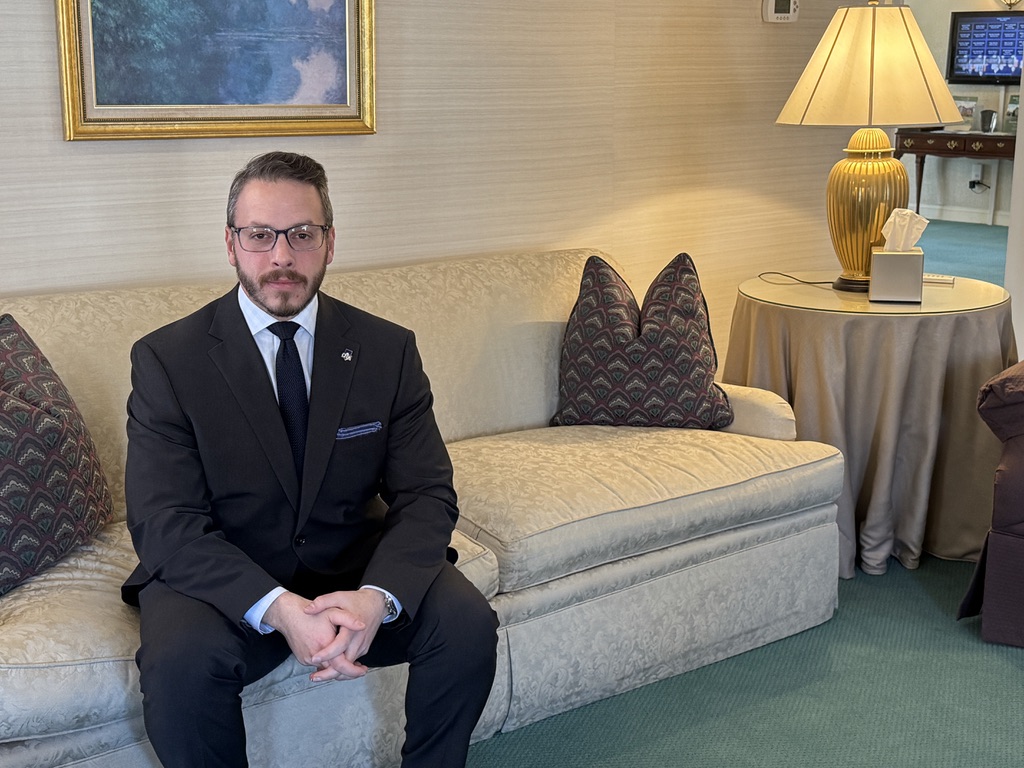
“If you can’t be caring or sympathetic or empathetic to someone as a family, then it’s time to retire,” said Matthew Adzima, president of the Adzima Funeral Home. “You never want to lose sight of the fact that it is somebody’s loved one, no matter what they are.”
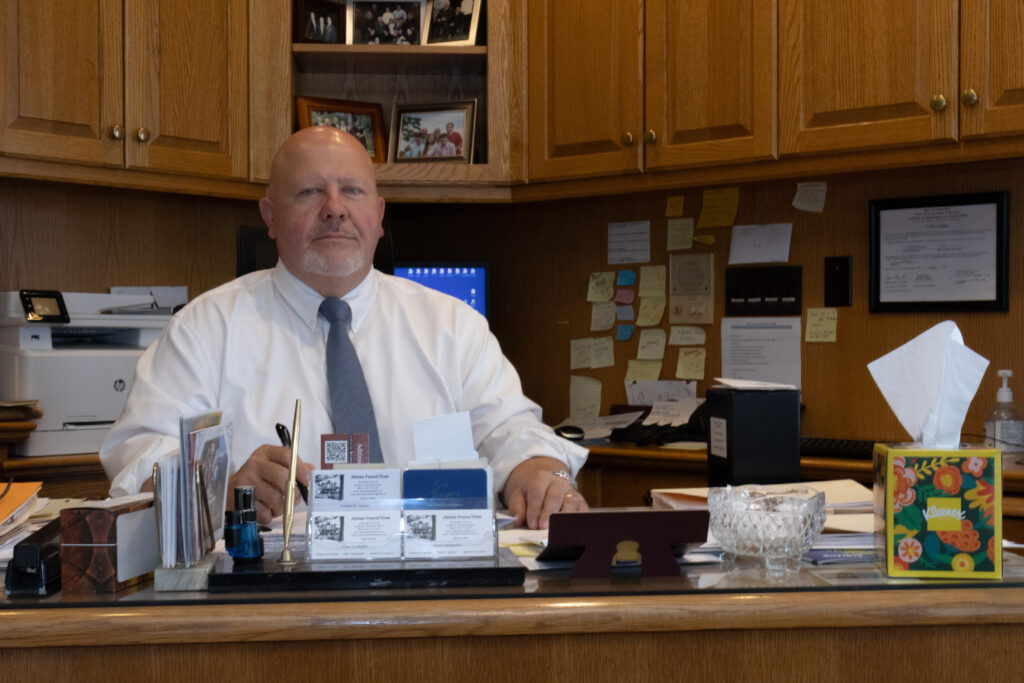
As a fourth-generation operator of the business, the one constant in Adzima’s life is death. He has provided decades of dedication to his community. Each day of service came out of the family’s facilities in Stratford, becoming a staple in the community.
“You ask anybody in town, even if they didn’t have someone buried through their funeral home, I would bet everything I had on the fact that you would get a positive, warm comment from anyone,” Roballey said.
Their home radiates quiet busyness.
To the eye of most beholders, there is little going on within. Adzima and the other funeral directors, including his brother Peter, sit at their hardwood desks tending to their day-to-day responsibilities.
Most of their energy is spent staying ready for the big moments. The moment their phone rings, they know they are about to speak with someone going through a horrible loss.
They are on call 24 hours a day, seven days a week. Whether it’s 4 p.m. or 3 a.m., Matthew or his staff may need to drop everything to come to the aid of a family.
That can come in the form of meeting to schedule a funeral, hosting a wake, embalming bodies or retrieving the deceased from their homes. Embalming a body is the process of cleaning a body after death and preserving it from further decay.
“I do more work sometimes in the middle of the night than I do during the day,” Adzima said. “That’s just the luck of the draw.”
One of the first places a grieving family might visit after a death is the funeral home, making funeral directors an early provider of emotional support and guidance. They are some of the select few that choose to live in life’s difficult moments, not skip them. This isn’t a job to them, it’s a vocation.
It takes guts for a person to tell themself, “Yes, I will be someone’s rock, no matter the circumstance.”
“I think at the end of the day, what helps my stress is knowing, when I lay down on my head at night that I helped them,” Adzima said. “That puts me at peace.”
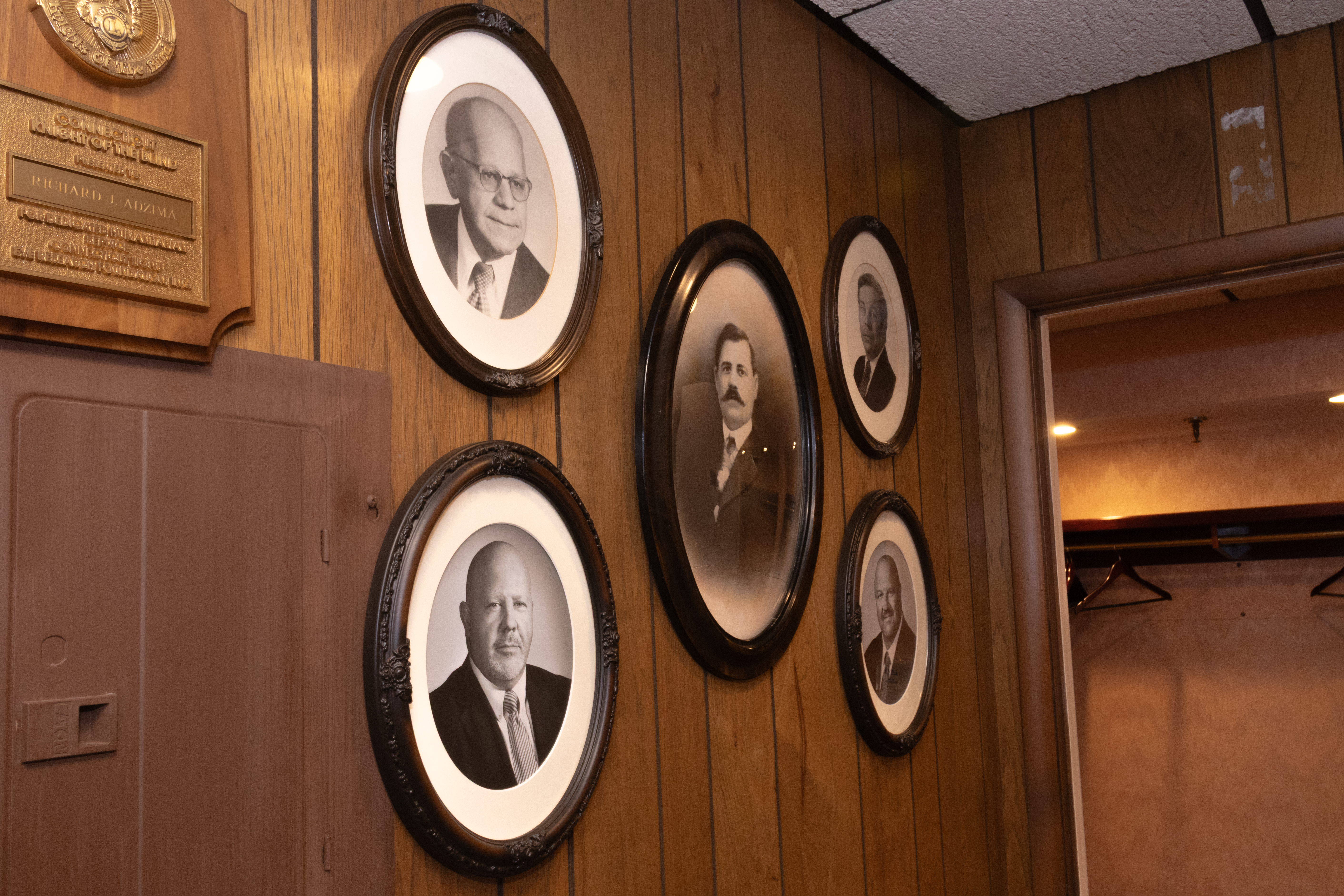
It’s what inspired the Adzimas to become the fourth generation of men in their family to run the funeral home, and it’s why Matthew had no issue with his children choosing not to become the fifth.
“It was always something I knew that I wanted to go into. It was never forced,” Adzima said. “You don’t just do it just because. It’s certainly a calling.”
For Those Up To The Challenge
While some may be interested in entering funeral service, not all are qualified. As with any profession on Earth, there are prerequisites.
To become a funeral director in the state of Connecticut, one must:
- Earn an associate’s degree in mortuary from an institution accredited by the American Board of Funeral Service Education
- Successfully complete the Arts and Sciences examinations from the Conference of Funeral Service Examining Boards
- Complete a one-year-long, full-time, paid apprenticeship under the supervision of a licensed embalmer, embalming or assisting in the embalming of at least 50 bodies during that time
- Complete the Connecticut state laws and regulations exam
- Complete a practical exam
Most requirements are fulfilled, or at least prepared for, within a two-year associate’s degree program in mortuary science. However, there are only 58 schools in the entire country, four schools in New England and one school in Connecticut that offers it.
East Hartford’s Goodwin University is an industry-related school that offers programs in business administration, health sciences and manufacturing management, but it also offers mortuary science, boasting an accreditation from the American Board of Funeral Service Education.
Their students are taught restorative art, fundamentals of embalming, mortuary law and ethics, death and dying and funeral merchandising among other topics.
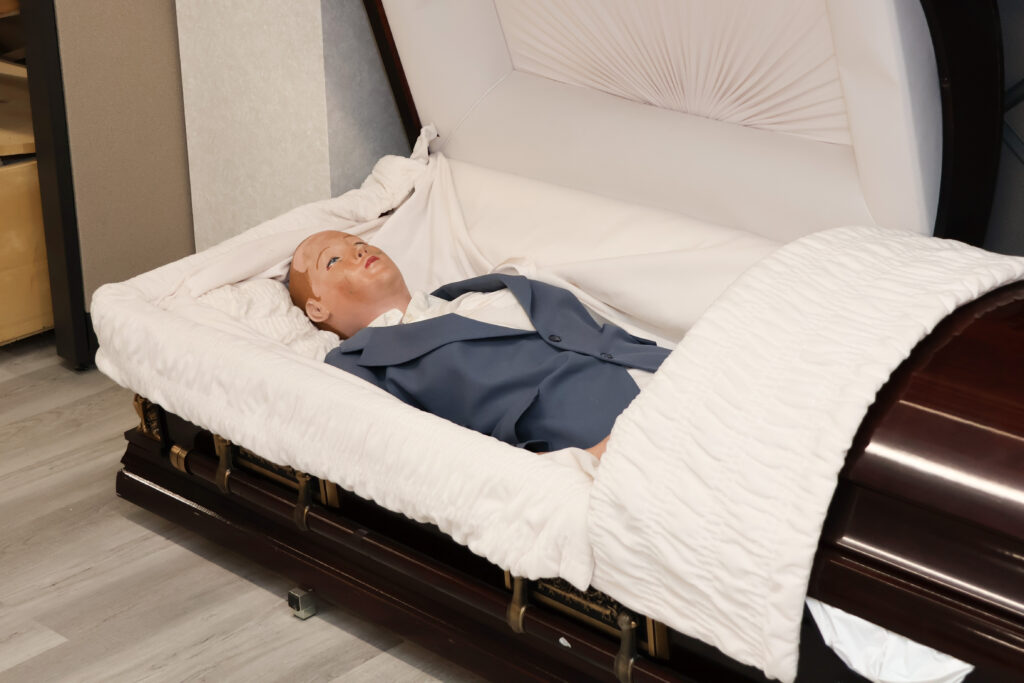
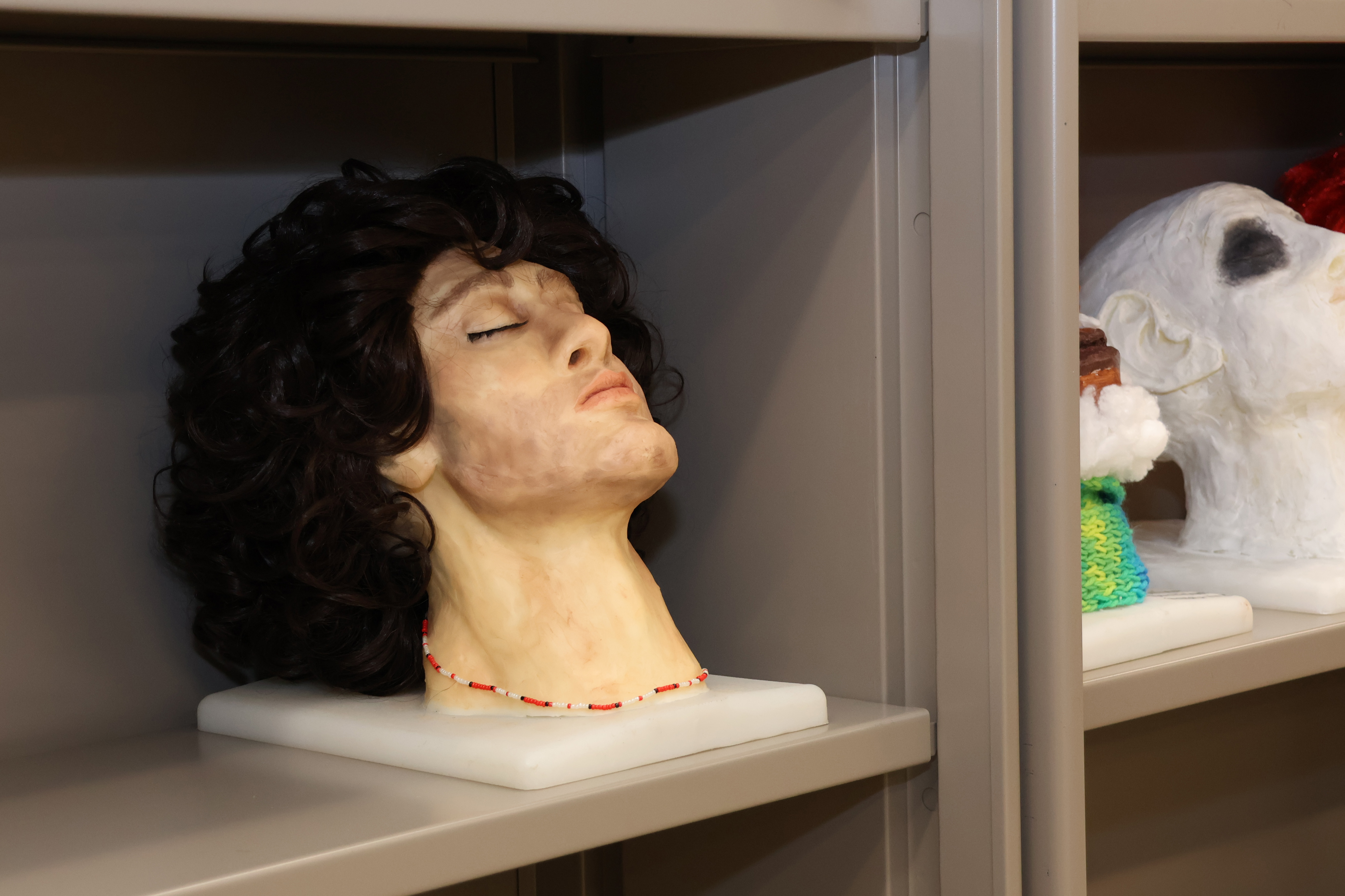
Full-time students are expected to complete the degree in approximately 24 months. Once the coursework is complete, students are provided with an apprenticeship, the last outstanding requirement to become certified in Connecticut.
While the application process to Goodwin is specifically meant to work through and understand who actually wants to work in funeral service, misconceptions always need to be broken.
“Sometimes people think that mortuary science education and funeral service education is a stepping stone for other careers, for example, a forensic technologist or a pathologist,” said Jesse Gomes, a licensed funeral director and Goodwin’s funeral science program director. “Funeral service is more the public side of that. It’s running funerals. It’s seeing families. It’s embalming, just overall advocacy for the profession.”

Students are signing up for a lot here.
If all goes according to plan, they will dedicate their lives to tending to the dead and serving the living. According to the Bureau of Labor Statistics, funeral directors only make approximately $51,850 each year nationally. Managing a funeral home can provide them with an extra $20,000 or so. It’s enough to make a living, but they most likely won’t strike it rich.
It’s not the fastest-growing occupation in the United States, sitting around the national average for outlook over the next 10 years, expecting 4% growth. It’s stable, which is likely why employment change is attributed to retirement rather than career switches.
It’s reasonable to assume most young people don’t want to surround themselves with death on a day-to-day basis or work with difficult families 24/7.
This isn’t a program students find themselves in by accident. This is what they think they want to do. And, they’re coming to these conclusions by themselves.
“A majority of people entering funeral service are not what we call legacy students,” Gomes said. “They’re not from a family funeral home, so they’re interested in joining the business because it’s their interest. It’s not something their dad or grandfather or great-grandfather did.”
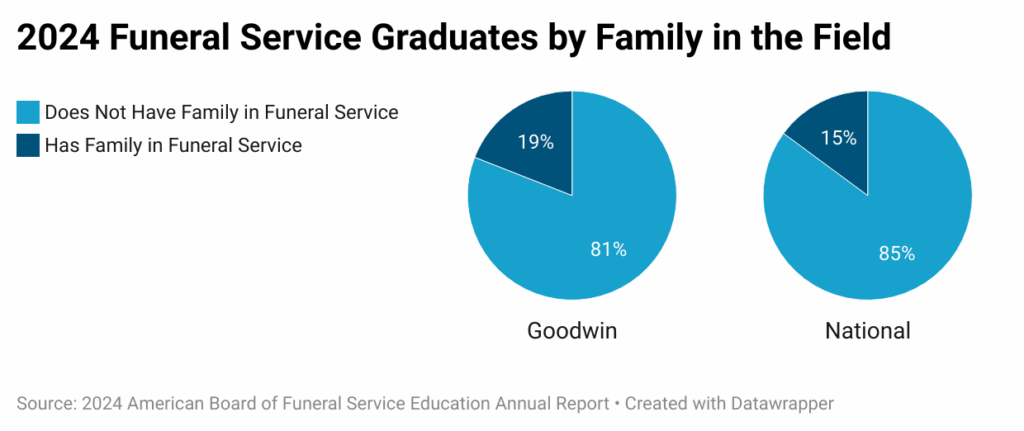
And when students at Goodwin make their way through the program, the coursework isn’t necessarily the hardest part, it’s the dose of reality administered by the apprenticeships.
“They’ll come into class and they’d be tired, and I’d ask, ‘What’s going on?’ And they’d say, ‘Oh, we had a 3 a.m. removal, then we had the prep and I have to work calling hours after I leave class,’” said Amanda Portelance, Assistant Professor of Funeral Service at Goodwin and a practicing funeral director. “They are starting to get that reality. This is a 24/7/365, selfless career.”
And these students are successful. The class of 2023 at Goodwin saw a 100% graduation rate and 100% job placement rate in funeral service professions out of its 10 graduates.
According to the American Board of Funeral Service Education annual report, almost 75% of funeral service graduates in 2024 nationwide were female, indicating a future shift in what is historically a male-dominated field.
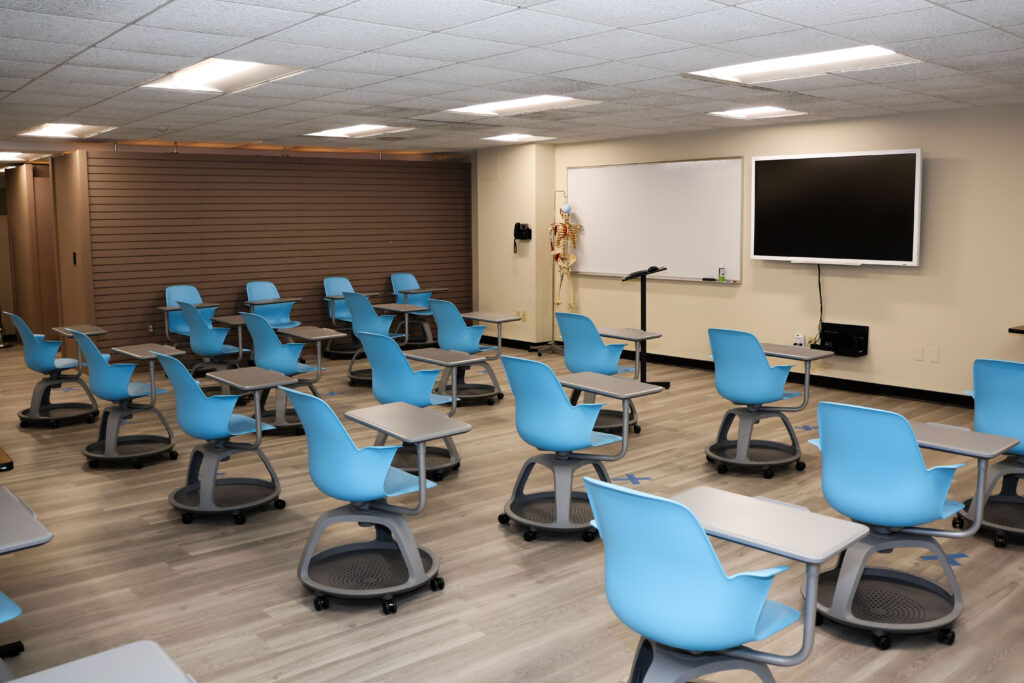
For Gomes and Portelance, this side of their career is how they choose to give back. There’s only a finite number of licensed funeral directors in Connecticut, and working as an educator is acting as a friendly gatekeeper for those who want to join the club. To them, there’s no better feeling for them than letting someone in.
“The most fulfilling part is having those light bulb moments with students who realize, ‘Now this makes sense. This is what I applied to school for. I’m learning something,’” Gomes said. “I jokingly say (to them), ‘I don’t want you as my students, I want you as my colleagues.’”
Building Trust Through Unity
“Owner of Texas mortuary accused of performing ‘experiments’ on corpses.”
“Funeral home owner jailed after 18 bodies found in various stages of decomposition, authorities say.”
“CT funeral home owner stole $81K from clients’ pre-paid burial accounts, police say.”
These are headlines to real news articles, all published within the last year, one even within the last week. According to the 2023 Funeral and Cemetery Consumer Behavior Study, only 54% of consumers trust funeral professionals as a whole. The aforementioned stories being a yearly occurrence doesn’t help.
“That hurts us, because that doesn’t happen here,” Adzima said. “Outside of the news, I’ve never heard of anybody doing that. Everybody’s so ethical, takes their job so seriously. So there are the misconceptions that we kind of get lumped together because of one bad tabloid.”
As with any industry, there should be safeguards for both the workers, as well as the consumers. On top of the years of study and exams to become a funeral director in Connecticut, several other laws regulate the profession, including health standards, specific clerical requirements and consumer protection laws.
Some of these laws include:
- Requirements to disclose funeral home ownership information to the Department of Public Health
- A licensed funeral director is required to take part in any disposition of human remains
- Embalming rooms must include tile flooring, necessary ventilation, sewage facilities and proper equipment for embalming
- Funeral directors must complete six hours of continuing education courses each year in order to renew their license
And that’s just scraping the surface. Ultimately, much of funeral service law in the state is focused on increasing the transparency of the work and ensuring the workers are legally qualified.
The Connecticut Funeral Directors Association, based in Wethersfield, works to unify funeral directors across the state and promote higher ethical standards for the funeral service profession.
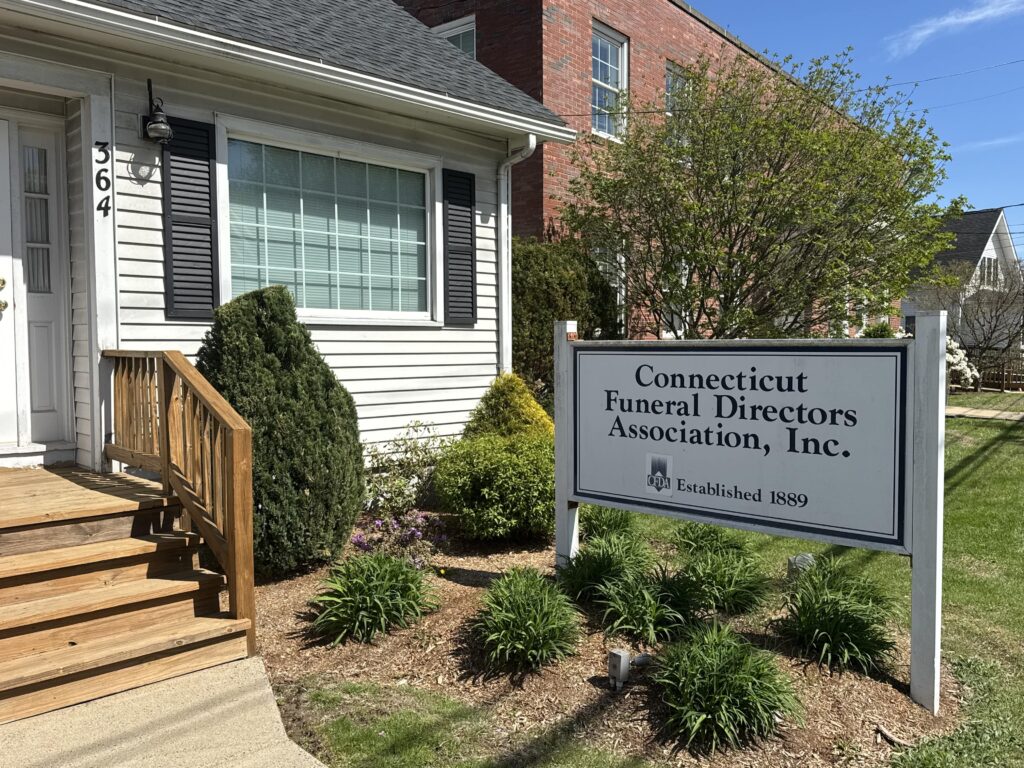
The association provides coursework for funeral directors to complete their yearly continuing education requirements and works with state lawmakers to ensure legislation regarding funeral service has the best interest of funeral directors in mind.
“There’s a reason why we’re regulated and why we’re licensed professionals,” CFDA President Melissa Melin-Miles said. “We’re involved legislatively to maintain those standards.”
For example, a new form of body burial gaining popularity in the U.S. is terramation, the process of composting a body so that it may fertilize the soil it is placed in, acting as a full life-cycle event.
While the process has its merits, there are legal questions it poses when it comes to the disclosure of human remains in a certain area and how to train funeral directors on the process, ensuring it is done correctly and cleanly.
Connecticut lawmakers have tried to pass a bill legalizing terramation, but the lack of CFDA endorsement has kept it in limbo until more clarifications are made. The CFDA emphasizes that it wants the bill to be passed, but only when it meets their standards as those incorporating it into their businesses.
The coalition of funeral directors in the state is crucial to ensuring the bottom line of their profession is met now and for the future, no matter the angle.
Can a Profession Live in the Decline of Tradition?
Most funeral homes across the U.S. are inherently religious. However, the country is moving away from it, at least slowly.
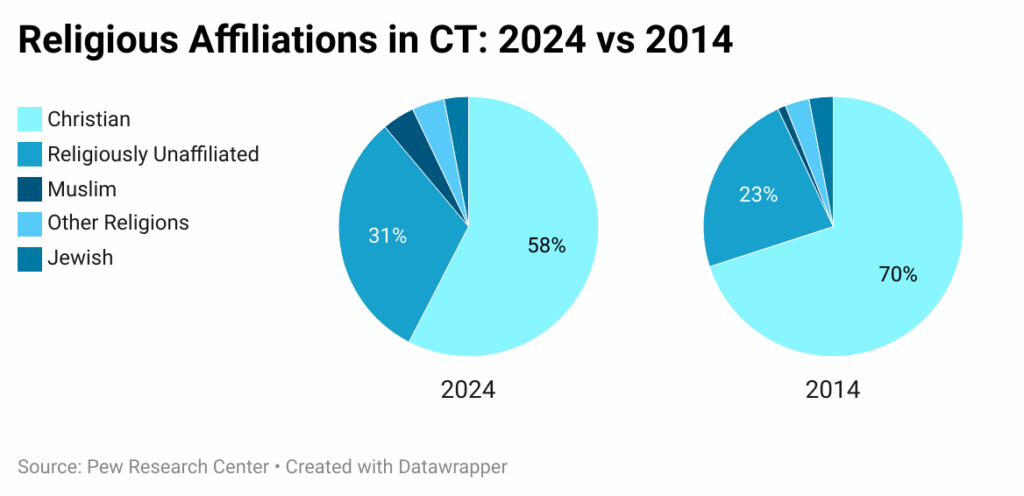
A March 2024 Pew Research Center survey found that 8-in-10 Americans believe religion is playing less of a role in society, and only 57% of adults view religion positively. In Connecticut, 57% of adults identify as Christian, 4% as Muslim, 3% as Jewish and 31% — nearly a third of the state — have no religious affiliation.
That last figure saw an 8% increase from where it was in 2014.
When much of the traditions of death are based in various religions, that forces funeral directors to adjust with the times.
“I think you’re going to see more people moving away from religion and more people starting planning more around dying,” Melin-Miles said. “At the end of the day, we go right back to being that trusted person for people to come to, offering help to them in their worst times.”
Currently, many funeral homes base and have based their business models and practices around the religions they serve. The Adzima Funeral Home in Stratford serves a primarily Christian community, while the Abraham L. Green & Son Funeral Home in Fairfield serves a primarily Jewish one.
While both provide similar services, their religious affiliations and traditions enable them to work uniquely from one another. Say Adzima and Jonathan Green, CFDA vice president and vice president of Abraham L. Green & Son Funeral Home, received phone calls at the same time desiring to organize a funeral, their timelines would look quite different.
In Christianity, bodies are allowed to be embalmed prior to burial, because up to a week can be needed to bring loved ones back together for the services. In Judaism, embalming and cremation are prohibited as the body is required to be buried within 24 hours of its death.
Asking either to work on the schedule of the other might cause issues.
“If someone were to have a loss and want to have a funeral take place that same day, we are prepared and accustomed to that,” Green said. “If someone says, ‘OK, we need to wait a month.’ That’s rather different for us. So it’s interesting that you can have two perfect, routine examples of funeral service that are in complete contrast to what we are used to.”
But when more people move away from organized religion, what traditions are there to work from? In Connecticut, a dead body is required to be either buried or cremated. So religious or not, that’s what people are required to work with.
“We have people that come in and they just want to be cremated. Give the family the ashes. No service,” said Michael Introvigne of Introvigne Funeral Home in Stafford Springs and CFDA secretary. “If that’s what people want, then that’s what they want. Everyone handles it differently, and there’s no one right or wrong way of doing anything with funeral service.”
With the changes in America’s priorities as time passes, funeral directors realize that they need to rework their services to today’s trends.
“Over the past years, we’re seeing an increase in adaptation in the modern world, addressing changes in organized religion and changes in, if you’ll excuse the term, what the consumer is looking for,” Green said. “I have to refer to people as consumers because they are looking for specific services. Funeral homes have learned that we need to adapt, whether or not we agree with what someone is looking for.”
Maintaining The Status
Changes to the ways funerals might be conducted does not lighten the weight of the emotional burden they can bear.
While the death of a successful and loved 90-year-old man may be easier to swallow for some compared to the death of a young mother with children left behind, funeral directors have to push through all of it.
“You have to be able to be compassionate, but not wear your emotions on your sleeves,” Gomes said. “It’s a difficult balance.”
Funeral directors are human, they need to deal with their own grief as well. Good days and bad days exist for them too. What makes them even better at their jobs is their ability to process those bad days.
“Know your resources,” Gomes said. “Know that you could pick up the phone and call and say, ‘This is happening. This is the family I dealt with. This is a sad situation.’ … It’s the text message that said, ‘I had a crappy day.’ You may not be realizing it, but you’re having those therapeutic conversations, that dialog back and forth that says you’re reaching out.”
Regardless of where the industry goes, funeral directors are critical to the community they serve. The best ones make themselves indispensable through doing all the little things to the highest standard they can possibly hold.
“Even though they run a business, you don’t feel like they’re running a business,” Roballey said. “You feel like they’re really more worried about you and your loved one and how this is going to play out for you than running a business.”
Before Roballey’s mother’s funeral procession left the Adzima Funeral Home on March 14, 2019, she found the awareness to make one request to Matthew Adzima before they all trudged toward St. James Church in Stratford.
“I had said to Matthew, ‘ I didn’t ask you this in advance, but my parents’ house is only a few blocks away from here, and it technically could be on the way to the church. Could we do a drive by?’” Roballey said.
There was no other choice he would have wanted to make. He made it happen.
“Matthew didn’t even think twice about it,” Roballey said. “And it was a simple request, but he didn’t even blink an eye for me to be able to do that.”
Humans have been burying their dead for over 100,000 years and cremating them for over 20,000 years. That’s not going to stop anytime soon.
As the funeral directing profession developed in the years since, they’ve become more than undertakers. They’re counselors, planners and educators of the next generation. They’ve gone from people who take care of the large moments surrounding death to the coordinators of each small moment in someone’s grief.
It’s those little instants that make or break someone in this field. It’s what makes them cornerstones. It’s when they prove to themselves that they will be someone’s rock in these moments, no matter the circumstance.