
By Carlos Calo
Duke. Kentucky. North Carolina. Florida. All blue-blood schools in collegiate sports with numerous national championships apiece.
These are some of the names that come up in conversations in high schools across the United States and Puerto Rico. Only 6% of scholastic student-athletes advance to play in the NCAA, with just 2% competing in the highest tier Division l. For Latino student-athletes, the numbers are even less.
In 2024, 36,954 Latinos were playing across the NCAA’s three divisions. These athletes competing in men’s and women’s sports hailed from Cuba, Mexico and Puerto Rico or from Central American, South American and other Spanish-speaking countries. That represents just 7% of NCAA student-athletes.

That daunting statistic alone can discourage Latino student-athletes. Additional hurdles such as limited access to recruiting markets, poor program exposure, and fierce competition for roster sports complicates the situation.
These numbers reveal that collegiate athletics are highly selective, and that requires athletes to elevate their game to capture the attention of recruiters and coaches. Opportunities exist, but a crucial disconnect prevents Puerto Rican players and college programs from gaining notice.
The answer may stand at the so-called mid-major outside the Power Four Conferences of the Big Ten, Big 12, ACC and SEC. In mid-major conferences such as the Sun Belt, the Metro Atlantic Athletic Conference and the Atlantic 10, student-athletes can compete in Division l sports while receiving a quality education.
Access, however, may remain a problem. Mid-major schools lack the money Power Four Conferences and their television contracts provide for national recruiting campaigns and lucrative Name, Image and Likeness deals. That forces mid-majors to recruit regionally and at camps and combines to get the most out of their limited resources.
“We have to rely more on some of our former players and contacts that we have made over the years to be able to have a good recruiting class,” said Quinnipiac University men’s soccer head coach Eric Da Costa.
Quinnipiac University is a mid-major Division l school in Hamden, Connecticut, that competes in the Metro Atlantic Athletic Conference (MAAC). Most of the 21 teams recruit students from the northeastern U.S. or through long-standing coaching networks with some exceptions. For example, men’s and women’s ice hockey recruit athletes from Canada, while men’s and women’s tennis look to California for talent.
The economic resources of these mid-majors are also less than bigger schools, therefore, they have to appeal to other methods to get those players to play for them. The advent of Name, Image, and Likeness (NIL) rights and the liberalization of the NCAA transfer portal have fundamentally reshaped college athletics, particularly for mid-major programs. Unlike Power Four schools, which boast robust booster networks and deep financial resources, mid-majors often lack the economic firepower to compete in lucrative NIL bidding wars. As a result, these programs must lean on alternative selling points—such as consistent playing time, strong developmental coaching, and a close-knit team culture—to attract and retain talent.
The transfer portal has become both a blessing and a burden: while it allows mid-majors to bring in overlooked or underused players from larger programs seeking a bigger role, it also leaves them vulnerable to losing their own breakout stars to richer, more prominent teams. In this new era, recruiting is no longer just about potential—it’s about opportunity, exposure, and economics.
Puerto Rican athletes often lack crucial guidance through their local schools and clubs. School counselors often number just two and serve all students. Meanwhile, coaches lack contacts in the mainland U.S.
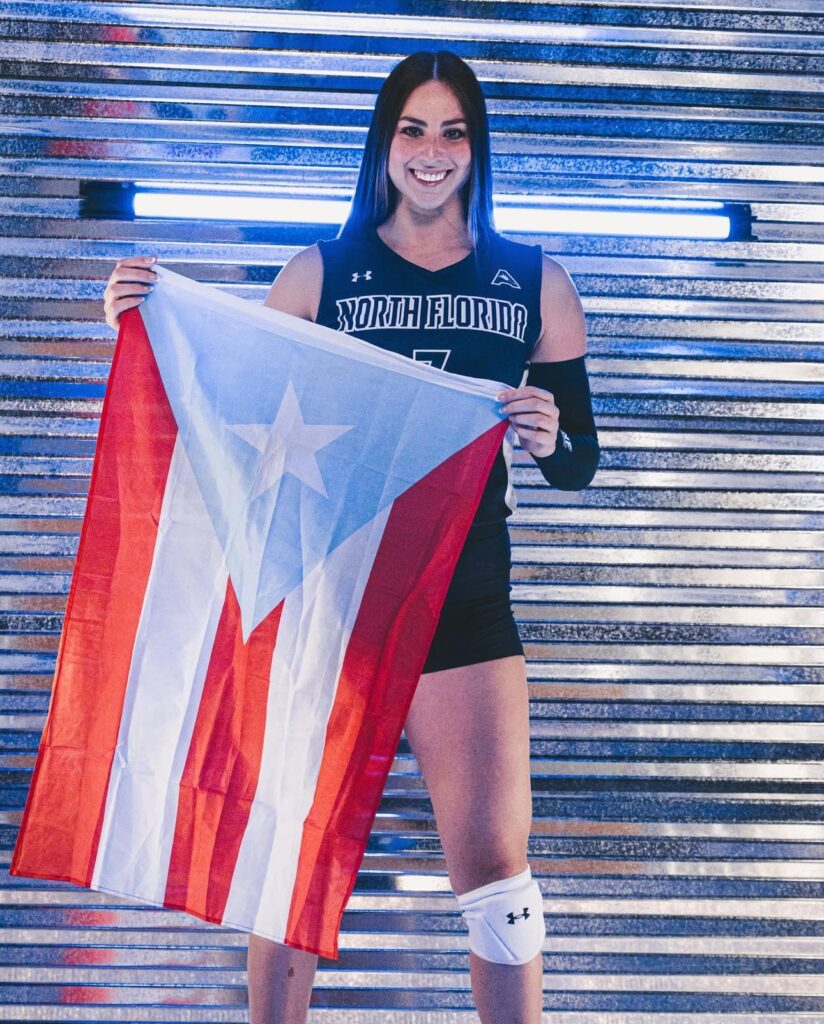
“I didn’t know much about the college landscape and had no one in Puerto Rico to rely on in that matter,” said former University of North Florida volleyball player, Solimar Cestero. “That’s a problem I see in Puerto Rico, there is no entity or people that are able to help student athletes that has aspirations to go and play at the collegiate level.”
After attending North Florida, Solimar plays at the professional level and is part of the Puerto Rico National Team. She has played for Szent Benedek RA in Hungary, Anorthosis Famagusta in Cyprus, and Atenienses of Manatí in Puerto Rico. But she had to work for these opportunities. The national team left her off the roster the first time she tried out for the squad. She went to North Florida after that.
At UNF, after seeing what it was like to be a Division l athlete and talking to her coach and some former players from the university, she decided it was time to get an agent and start the process to become a professional volleyball player after finishing school.
“The mental health sessions helped me a lot,” said Cestero. “It was required of us in UNF to attend to those, and that’s something you don’t see in Puerto Rico, also the time management that you need to acquire when you are a Division l athlete is something super important. I didn’t know what to expect and had no one to prepare me, or give me a heads up before that time, so I struggled at the beginning.”
The academic aspect is also important. An athlete has to maintain a 2.3 GPA to play Division l sports and a 2.2 GPA to play in Division 2. The education system is different between Puerto Rico and the United States. A lot of schools on the Island don’t have the resources to give an education that can go accordingly to preparing a student to go and study at a Division l level.
“The first thing for us is academics,” said Da Costa. “That’s the first hurdle that we have to clear. The easy part is to see the player and evaluate if he’s a good fit for our team on a skills standpoint.”
The gap between mid-major schools and Puerto Rican athletes is the same: they don’t have enough resources. But that, ironically, can bring them together. The key is the exposure. In the United States, high school athletes will create highlights of themselves playing and on some occasions, they will have the chance to have their games televised, but in Puerto Rico, that doesn’t happen.
The question is, what can be done to allow student-athletes to get noticed and offered scholarships to compete in Division l?
Colleges in Puerto Rico that belong to the Liga Atlética Interuniversitaria (LAI): University of Puerto Rico at Bayamón, University of Puerto Rico at Mayagüez and the University of Puerto Rico at Rio Piedras are also part of the NCAA Division II as independent schools, meaning they are not part of a NCAA conference. Athletes in Division II schools can enter the transfer portal, making it easier to access mid-major Division l schools in the U.S.
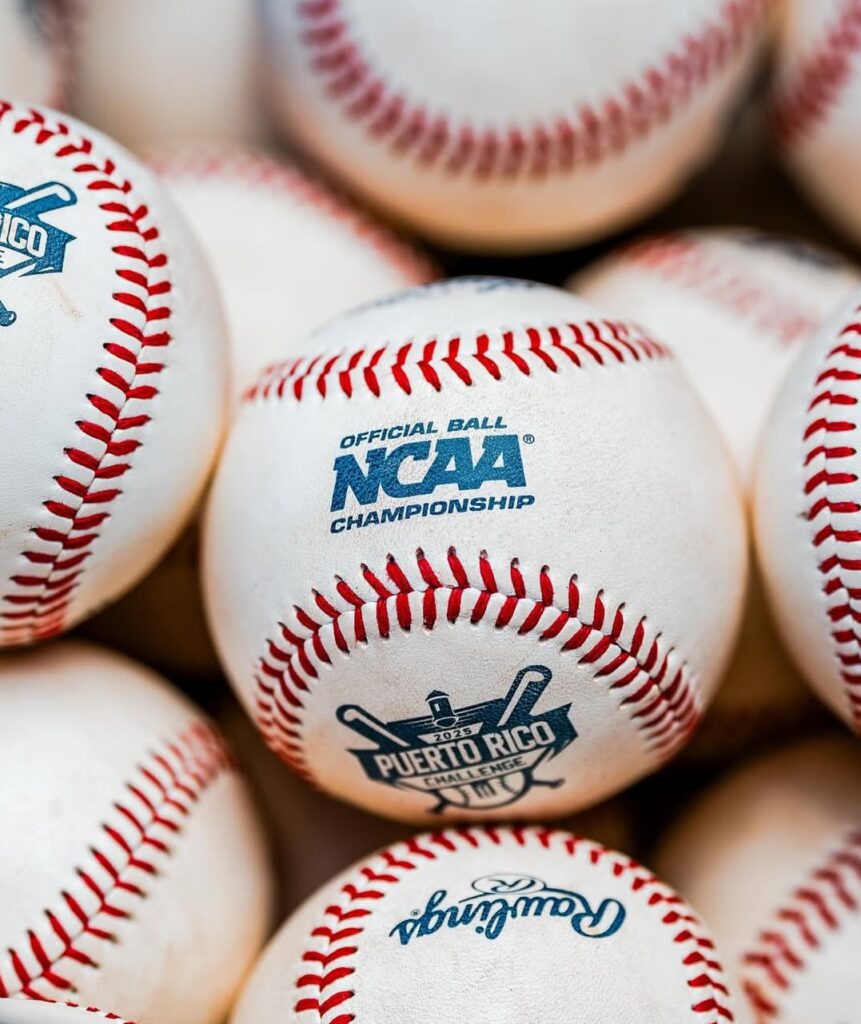
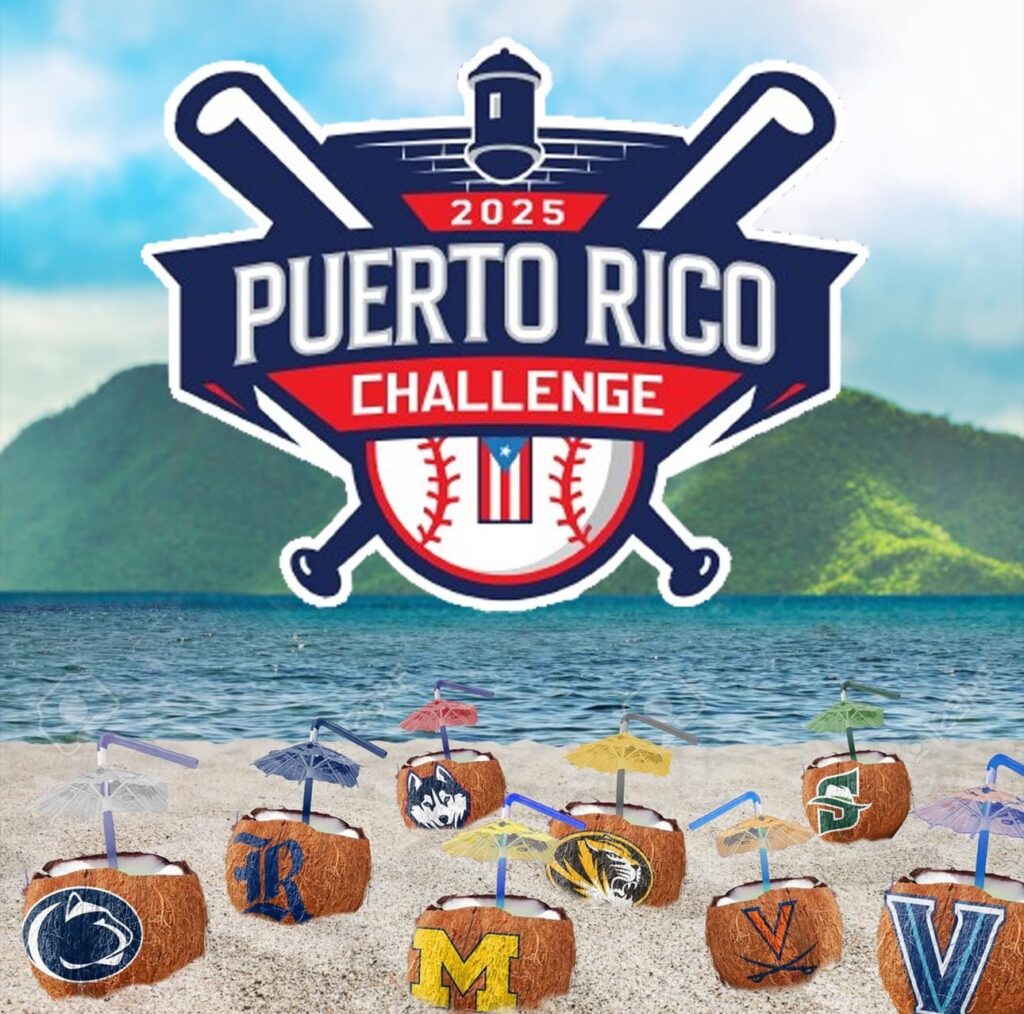
The Puerto Rico Challenge baseball tournament is also a great opportunity to create connections with coaches of top programs in Division l baseball. This year it was played in Caguas and Ponce from February 14-17. The programs that played in the tournament were: Michigan, Rice, Uconn, Virginia, Penn State, Missouri, Villanova and Stetson.
Social media platforms like ‘Buzzer Beater’ have put high school sports on a national level by doing a national tournament in volleyball, basketball, and soccer. All the games are available to watch live on their channels, but outside of that one tournament, no one else is doing anything.
“Advice I would give is that they need to have someone record the games for them,” said Quinnipiac University men’s basketball assistant coach Shaun Morris. “That way, via video, we can identify if a player is a good fit for us.”
College basketball is in a league of its own. In recent years, Puerto Rico has had great talent playing at the Division l level with names like Andre Curbelo, Ramses Melendez, and Rafael Pinzon. The one thing that they all have in common is that they finished high school in the United States. That is the reality for basketball players who want to play at that level.
“We need to see them playing against the United States level to see if they really have what it takes to be on a Division l program. Doing a prep year is also good for the kids because the basketball landscape is changing and you don’t want a kid playing against men,” added Morris.
Another way to get exposure is to reach out individually to coaches and universities of interest. That way, the players can create a connection with the coaches and the team, and if they have the opportunity to travel with a club team, they can reach out to the coaches.
“If they are able to come to the United States to a camp or a tournament, it would be better for us,” said Quinnipiac University softball assistant coach Mandie Perez. “That way we can have a look at the players after they either contact us or we have contacts in that zone, and we decide to go there to recruit.”
Currently, there is an emerging agency in Puerto Rico called “Uprospectpr.” It helps athletes from the island create a profile and be able to upload videos to get exposure and contact colleges in the United States.