
When Aaron Toomer transferred to Quinnipiac University to study computer science, he noticed something immediately: he was often one of the only Black students in the room. Discussions about diversity, equity, and inclusion rarely surfaced—despite the field’s well-documented lack of representation.
“The computer science field is overwhelmingly white and male,” he said. “Even in my classes here, it’s obvious. These are important discussions, but they’re not happening where they should be—inside the classroom.”
For many people, like Toomer and others, living in America during Donald Trump’s second term is a period of negotiation, fear, fatigue, and resistance. The 2024 presidential election has reignited anxieties that trace back to Trump’s first term—from policy proposals targeting diversity, equity, and inclusion (DEI) programs to new federal investigations into universities. Once again, higher education is at the center of a culture war.
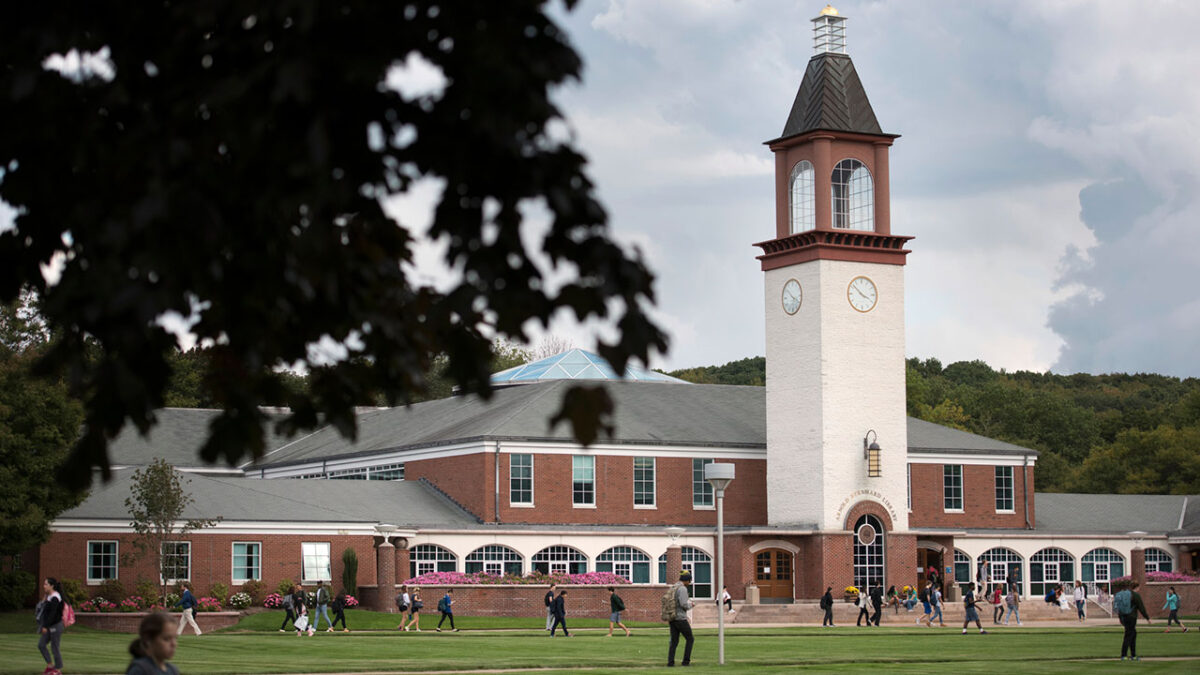
As a mid-sized private university in Connecticut, Quinnipiac reflects many of the same tensions playing out across the country. In classrooms, dining halls, and campus forums, students and faculty are navigating how to talk about — or avoid — critical issues like DEI and free speech.
“There’s definitely a divide,” said Timofe Ogontulu, a junior studying occupational therapy. “Some professors try to create open dialogue, but others steer clear of anything that could be controversial. It’s frustrating because these conversations matter, especially right now.”
Toome echoed similar concerns about the lack of diverse representation in the computer science field. “There’s barely any talk about DEI in my classes, even though computer science is so white and male-dominated. It should be part of the curriculum.”
As federal policy continues to target university DEI programs, many students feel caught between institutional silence and growing political pressure. For some, the impact is more than academic — it’s deeply personal.
Campus Climate: A Growing Divide
The return of the Trump administration has sparked deep concerns among some students and faculty alike –many concerned for the school’s actions or lack thereof. “While Quinnipiac University does provide support for multicultural communities through certain programs, student orgs, and DEI initiatives, there’s still a lot of work to be done,” said Tahira Jilu, a junior and active member in organizations like Students for Social Justice (SSJ) and the Multicultural Student Leadership Council. “The support can sometimes feel surface-level or disconnected from the lived experiences of students of color.”
Recent reporting from Fortune and NPR confirms that these concerns are not isolated student observations. The Trump administration has taken direct aim at higher education institutions it claims are engaging in “discriminatory” practices by supporting students based on race, gender identity, or ethnicity. One of the most prominent targets is Harvard University. In February 2024, the administration announced efforts to revoke Harvard’s tax-exempt status, alleging the school violated federal civil rights laws by running programs that prioritize certain groups — including race-based fellowships and cultural affinity housing. The administration has also threatened restrictions on foreign student enrollment at institutions that do not comply with its new anti-DEI directives.
More than 50 colleges and universities nationwide are now facing federal probes or lawsuits. According to the Chronicle of Higher Education, schools like the University of Minnesota and the University of Florida are under investigation for allegedly violating new guidelines that ban race-conscious support programs. In response, some institutions — including the University of North Carolina and the University of Texas system — have moved to disband or downsize DEI offices, cancel affinity-based graduation ceremonies, and rebrand multicultural student centers to avoid potential legal penalties.
DEI initiatives are nothing new to education and long embedded in into the framework of modern higher education.
Originally established to address historical inequities, Diversity, Equity, and Inclusion (DEI) initiatives in higher education aim to create more inclusive learning environments. These programs often fund cultural centers, provide resources for first-generation or underrepresented students, offer faculty training, and promote dialogues around identity and social justice.
“DEI programs ensure that everyone has access to the resources and support they need to reach their full potential,” notes a recent article from The Education Trust. “These initiatives not only enhance individual lives but also contribute to a more inclusive and equitable society.”
However, critics argue that such programs can inadvertently exclude or discriminate against majority groups. The Trump administration has echoed these concerns, asserting that certain DEI efforts may violate federal civil rights laws by prioritizing specific groups based on race, gender identity, or ethnicity. This stance has led to increased scrutiny and legal challenges for over 100 public and private universities.
In response to these developments, some institutions have begun scaling back or eliminating DEI offices, affinity-based graduation ceremonies, and cultural support services to avoid penalties and scrutiny. For instance, Stanford University is reviewing its DEI programs in light of new federal guidelines, with President Jonathan Levin stating that these programs will be reassessed to determine their contribution to the academic mission.
The U.S. Department of Education has initiated investigations into several universities, including Harvard, Princeton, and Columbia, scrutinizing their diversity, equity, and inclusion (DEI) programs under Title VI of the Civil Rights Act of 1964. This law prohibits discrimination based on race, color, or national origin in programs receiving federal funding.
Education Secretary Linda McMahon stated, “Students must be judged on merit, not skin color,” emphasizing the administration’s stance that certain DEI initiatives may constitute racial discrimination. The Department of Education’s Office for Civil Rights (OCR) has opened investigations into 45 universities, alleging violations of Title VI due to partnerships with organizations like The Ph.D. Project, which aims to increase diversity in academia.
Critics argue that this interpretation of Title VI misrepresents the law’s intent. Civil rights advocates contend that DEI programs are essential for addressing historical inequities and promoting inclusive environments in higher education.
For private institutions, like Quinnipiac University, the ripple effect is substantial. Though not yet under direct investigation, like many schools, the nationwide crackdown on DEI programs and academic expression has created a tense environment both politically and culturally.
Freedom of Speech or Political Suppression?
The tension on college campuses today isn’t just administrative — it’s ideological. From classroom discussions to club meetings and campus events, political conversations are increasingly shaped by social privilege and silence rather than open exchange. At Quinnipiac University, Toomer says civil dialogue is still possible — but only under specific conditions.
“I personally have friends here on campus with opinions all over the spectrum that I have civil political conversation with. Though I think this is only possible due to how privileged many students here are,” said Toomer, a computer science major. “As a PWI (Predominantly White Institution) with a relatively wealthy student body, many of the students here are fortunate enough to be able to ignore politics and not be outspoken.”
His experience reflects a larger concern: that political discourse is becoming more reserved, often muted by social dynamics or the fear of mislabeling, especially at schools where the student body feels removed from direct political impact.
The growing tendency to view campus issues as strictly right or wrong — politically ‘blue or red’ — is making some students and faculty feel isolated. Even when no one is openly speaking about it, the tension lingers beneath the surface.
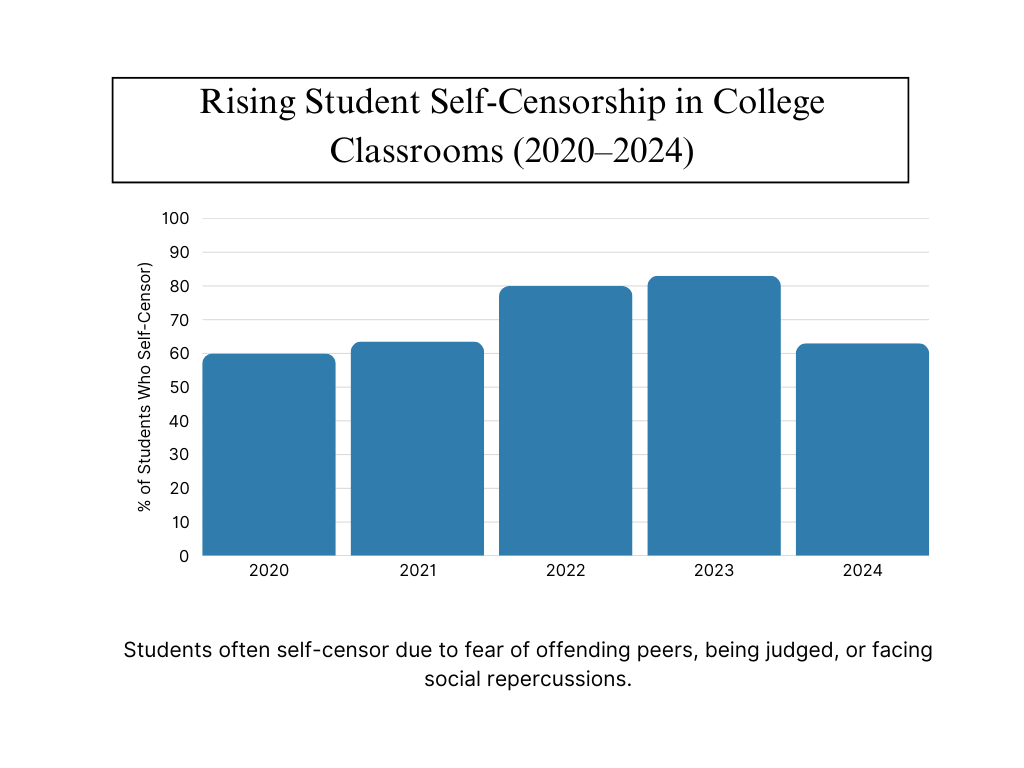
“I’ve had students ask me if it’s safe to talk about race in their essays,” said one professor at Quinnipiac University, who requested anonymity out of concern for professional backlash. “That’s never happened before. There’s a real anxiety about saying the wrong thing — even when the intent is academic or thoughtful.” The idea of self-censorship is nothing new.
A 2024 Foundation for Individual Rights and Expression (FIRE) report found that nearly 63% of students nationally have stopped themselves from sharing political opinions in class out of concern for backlash — a sharp increase from previous years.
Legal analysts at Steptoe & Johnson LLP warn that the trend towards “viewpoint neutrality” could be weaponized to suppress entire conversations under the guise of fairness and respect, particularly at institutions that rely on federal funding. The concern is not about the possibility of arguments, but the erosion of core academic values like inquiry, critique, and open debates. In a sensitive political climate, the discussions are viewed to be ‘too risky’ to bring up in class discussions.
“When I took a social problems class, I tried to bring up the topic of Palestine as part of an important global human rights discussion. Instead of it being a meaningful dialogue, it felt like the class shut down, like I had said something wrong just for mentioning it,” said Quinnipiac student, Jilu. “That moment really discouraged me. It felt isolating, like no one wanted to engage with or even try to understand where I was coming from.”
DEI Under Attack
Trump’s renewed focus on dismantling Diversity, Equity, and Inclusion (DEI) initiatives has largely impacted college campuses nationwide. The administration’s aggressive policies, including proposals to eliminate the Department of Education, have led to the defunding or restructuring of programs that once provided mentorship, scholarships, and identity-based support for underrepresented students.
At Quinnipiac University, the impact of national policy shifts on diversity, equity, and inclusion (DEI) initiatives is evident. This local reflection aligns with a broader trend across the United States. A recent report by Fortune highlighted that students are increasingly being advised to avoid sharing personal experiences of racism in application materials or public forums, indicating a chilling effect on open discourse.
Critics argue that this approach reframes DEI efforts as violations rather than remedies, casting programs that support Black, Latino, LGBTQ+, or Indigenous students as potentially illegal. Civil rights advocates contend that such interpretations misrepresent the intent of Title VI of the 1964 Civil Rights Act, which was originally established to prevent discrimination based on race or national origin.
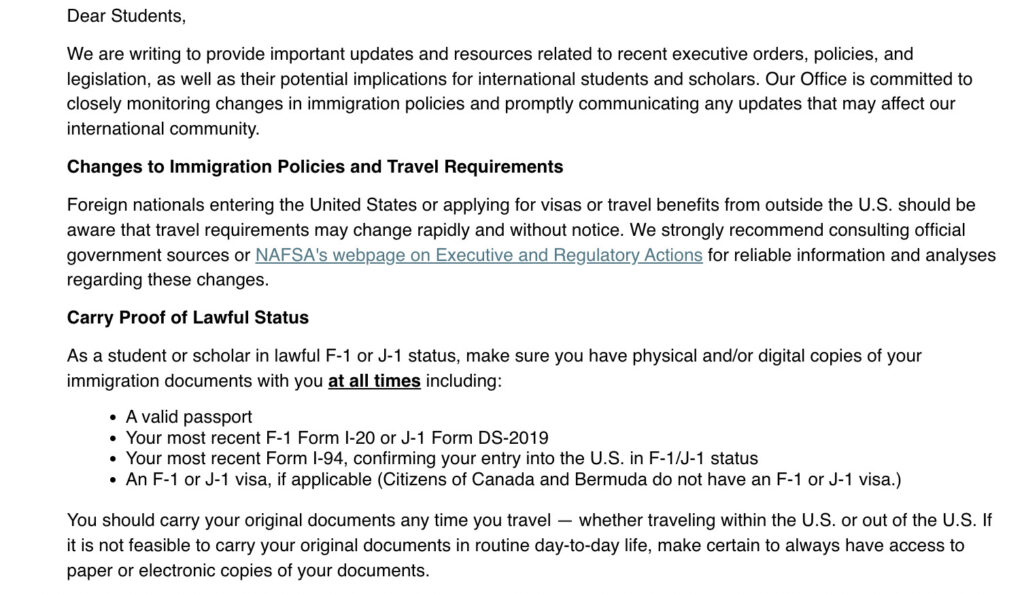
International students are also facing increased scrutiny. Quinnipiac University’s Office of International Students and Scholars (OISS) issued an email warning students about potential immigration policy changes under the Trump administration. The email advised students to keep physical and digital copies of their immigration documents with them at all times, highlighting the heightened sense of vulnerability in this environment.
The Role of the University
Universities have long been battlegrounds and spaces for demanding social changes and today is no exception. Their roles as educators may also serve as protectors for open dialogue in the face of public scrutiny. Balancing student safety with institutional neutrality is a challenge many may face, including Quinnipiac. The pressure to remain apolitical — particularly considering recent federal investigations and anti-DEI sentiment — often clashes with the moral imperative to acknowledge the lived experiences of their most vulnerable students.
When asked about the actions the school is taking in account for students and faculty who may be concerned, junior nursing student, Symya Smith emphasizes her thoughts. “I wish in general the school promoted more multicultural events and clubs. It would be nice if they even acknowledged what’s going on in the U.S. especially with immigration,” she said. “In my opinion, they only promote diversity when it’s convenient in numbers for their statistics.”
Symya’s sentiment echoes a broader pattern of perceived performative allyship –when institutions publicly promote values like diversity and inclusion but fail to take meaningful or consistent action to support those communities in daily campus life.
“I do not believe my university is doing enough to support multicultural communities,” said Smith, a student at Quinnipiac University. “They only promote diversity when it’s convenient — for stats. But it didn’t feel like those communities had much of a presence on campus. I wish they even acknowledged what’s going on in the U.S., especially with immigration.”
Smith added that DEI topics rarely came up in classes outside of sociology, and that most meaningful conversations only happened in student groups created by and for multicultural students. “Political discussions feel taboo. I remember seeing a Confederate flag in a student dorm common area and nothing was done. But the school still tries to claim they support minorities. You can’t play both sides.”
Her concerns reflect a national pattern: a 2023 Higher Education Diversity, Equity, and Inclusion Survey conducted by Hanover Research found that while many colleges promote their diversity numbers in admissions brochures and on websites, students often feel that support stops at surface-level optics — with little follow-through in curriculum, campus culture, or policy enforcement.
Recently, however, Quinnipiac University has taken steps toward more visible cultural engagement. In a landmark moment for the institution, faculty members and students collaborated to host the university’s first-ever powwow –an event rooted in Native American traditions that celebrates Indigenous culture through dance, music, storytelling, and community discussions. Organized in partnership with members of local tribal nations, the event provided a space for educational discussions and cultural exchanges, drawing attention to a group that is often overlooked in broader DEI discussions.
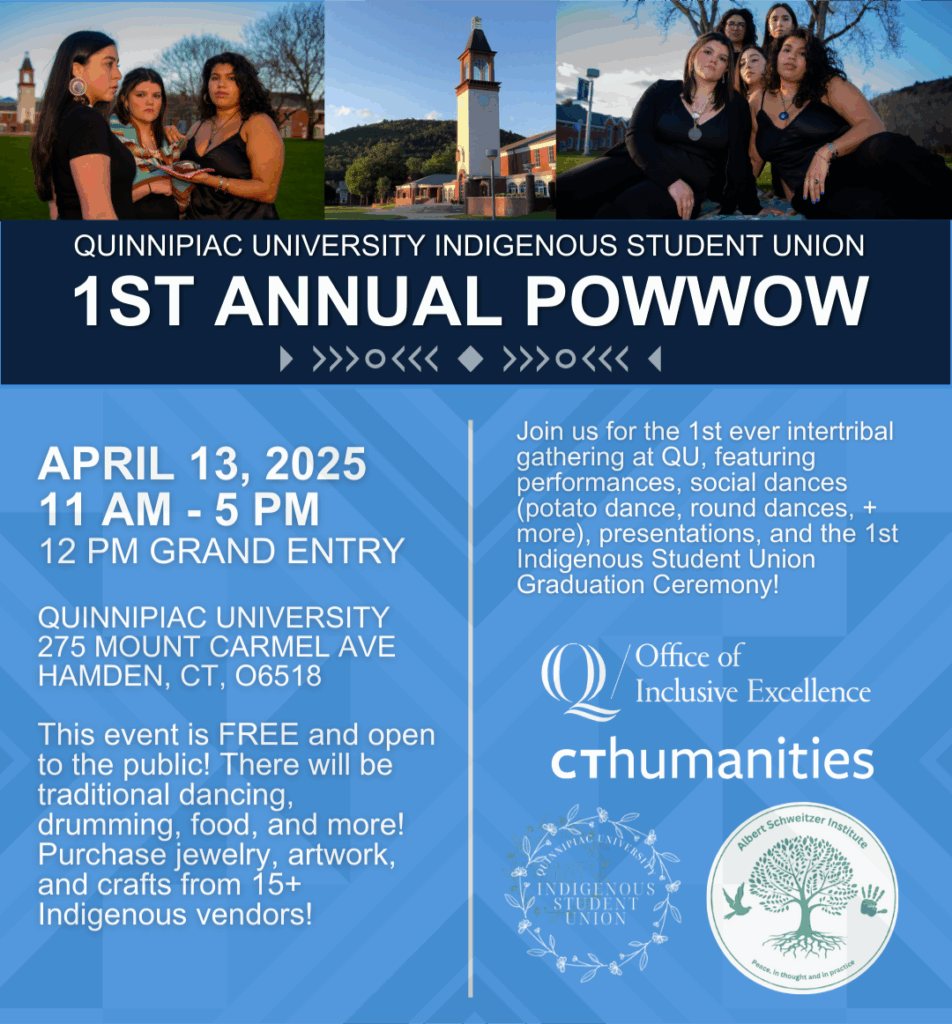
The event marked a significant moment for both students and faculty who have long advocated for more inclusive representation on campus. Additionally, various multicultural programs have the opportunity to express their creativity through events and media. While the promotion and celebration of such events are encouraging, students hope they are not one-off gestures but the beginning of sustained efforts to include marginalized voices year-round, not just during moments of celebration or visibility.
Quinnipiac University’s inaugural Intertribal Powwow, titled “Dancing in the Shadow of Sleeping Giant,” exemplifies this aspiration. Organized by the Indigenous Student Union (ISU), the Indigeneity Initiative, and supported by the Office of Inclusive Excellence and the Albert Schweitzer Institute, the powwow brought together members of Connecticut’s intertribal community to celebrate Indigenous culture through traditional ceremony, song, dance, jewelry, clothing, and food.
Aiyana Baker, a senior nursing major and president of the ISU, expressed the significance of the event. “It has always been my dream to make a powwow happen on the Quinnipiac campus, and it was my goal to have it happen before I graduated from the university. To have been a part of it and making it happen brings me great joy and honor.”
The event not only honored Indigenous traditions but also served as a platform for cultural exchanges and education, aligning with students’ desires for ongoing inclusion and recognition of marginalized communities beyond singular events.
What Comes Next?
In today’s charged political climate, silence on campus can feel like complicity, according to many students of color. For many students, especially those from multicultural backgrounds, universities are not just educational institutions but spaces where identity, safety, and future prospects are continually negotiated.
Timofe Ogotulu, a junior at Quinnipiac, encapsulates this sentiment:
“As a student of color, I often feel the weight of national events pressing into our campus life. It’s not just about academics; it’s about feeling seen, heard, and supported. The university has a responsibility to not only educate but also to stand as a beacon of inclusivity and understanding during these times.”
Ogotulu’s perspective underscores the broader concerns of students who seek active engagement and support from their institutions in navigating the complexities of identity and advocacy in today’s America.
The voices featured in this story –from Aaron Toomer to Symya Smith and Tahira Jilu –make one thing clear; students are not asking for people to take sides but rather making an effort to acknowledge the issues evolving within the nation, being transparent with students in their efforts, and committing to creating spaces for where identity is not only accepted but affirmed.
“As students, we’re not asking for much,” said Symya. “We just want to feel like the university cares — not just when it looks good in a brochure, but when it actually matters.”