

Honesdale, PA – Within the last two years, the Wayne Highlands School District has invested over $4 million into a new multi-sport facility installing a state-of-the-art artificial turf surface and new logo prominently displayed in the middle of the football field.
That seems like an expensive outlay for a small educational district 32 miles northeast of Scranton, Pennsylvania. And it’s one may be particularly baffling given that participation in scholastic sports across the United States is declining along with enrollment – but Honesdale is bucking that national trend.
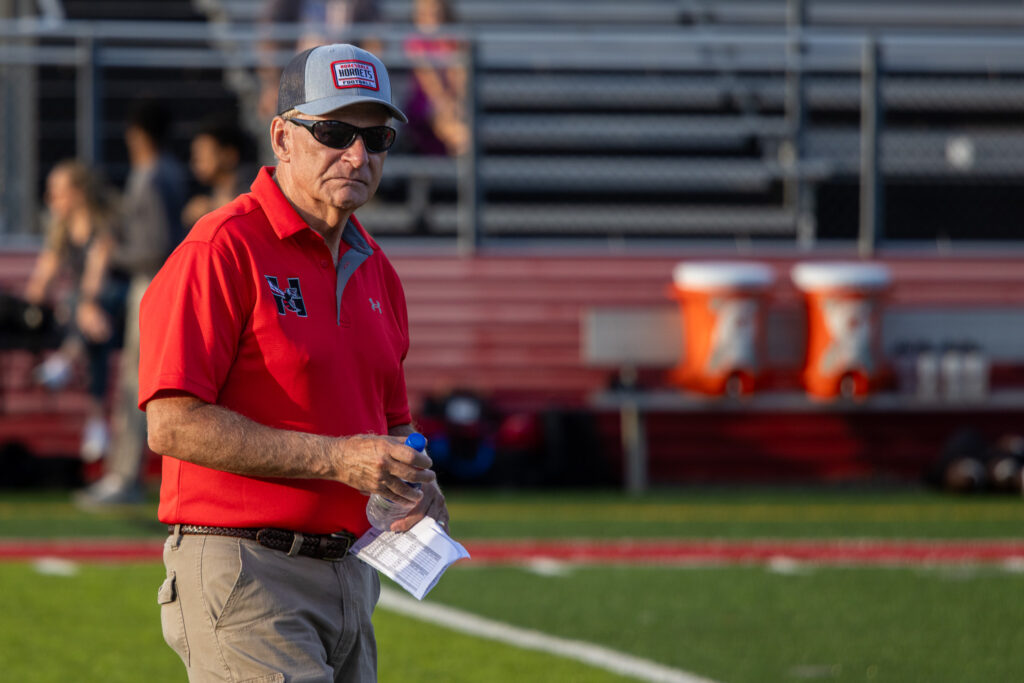
The school district offers K-12 education to about roughly 2,300 students in six separate schools. District education superintendent Gregory Frigeletto said in an interview that he understood taxpayers’ concerns over the cost of the new facility and field.
“Community members that are taxpayers are somewhat concerned about the cost, and understandably so, until they see it, and they see the excitement.” Frigeletto said recalling the conversation.
Frigeletto will be completing his 15th year as the superintendent at Wayne Highlands in June. One of his long-term goals during his term focused on what amounts to brand identity: developing a single “Hornet” logo for the athletic teams that each offered different variations of it.
In May of 2023, Peter Jordan, Principal of Honesdale High School, invited the captains of each team to listen to the school’s presentation on the future of sports at the school. The excitement could have lit up an entire school.
“Our numbers have gone way up”
The sound of a whistle, the scuff of sneakers on polished gym floors, the cheers of parents bundled in lawn chairs on the sidelines still serve as a rite of passage in American childhood and teens. But statistics show that what might have been true a generation ago is no longer in play today.
According to data compiled by USAFacts from the National Survey of Children’s Health, youth sports participation among children aged 6 to 17 fell from 58.4% in 2017 to 53.8% in 2022. That’s a five-year slide that equates to more than 1.6 million fewer children involved in organized sports. Meanwhile, the demographic group of children ages 6-12 experienced a slight uptick in participation during that period, from 53.5% to 55.7%, teenagers between 13 and 17 saw their involvement decline from 56.7% in 2019 to just 52.1% in 2022.
The reasons are varied but deeply interconnected. Perhaps the most immediate factor is cost. Organized youth sports are no longer simply a matter of signing up at the local rec center. According to the 2024 Youth Sports Business Report, the average annual cost for a child’s primary sport now exceeds $1,000, a figure that includes equipment, travel, registration fees and coaching. Parents in higher-income households spend nearly three times as much as their lower-income counterparts. This has created a growing gap in who gets to play. As of 2022, only 33.3% of children living in poverty were participating in organized sports, compared to 41.3% of children from households earning one to two times the federal poverty level, as reported by USAFacts.
For many families, especially those in lower-income or rural areas, this has meant tough choices.
“The collision of rec sports and sports tourism has happened, and sports tourism is winning,” said Jason Clement, CEO of The Sports Facilities Companies, in a report by the Aspen Institute’s Project Play initiative. “Parents want what’s best for their child’s skills, and the quality of local leagues is really watered down.”
Yet while overall participation trends suggest a decline, there are bright spots. Girls’ involvement in youth sports has steadily climbed, even as boys’ participation has dropped. In 2013, there was a 15.4 percentage point difference between genders; by 2023, that gap had narrowed to just 5.4 points. According to the 2024 Youth Sports Business Report, boys’ participation has dropped from 50% to 41%, while girls’ participation is holding steady — and in some cases growing.
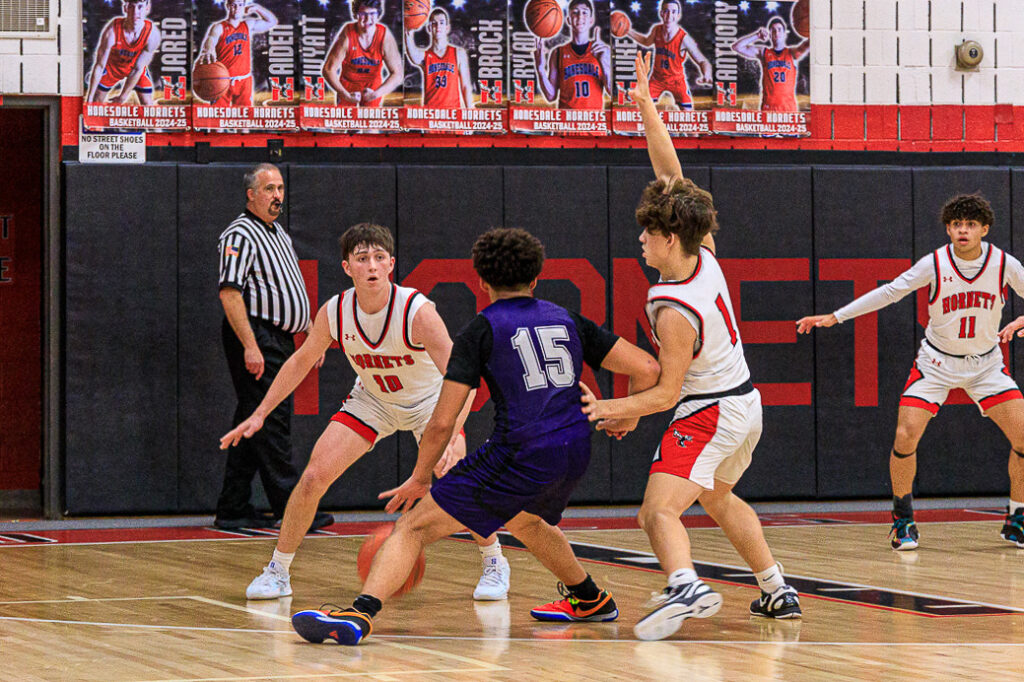
Honesdale, however, is experiencing something different: growth.
In Honesdale, the Biddy Basketball Association has a sharp increase in participation under boys basketball head coach Jon Gillow, who has held the post since the 2022-23 season. A 2013 graduate of Honesdale High School, sees the growth first-hand, first as a player himself.
During the 2022-23 season, there were four senior division teams that had between nine to 10 players per team. In 2024-25, six teams with 10 players per team competed.
“It’s honestly been hard to find refs because that’s a long time to be there,” Gillow said. “We do all of our reffing free or on a volunteer basis. We start at two in the afternoon and the last game doesn’t start until seven at night.”
Honesdale also added girls wrestling to its athletic program in 2022-23 after the Pennsylvania Interscholastic Athletic Association (PIAA) approved the sport for varsity play.
But as participation rises in some corners, many kids are walking away from sports entirely — and doing so younger than ever. An estimated 67% of children stop playing organized sports by age 13, a statistic echoed by World Metrics and reinforced by a broad range of pediatric and behavioral research. The reasons for quitting are consistent: lack of enjoyment, pressure from coaches and parents, overscheduling, and concerns about body image or injuries. Many kids simply burn out.
Elaine Conway, a pediatric psychologist in Chicago, said early specialization plays a major role in this attrition. “We ask these kids to train like professionals before they hit high school,” she said. “It’s not fun anymore for a lot of them. And when you take away the fun, you lose the child.”
Ten years ago, most young athletes played multiple sports. Today, according to the Aspen Institute’s State of Play 2024 report, the average child plays just 1.63. Early specialization — focusing intensively on one sport with the goal of scholarships or elite performance — has become the norm. But for most children, those scholarships never materialize, and the physical and emotional toll can be significant.
Geography and education levels play a role in who participates as well. Youth in the Midwest (58.6%) and Northeast (58.4%) participate more than those in the South (48.7%), according to data from the Centers for Disease Control and Prevention. Similarly, 67.6% of children with college-educated parents participate in sports, while only 36.8% of children whose parents have a high school diploma or less do the same.
Still, in the face of these trends, one surprising arena has shown growth: high school sports. In the 2023–24 school year, the National Federation of State High School Associations reported a record 8 million student-athletes, including a record 3.4 million girls and 4.6 million boys. These programs, typically subsidized by school districts and more accessible than club teams, provide a haven for students who might otherwise be priced out or overlooked.
It’s all about the people.
The Honesdale community is continuing to show strong support for Wayne Highlands School District athletics, raising tens of thousands of dollars and helping local student-athletes pursue both competitive and personal development goals.
This past spring, the Honesdale High School Varsity Track & Field team exceeded its $12,000 fundraising goal by collecting more than $16,000. The funds are earmarked for upgraded training equipment and improved team resources, according to a campaign on Blast Athletics.
Other athletic programs have also benefited from local backing. The Friends of Honesdale Football Club, a booster group of parents and community members, plays a vital role in covering costs for the varsity and junior high football teams. Their contributions help pay for equipment, uniforms and training materials not fully funded by the school district.
For Gillow, the money that is donated to his boys basketball program goes where it should – back to the people in his program.
“I might, you know, randomly swing by and pick them up a bunch of hoagies from any of the hoagie places in town,” Gillow said. “I try to keep the fridge stocked with water and make sure at any point you can go and get water.”
In addition to financial support, the community is also helping student-athletes off the field. The Honesdale High School Athletic Department recently launched a partnership with the Athletic Scholarship Corporation called “Empowering Dreams.” The initiative connects student-athletes with national and regional organizations to offer mentorship and scholarship opportunities.
Honesdale athletes have also taken part in service initiatives. Football players from Honesdale and nearby Wallenpaupack Area High School joined forces earlier this year to assist a local food pantry, reinforcing the program’s commitment to leadership and civic engagement.
The outpouring of local support reflects a broader investment in the future of student-athletes in Honesdale — one that extends far beyond game day.