
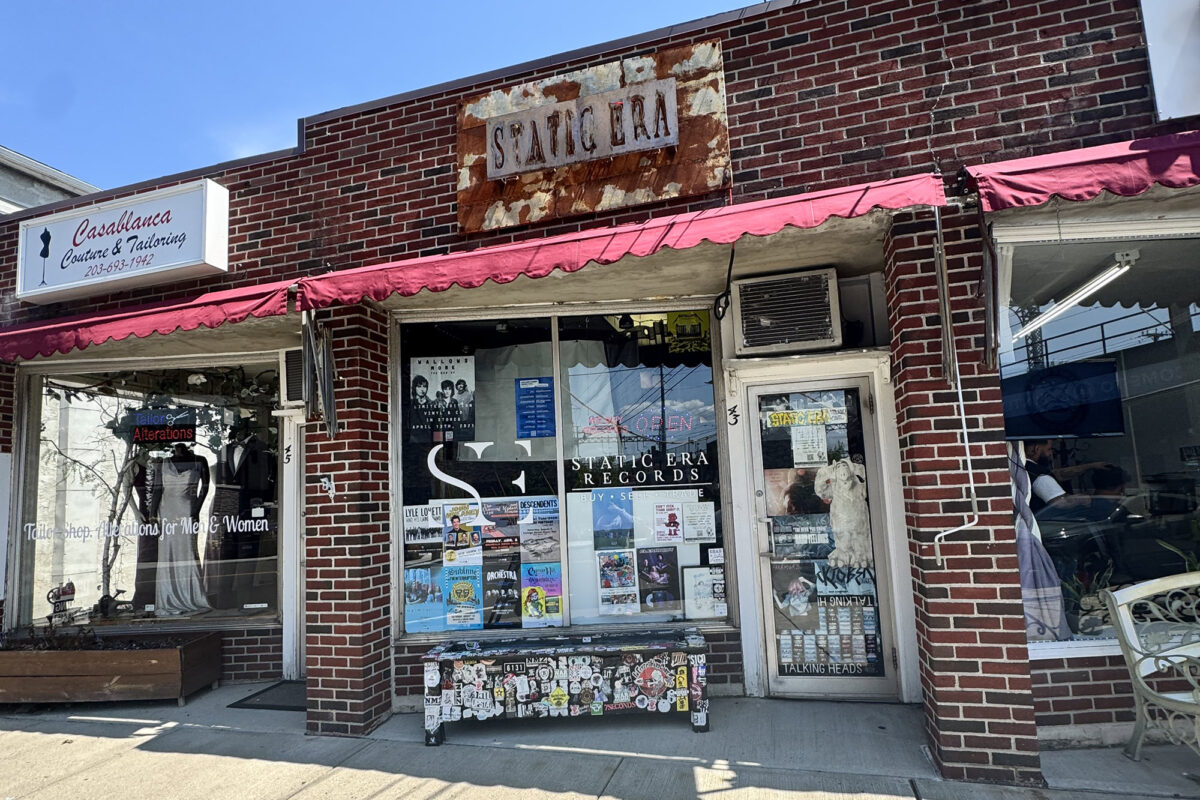
Milford record store focuses on physical media in the digital age
Amidst the hustle and bustle of people crossing one-way streets, the smell of salty water in the air from nearby marinas, and the sound of people chattering as they walk from shop to shop, lies a whole other side of energy. Located on River Street in Milford, next to Sprout Raw is Static Era Records, a store dedicated to preserving the art of physical media.
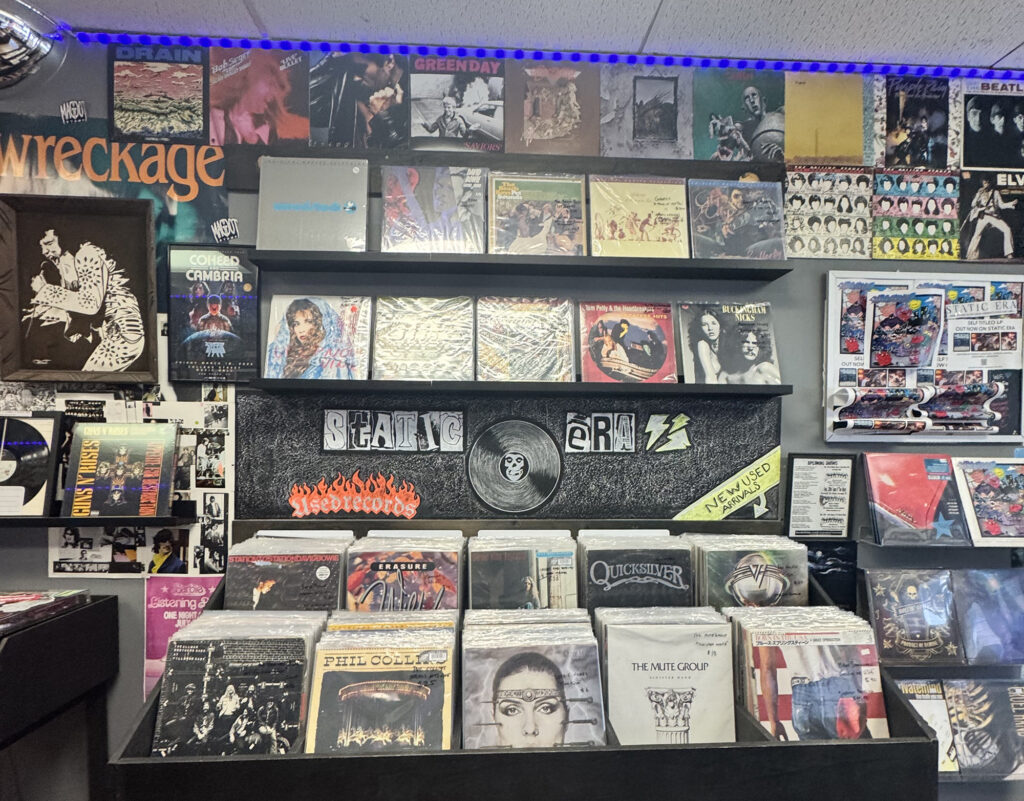
This store, a small yet important fixture in the local Milford community, captures a world of different music genres, from loud punk rock playing over the speakers to rows of used rock records from groups such as The Beach Boys to The Kinks. Above the rows and rows of records hangs dozens of music posters which cake the wall, showcasing band tours and album releases.
Yet the the space, which is around the size of a small convenience store, feels much bigger, with not only selling records, but music memorabilia as well, from local music-themed art from Milford to Grateful Dead’s Bertha figurines. Ultimately, Static Era Records fosters great conversations and new friendships from people of all walks of life.
Modest beginnings
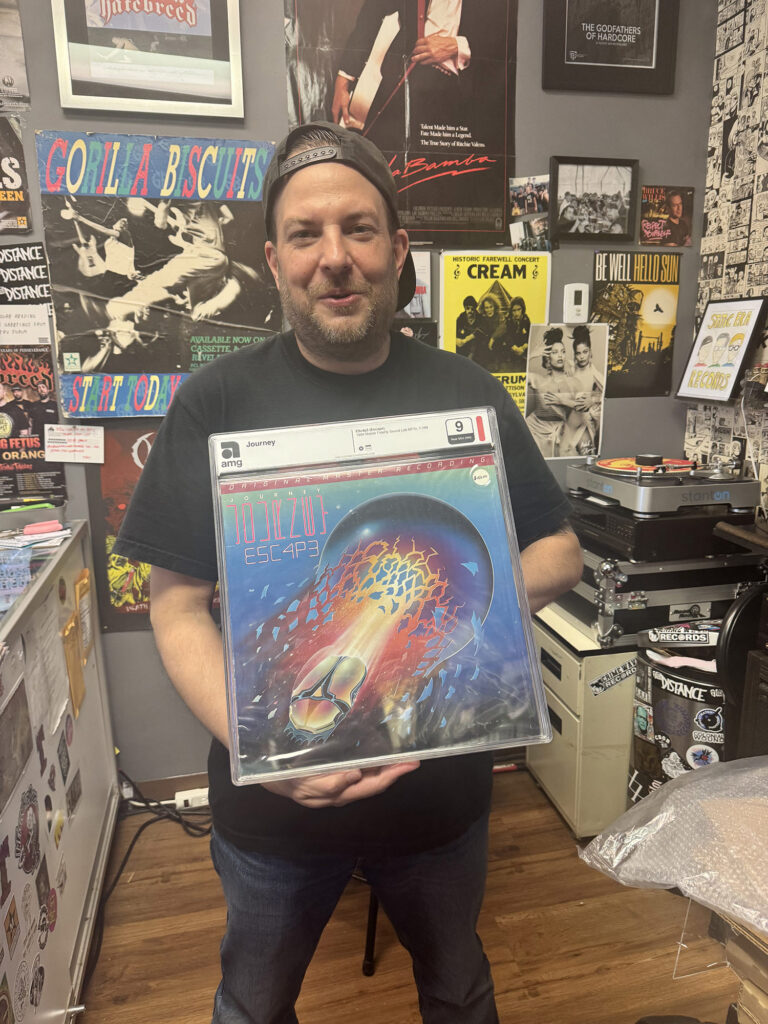
Since the opening of its doors in 2020, Static Era Records has been Milford’s music hot spot, from promoting local bands to hosting listening parties on artists’ new material. Through these, it has also brought one common theme: keeping physical media alive.
Owner Jay Reason has always been into music since he was a young child. His older brother was in bands and would often take Reason to local concerts.
“I always loved music. I grew up around music and got into hardcore and punk rock,” Reason said.
Many of the local bands performing would release their music on singles (45 RPM) and albums that would not be found at local record stores.
This sight of selling physical media sparked a torch in Jay that would keep with him well into his adulthood.
“It was crazy to see that you can just do that,” Reason said of seeing physical media for sale.
Those concerts are what sparked a lifelong devotion to music for Reason. In his young adult years in the late 1990s to the early 2000s, he was in a successful hard punk band called Voice of Reason. Like what Reason experienced as a young child, Voice of Reason released their music on physical media such as compact discs (CDs).
This experience came with dealing with a record label and learning the insights of how music went from a recording to being pressed on something such as a 45 RPM record or CDs.
Before having a new song (single) being released on streaming platforms such as Spotify and Apple Music, new singles were released on a 45 RPM. A 45 would contain two songs, the single on the A-side (front) and another song from the artist on the B-side (back). In their prime in the 1950s and 1960s, 45s were seen in jukeboxes and collected by teenagers as they were cheaper than an album (an LP, or long play). They were also seen as an easy way for local musicians to record their music and be released on physical media, and local recording studios usually had their own label. As other methods of releasing music grew such as CDs and cassettes, 45s and albums became not as popular. These newer methods did the same thing as a 45 or album, but they were easier to make at home and for vehicle stereo systems.
However, Reason always wanted to know if he was “doing the right thing” in the studio, and wanted to take what he learned from his Voice of Reason days and teach those skills to others.
So in 2019 Reason launched Static Era, an independently owned record label based in Milford, Connecticut. Since its launch, Reason has managed over 15 groups, from Cruel Hand from Portland, Maine and Cloned Apparition from Toronto, Quebec.
The goal of Static Era was to “get bands to the next level” according to Reason as well giving them an experience he did not have. However, similar to what he experienced with his own band, Reason’s groups also released their music on physical formats, such as CDs, vinyl, and cassettes.
Static Era Records is born
A year after the start of the Static Era label, Reason found himself in a pickle. COVID-19 had hit, causing tours of his groups to halt. From times with his bands and seeing them go from recording music to now a sudden stop, Reason did not know what to do next.
One thing Reason had even amongst the closures of the pandemic was his record label’s physical media featuring all of those local bands. Lots of it to be exact. And that sparked an idea.
One day, while traveling through Milford, there, right before a bridge and next to the mom-and-pop coffee shop, was an empty space.
It did not take long for that space to fill. Reason bought it. Months later, in September of 2020, supplied with his group’s physical material, Reason opened Static Era Records. “Never thought I would open a record store to be honest,” Reason said.
However, his record store slowly began to transform into Milford’s go to place for all things music. With concerts and tours being cancelled, Reason’s store became “the show without the band” as group’s merchandise was now in the physical hands of customers.
Today, the record store sells not only Static Era’s materials but others as well. Walking in on the left side, there are rows of used records from the 1960s and onwards from rock, soul, new wave, and more. Hung proudly on the walls are concert posters and band posters, covering nearly every square inch. Directly to the right are rows of new and sealed records, filed alphabetically. Below the sealed record shelves are crates of used records that are $2 a piece. On top of this, the store sells stereo accessories, such as slip mats for turntables and record cleaning fluid.
All are welcome
The shop welcomes all walks of life, whether it is someone buying their first record or someone who has been collecting for years. Customers can come in and hang out, listen to music, chit chat, and unwind from the stresses of everyday life.
One customer who is a regular is Charlie Winthal, who has been around vinyl for his whole life, becoming immersed in physical media from his grandmother, father and uncle.
“My first record was from my uncle. It was Kiss, ‘Dressed to Kill’,” said Winthal, of Bridgeport, Connecticut.
After that, Winthal began to collect records, from country, such as Johnny Cash to hip hop. As he then found a career as a filmmaker creating short music videos and public service announcements (PSAs) as well as working for major news companies such as Fox and CBS, Winthal continued to collect vinyl, a hobby that still sparked interest.
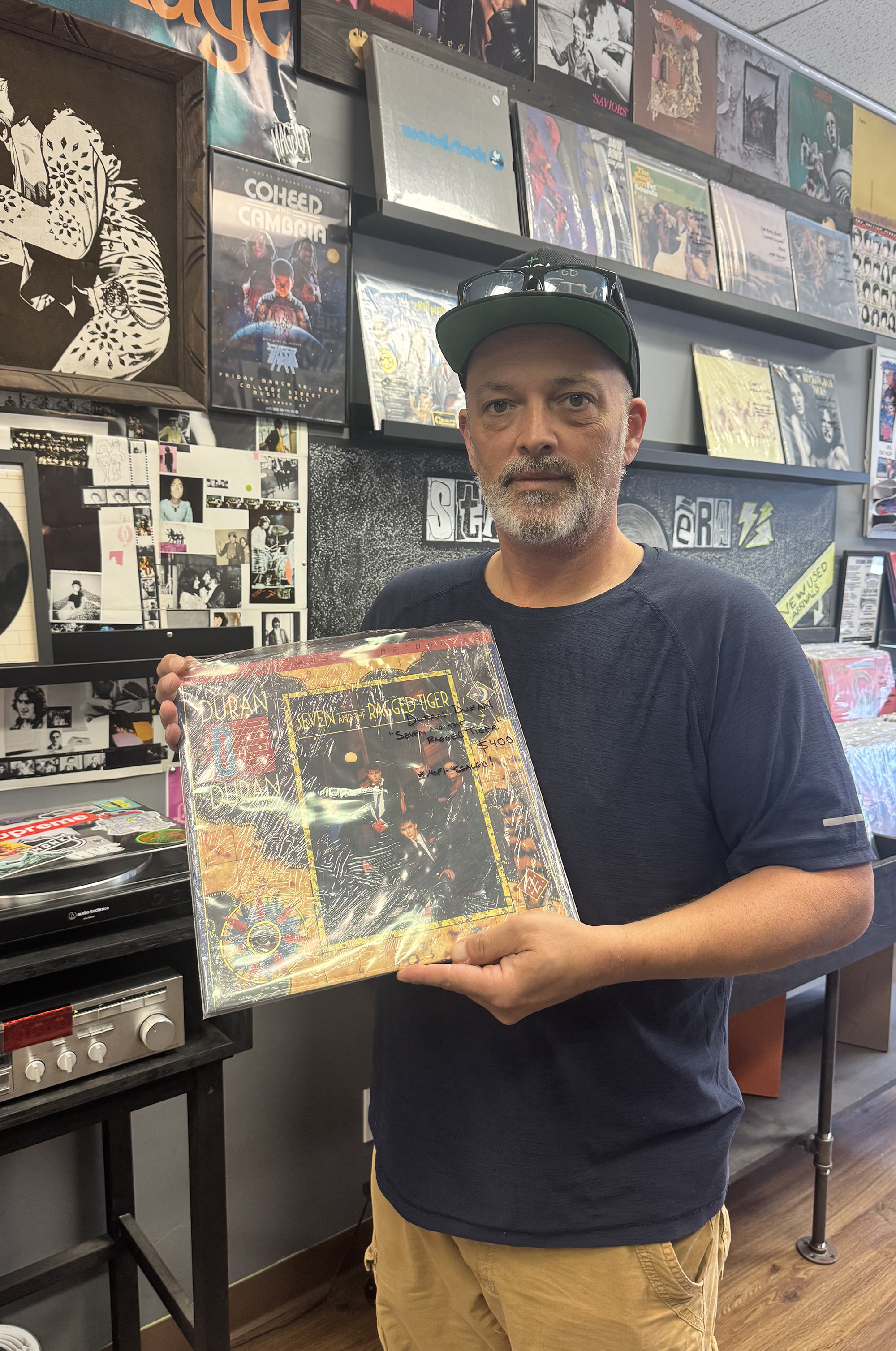
“Vinyl has more depth,” Winthal said.
Today, Winthal’s collection is home to over 2,000 records. Out of all his records, his favorite one he has is a signed album by country superstar Waylon Jennings. Jennings, who worked with Buddy Holly, almost died in 1959 when he gave up his charter plane seat that killed Holly along with two other rock and roll musicians. After Holly’s death, Jennings switched from playing rock and roll to country, making himself a well known figure in the genre. Once Jennings signed his album for Winthal, he never played it again.
During his free time, Winthal goes to Static Era Records, where he browses through the store’s records. From having friendly conversations with whoever is working to soaking up whatever is playing through the speakers, Winthal always has a great experience.
“You’re not interacting with anyone if you’re streaming with stuff like Apple Music,” said Winthal. In a record store, there are face-to-face conversations, with the ability to feel the records brushing against fingertips and see albums from different genres and decades.
“The whole part of having a record store is talking to people and the person behind the counter can introduce you to new music and things,” Winthal said.
In the midst of customers socializing and browsing through hundreds of records is another regular, Armand Giorgio. Similar to Winthal, Giorgio has been into music for nearly his whole life, starting his record collection in the 1960s when The Beatles became international stars in the United States.
“If I really go back, I don’t know, 50-60 years. I started collecting around the time The Beatles came out. I still have all my original records (by them),” said Giorgio, of Milford, Connecticut.
From then, his love for music never stopped. He learned how to play guitar, and by age nine, he was in a local band, charging listeners a nickel to hear “Wipe Out” and “Batman.”
Today, Giorgio’s love for music, both collecting and playing it, has not slowed down. He has shared the stage with artists such as Dion DiMucci, another 1950s musician who escaped flying on the flight that killed Buddy Holly.
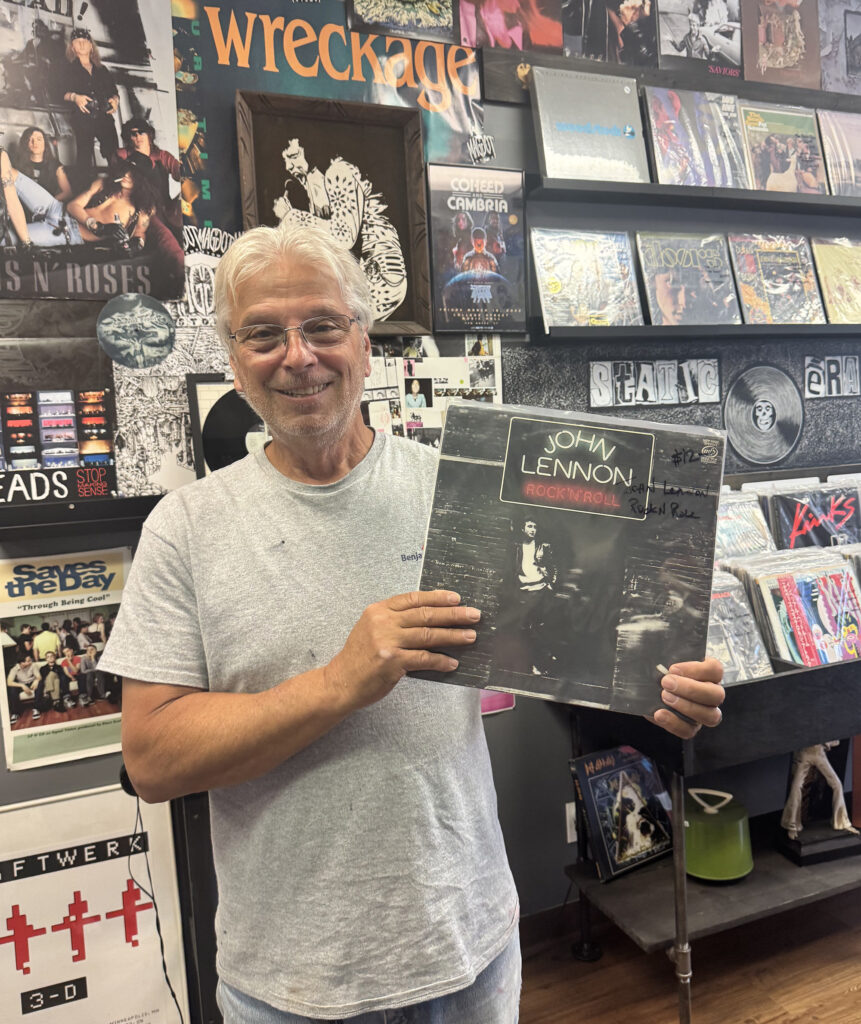
Yet, despite keeping busy with concerts, gigs, and playing guitar, Giorgio still finds himself going through record bins, continuing to build his nearly 60-year-old record collection. Through Static Era Records, he has been able to relisten and enjoy music from his youth as well as meet and socialize with other similar minded people, such as Winthal.
And although most of the music in the store can be streamed, the feeling of physically picking up something in one’s hands and seeing a record spinning is what makes Giorgio want to still play and collect.
“It just sounds so different to me. And it’s just the sound of the old sound of music, you hear the little crackle of the records, you can’t duplicate that,” Giorgio said. “It’s just perfect.”
Thanks to Static Era Records, Giorgio has not only added to his record collection, but it brings back memories of his youth by finding albums from musicians such as Dino, Desi & Billy.
There are also “newer” records (from this century) and not just from the 1960s and 1970s. With a wide range of music and genres, Static Era Records is also a haven for people who are fairly new to collecting. Aaron Grant, who has been collecting vinyl for a little over three years, began his collection when a friend purchased him a turntable after Grant would constantly mention how much he enjoyed his friend’s records.
“I didn’t think I was going to have room in the apartment, but I made room. And since then, I’ve been on this journey to find music I didn’t know about,” said Grant, from Mount Vernon, New York.
Grant, who is a heavy metal fan, is always on the hunt for records and always checks out local record stores wherever he goes. If album art pops out to him, he will go on YouTube to listen the artist, before purchasing it.
Although music is available on YouTube to stream, sometimes other apps specifically made for music streaming, such as Spotify and Apple Music, do not have certain bands and albums available. Physical media, such as records, on the other hand, can always provide music, even if it is not on music streaming services.
“My initial thought was that I might be buying records that I didn’t think I would have on my phone myself,” Grant said. “And then I started buying a bit more metal here and there, and then I started just kind of collecting metal.”
Buying records just to hear music is not the only reason why Grant is hooked. He enjoys the natural sound of spinning a record, and the thought process behind it.
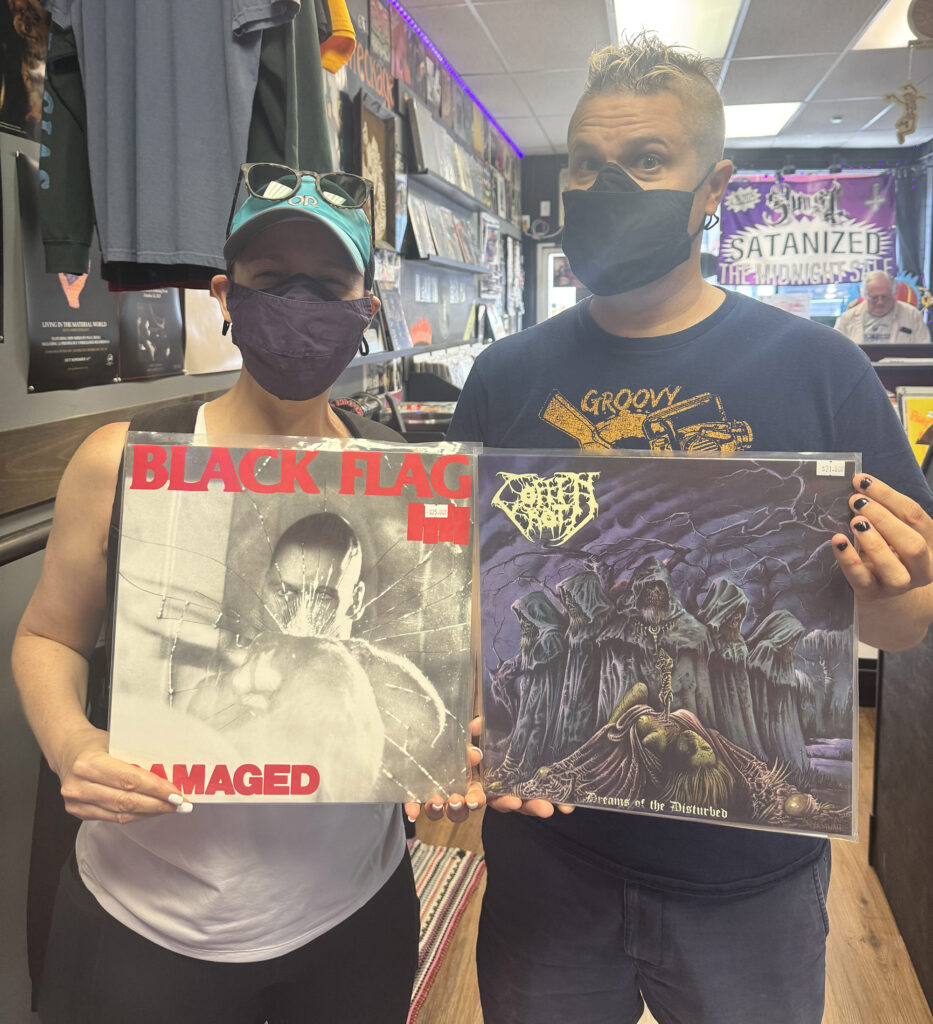
“You’re putting the record on the player, you’re listening to the music, you’re doing stuff, you’re cleaning, you’re hanging out,” Grant said. “There’s much more of a vibe of just like, let’s put on a record and chill, you know, and that’s not something you typically do with digital media.”
Unlike digital media, record collectors are holding something in their hands where each piece of digital media has its own artwork and that they took the time to pull out from a collection and place it on a record player. There are also lyric pamphlets in albums, encouraging listeners to read the lyrics behind each song. Sometimes, records will even come with extra material that is not available while streaming, such as posters and comic books.
There is also the action of physically going to a record store. Within a record store, people meet other people with a similar love for music, feel records run through their hands while flipping, and hold something that can be older than the person themselves.
Reminiscing about good times
Records can also bring back memories of family members and events that digital media can’t do in the same way.
Rachel Scherer, of Mount Vernon, New York, knows this feeling all too well. Her fondest of memories was as a child, her parents would put on the Nutcracker Suite for her and the memories of pure joy flowing over her.
“The joy of skipping around the room to ‘The Dance of the Sugar Plum Fairy’ and being a terrible dancer and it not mattering is my favorite memory,” Scherer said.
Although she has been collecting records for only a few years like her partner Grant, records have been a part of Scherer’s life since she can remember. Her father had a giant record collection with a lot of folk albums.
“It just felt like it made the home complete to have them, you know? So the second we had access to a record player, I was very excited to get on board,” Scherer said.
Scherer’s collection has been inspired by her past work at a job with MTV and VH1, and from this, she learned about artists such as Henry Rollins and his group Black Flag from coworkers. This music had Scherer hooked on hard punk.
As her collection continues to grow, stores such as Static Era Records have helped. Unlike streaming music, by going to a record store and buying a record (or other forms of media such as a CD or cassette), a person actually owns the music they purchased. Another thing is that by owning physical media, in case a streaming service has technical difficulties or removes a band or artist, there is still physical media by that person to listen to without those difficulties.
“Even when those media goes away, you’re kind of left with nothing,” Scherer said. “I think it’s really helpful whether it’s a record, a DVD or if you have a VHS, it’s the right of ownership to actually be able to play that again without some massive corporation stepping in between.”
For all of these reasons, Jay Reason continues to do what he does.
“Owning something is just cool,” Reason said. “Think of how many gems that have been lost in the sands of time. You might want that original recording.”