
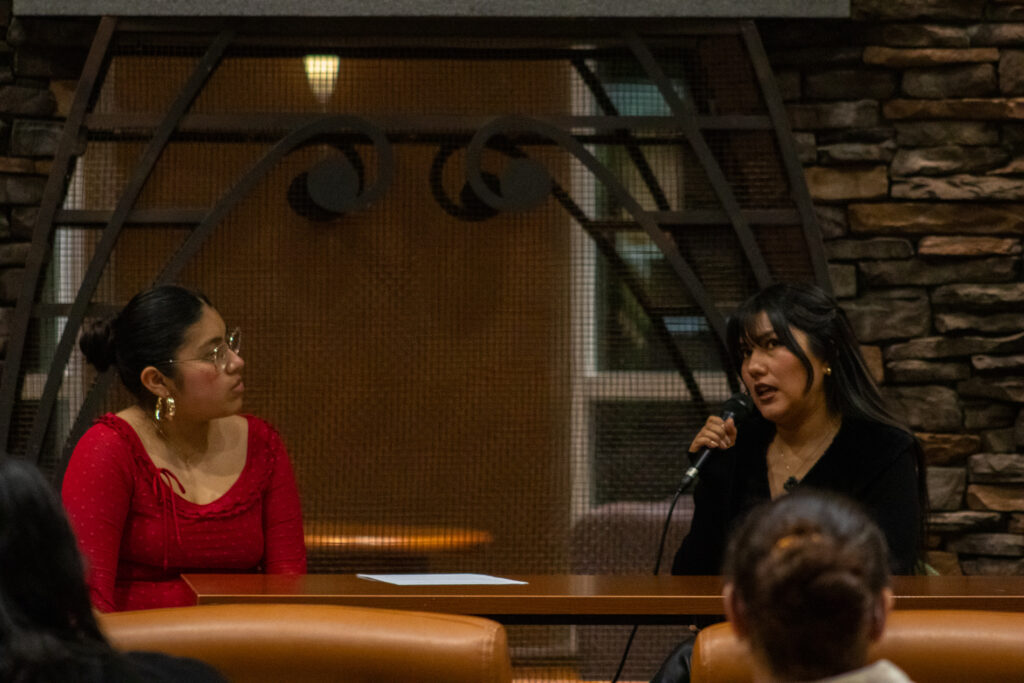
Quinnipiac University’s Student Social Justice club kicked off March by welcoming emerging Peruvian filmmaker Sisa Quispe to campus.
Quispe, whose work has received support from the Latino Film Institute and Netflix and won the 2023 Gotham Student Short Film Showcase award, screened two of her short films in the Piazza of the Student Center before participating in a question-and-answer session with students and faculty.
The Quinnipiac Film Society, the Indigenous Students Union and the Multicultural Student Council co-sponsored the event, which began with a meal of chicken, rice, yuca and desserts served to attendees.
Quickly, the room’s attention shifted to the large screen for the first film, “URPI: Her Last Wish” (2023). This film felt like a near-exact self-insert for Quispe, who wrote, directed, produced, and starred in the 17-minute short. It was about a young woman who comes back to her homeland to fulfill a promise to her late grandmother, and encounters an Indigenous man who helps her find her roots.
The film’s sweeping shots of Peru’s stunning landscapes highlight the country’s natural beauty while exploring questions of identity and belonging. Quispe said her own journey reconnecting with her Indigenous heritage inspired the project.
“My family is Quechua and Aymara, but I was born in a city away from the Andes,” Quispe said. “I am Peruvian American, but I was born and raised in Peru, and I would say that this was inspired by my own journey, because at the beginning, I wasn’t feeling Indigenous enough. My parents didn’t teach me Quechua as a way to protect me from discrimination.”
Despite growing up somewhat removed from the language and traditions of her ancestors, Quispe said rediscovering that heritage became central to her storytelling.
Margarita Diaz, an associate professor of journalism at Quinnipiac, said the film’s cultural details resonated with her own experiences in Peru.
“In ‘Urpi,’ the young man gives [Quispe’s character] tea that the older woman has made for them. When I was visiting Peru, we had that same tea every night before going to sleep, and in the morning when we woke up. It was a big part of the culture there, and I just remember it very fondly.”
These themes of identity and community representation resonated with SSJ and its co-president, Xiomara Saavedra, who helped arrange Quispe’s appearance. Saavedra is heavily involved in political and identity-based groups on campus, so finding a platform for Quispe was crucial.
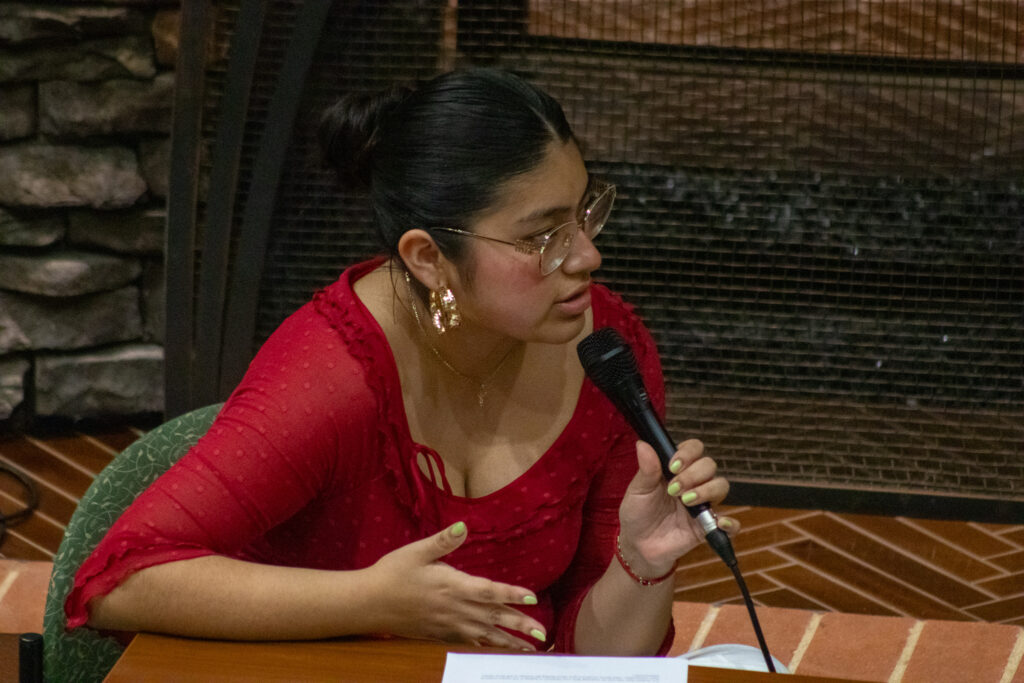
“I think that highlighting this in the space like Quinnipiac is very important because we get to expand people’s knowledge on communities that are Indigenous. Especially considering that we are on Indigenous land and named after an Indigenous tribe.”
This connection to the land proved to be another bridging theme of her films, and an even bigger one in the second film they screened, “Kusi Smiles (2025).” Quispe has strong anti-colonial beliefs that shone through in her most recent 15-minute short film, which she both wrote and directed, of course. All of the dialogue is in Quechua, which proved difficult for Quispe as a non-native speaker. However, Quispe powered through, knowing that if she wasn’t going to tell these stories, who would?
“When you don’t identify as Indigenous, or they make you believe you’re not Indigenous, then you have a disconnection with land,” Quispe said. “So the people can take over that or exploit it, or have these different destructive industries that are happening right now.”
During the discussion, Quispe and attendees also reflected on how themes of colonialism and self-determination appear in contemporary global conflicts. Faculty and students drew parallels between the struggles depicted in the films and current events around the world. She also noted the current conflict in Iran. With the U.S. and Israel relentlessly carpet bombing Tehran earlier in the week, the anti-colonialist sentiment in her films seemed all the more prescient. Diaz said the parallels felt particularly striking in light of the week’s events.
“I think any culture, any community, any population that has faced colonialism and has struggled against colonialism, will find parallels in others who are going through the same struggle,” Diaz said. “So our idea of what the future of Iran should look like is not for us, for us to decide, right? It’s for the Iranians to decide. The United States has taken steps to force the issue.”
For many in attendance, the conversation served as a reminder that the legacies of colonialism explored in Quispe’s work are not confined to history, but remain deeply embedded in today’s global politics.