
This past summer, torrential rainfall bombarded Hamden in a storm that caused flooding around southwestern Connecticut. The next day, Connecticut Gov. Ned Lamont declared a state of emergency in response to the devastation in the region.
In Oxford – which found itself in the heart of this storm – flooding along Little River resulted in the deaths of two women.

This storm is part of a larger pattern occurring in the northeast. The effects of climate change include intensified precipitation events, such as heavy rainfall. As time goes on and climate change continues to impact weather patterns, Connecticut will see shocking rainfall events like August’s storm more often.

“My parents actually live in Oxford, Connecticut,” Courtney McGinnis is a professor of biology at Quinnipiac University. She recalls how the storm in August wreaked havoc on Oxford. “So, that’s like, what 25 minutes from here and the roads washed out, bridges washed out.”
McGinnis’s work primarily focuses on aquatic toxicology in river water sources such as the Quinnipiac River. She also heads the environmental science and environmental studies programs. She highlighted how climate change influences the magnitude of these storms.
“When we think about what we know is happening with climate change, right, it’s that we see more extreme, more frequent, kind of bouts of these, what we think about as extreme weather events, right? So, the frequency of that is changing,” McGinnis said.
Across Hamden there are concerns about managing the long-term changes to stormwater flooding.
“I would say I’m very familiar with the issues around flooding, and very concerned,” said Justin Farmer, who represented district 5, the area of southern Hamden around the board of education building, which includes Newhall, an area with a history of flooding.
Now 30, Farmer served as a town council member from when he was 23 until he was 29. He fears for Newhall and other vulnerable communities as climate change continues to march forwards.
“Given the fact that these fifty-year storms or hundred-year storms are becoming, you know, five-year storms,” Farmer said. “It’s been ever present on my mind.”
Recognizing these climate trends, Hamden is working to brace itself for the effects of climate change. In recent years, there have been pushes to combat flooding as stronger rains fall on the town. In 2023, The town of Hamden partnered with Save The Sound along with other local environmental groups to build a rain garden in Hamden Town Center Park.
This green infrastructure project would work to treat the excess stormwater that runs off of the area’s impermeable infrastructure such as roads, buildings and parking lots into the lower-lying park. Additionally, stormwater from the nearby town would run out of a single outfall, flooding the park and overflowing the river on the other side of the park. That outfall now leads into the rain garden, filtering the water and increasing the area’s capacity for stormwater.

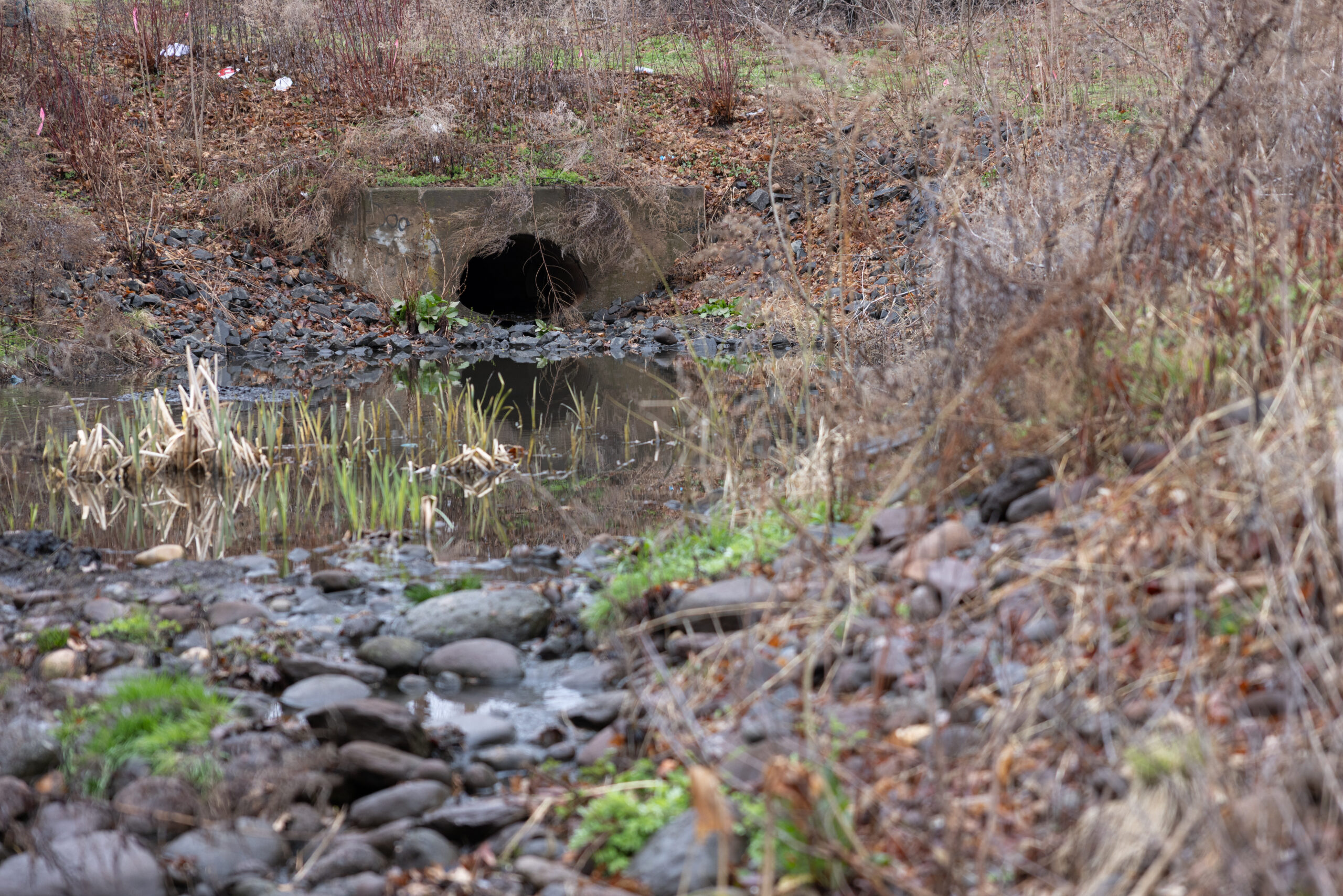
On April 12, 2025, around two years after the project began, McGinnis was one of multiple volunteers who arrived at the site early on a windy and rainy Saturday morning. The group consisted of Quinnipiac students and faculty, the town engineer, local residents as well as members of the organizations responsible for the construction of the site. Equipped with multiple layers, gloves and boots, the team worked in the rain to remove overgrown vegetation and invasive plants to make way for the spring growing season.
“No one’s going to disagree that we’ve seen a lot heavier rainfall all at once.” One of the people cleaning the garden was Save the Sound watersheds project manager Nicole Davis, who led this project during its construction.
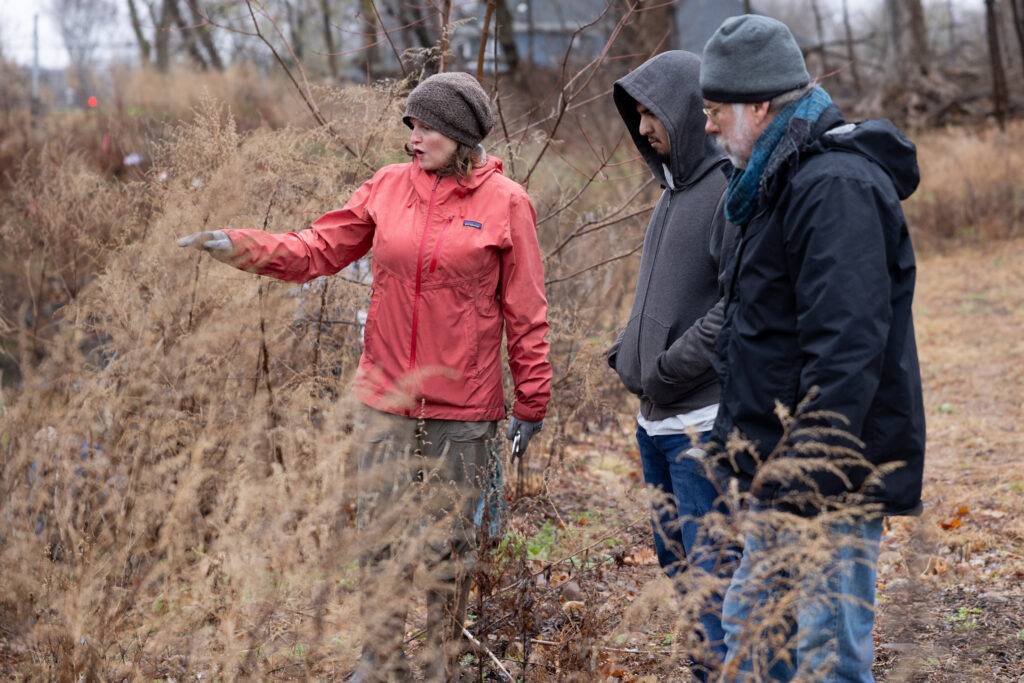
“Green infrastructure gets the water to go into the ground the way it was originally designed in nature to do. And so, by taking that water out of our pipes, our pipes are working less hard, and our infrastructure is working less hard, and our rivers are able to function in a way that they normally do,” Davis said.
Infrastructure of the past
As rains become more frequent and intense as time passes, the already aging infrastructure will become overwhelmed more easily. Hamden town engineer Stephen White was also helping out at the rain garden. “
Like all that infrastructure age is starting to show and like, it was done really quick so it’s, it’s just gonna – it’s always something’s kind of showing up and like needing to get replaced,” White said in a January interview.
White talked about the expenses involved in maintenance.
“I dealt with something two years ago that was I think built in like 1960. So like, it just… there’s a lot of deferred maintenance or maintenance that was not able to be completed because of costs associated with it,” White said.
Lightening the load on the stormwater drainage system is one of the tasks at hand as the town attempts to adapt for the future.
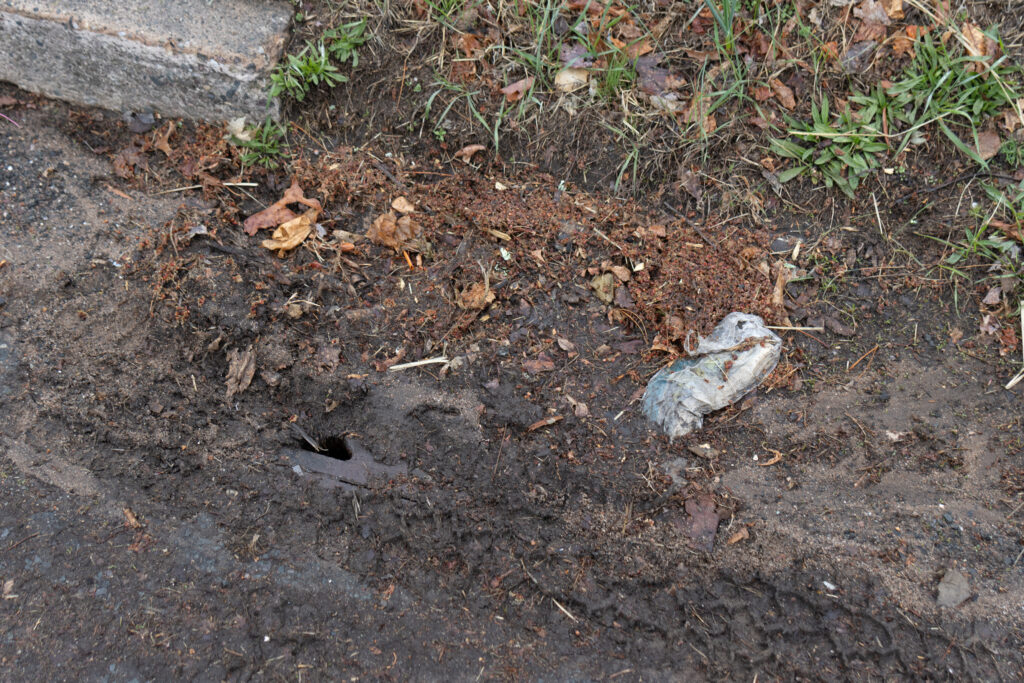
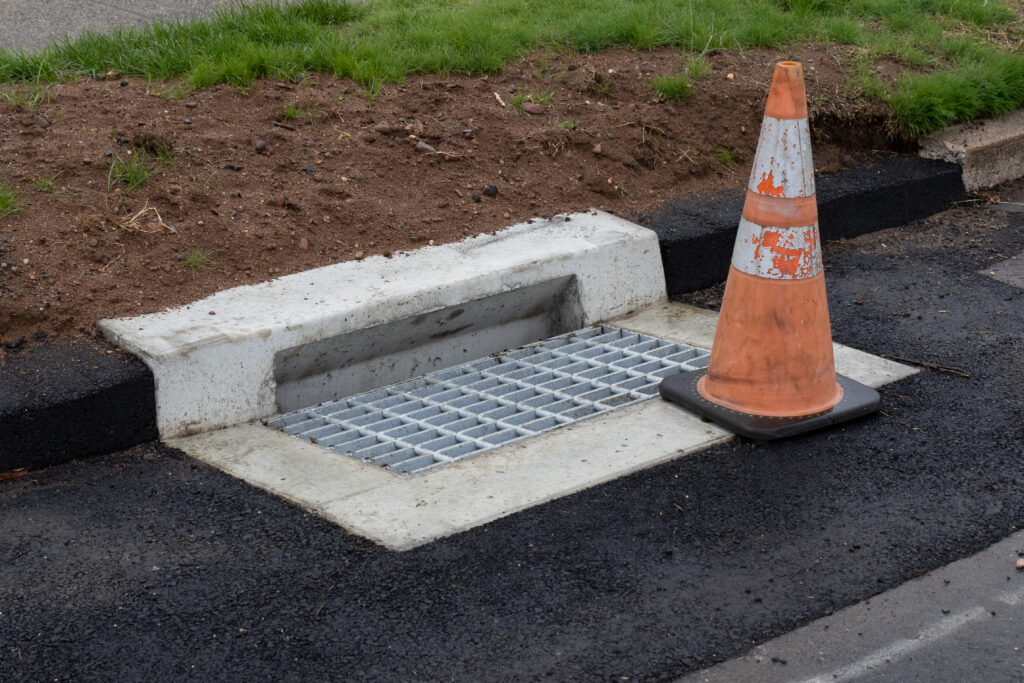
The town has been working to refurbish or replace some of the outdated infrastructure. In the Meadowbrook Co-Op, flooding impacts residents greatly. An outdated pump station is going to be replaced and green infrastructure built after the governor announced funding for climate resilience projects around the state. This project is currently in the design and planning stage.
In the Highwood-Newhall area, the situation is delicate. What used to be a swamp was filled in with industrial waste, creating the Newhall residential area. This waste contaminated the soil in the area which today the Newhall neighborhood stands on.
“Issues around flooding have always been a concern for that neighborhood, and it often over floods,” Farmer said.
Farmer discussed the stormwater problems that the town is seeing. The drainage system buried under contaminated soil is a difficult task to approach while managing finances and political leverage, but it’s necessary to make positive change. These underground systems aren’t tangible things that the average voter or politician see on a daily basis, but the effects of an outdated system are.
“We let things go until they break,” Farmer said.
Although the young former council member stepped away to focus on achieving personal goals such as a bachelor’s degree, he still cares deeply for the people of his district.
“In Highwood you have cars that are parked on slopes that oftentimes get washed away from the intensity of, of flooding,” Farmer said. “Many of the pipes in town are at least 50 years old.”
Due to the steep elevation around the area, the Newhall-Highwood area sits in what Farmer describes as a “bowl,” where stormwater flows and causes flooding. This makes the area especially susceptible to increased rainfall.
Quinnipiac University professor John Greenleaf heads the civil engineering department. Greenleaf often works with the town and stays informed on the civil engineering of Hamden.
“I mean, one thing about Newhall – One of the issues was that the pipes were just old, right?” Greenleaf said.
In 2022, Quinnipiac students published a capstone report on Newhall’s drainage system. The 2022 report is based on an extensive 2012 study by Diversified Technology Consultants. Both studies informed the town of Hamden on the drainage system in Newhall.
The 2012 study aimed to kick-off progress on an updated drainage system. Despite being completed, the almost 600-page DTC study “died in the water,” according to Greenleaf. Nearly a decade later, Quinnipiac students used it as a guide for their capstone report.
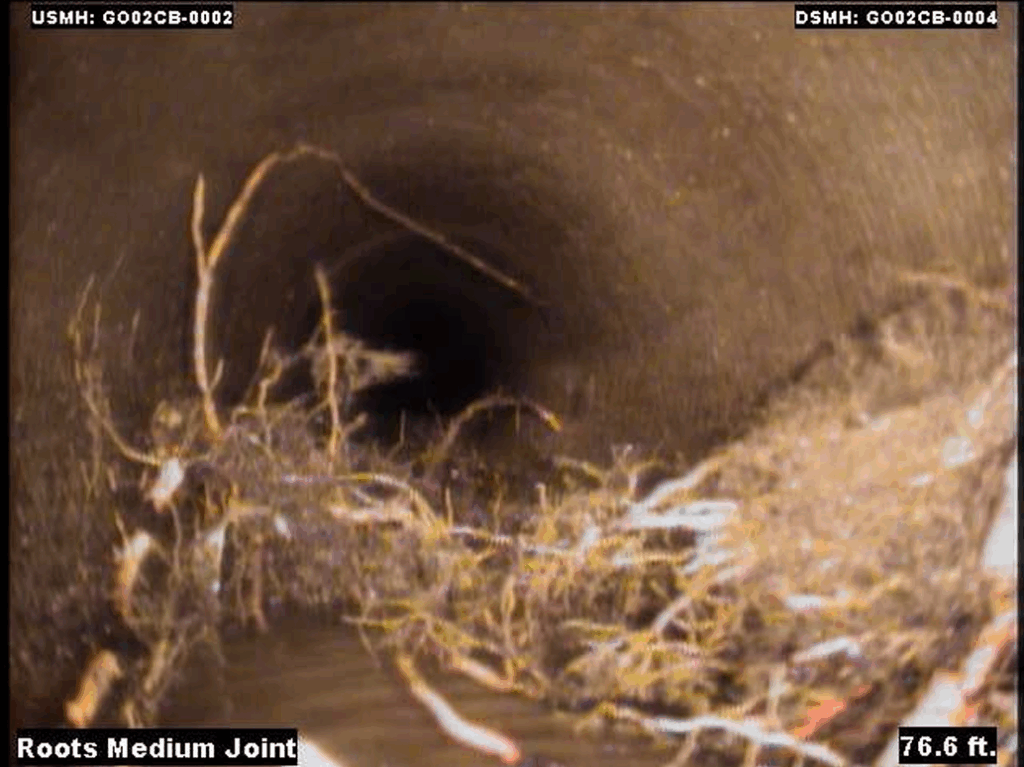
Much of the soil in the town has been remediated, with multiple feet of clean topsoil added above. However, there are still issues with the infrastructure that come with Newhall’s history.
“Old pipes they crack, they get root intrusions, and water doesn’t flow through them very well, right? So it flows slower, the water gets backed up, and then when the water gets backed up, it ponds, and it floods,” Greenleaf said.
In a Community Investment Fund grant the state awarded Hamden $750,000 towards fixing the chronic flooding caused by the drainage system in Newhall. Hamden’s government hasn’t hesitated to take an environmentally conscious stance, but policy takes time.
While infrastructure repairs move through political channels, it’s important to keep the public informed on the impacts of climate change, according to one former elected official.
“Right now, as the engineers figure out different solutions, the next step would be to bring it to the community and do that education, as well as get some of that buy-in,” Farmer said