
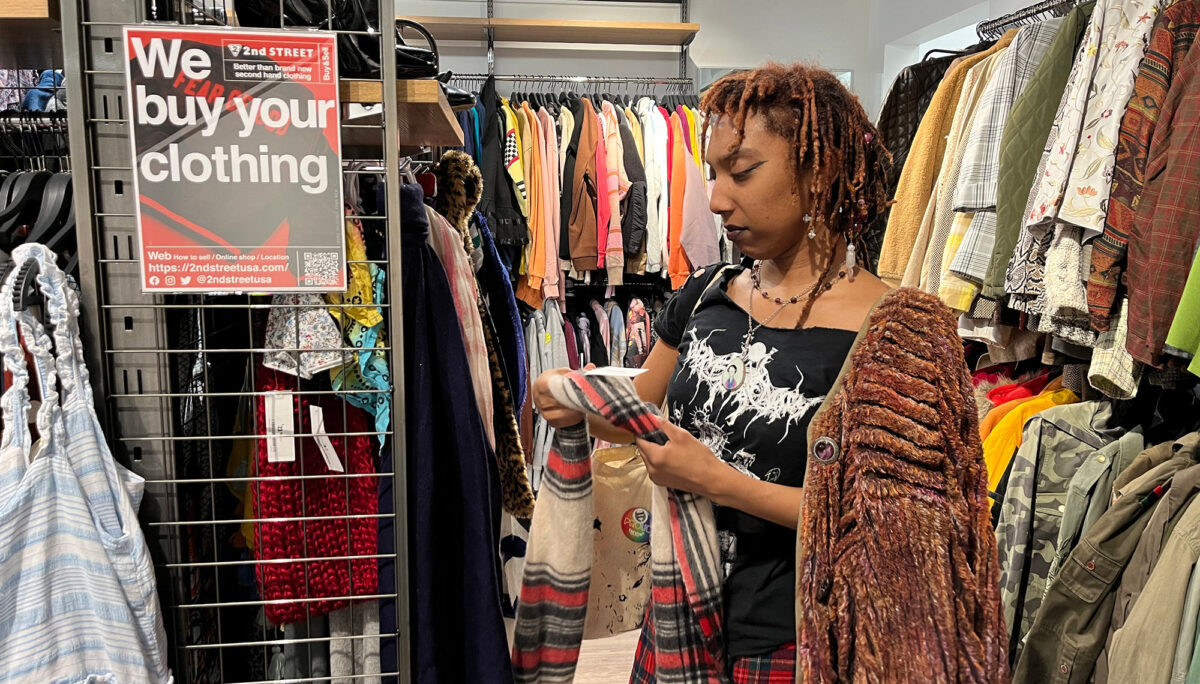
As the prices of clothing rise in retail stores and even from fast fashion retailers, people lean towards buying their clothes for work or school second-hand in local thrift stores.
President Donald Trump announced April 2 that all foreign imports from outside the U.S. will be charged a 10% tariff, according to CNN Business. This will have a large impact on U.S. retailers because majority of their products are made in other countries and they will now have to pay higher tariffs to get these items.
“I think the tariff will significantly impact the clothing industry in a very negative way,” said Mohammad Elahee, professor of international business at Quinnipiac University. “We get most of our clothing from other countries. So when we impose tariff, the importer, they will have to pay the extra amount, whatever it is, 10%, 15%, 20%, it keeps on changing. But it seems that President Trump has imposed some universal tariff. But on top of that, each country has its own separate tariff.”
In addition to the tariffs, the U.S. dollar is has been going down in value compared to other countries and because of this imports will be more expensive, said Elahee.
Negative impact of fast fashion
This increase in tariffs will have a particularly negative impact on fast fashion retailers such as SHEIN that produce large amounts of clothing quickly using low quality materials.
Any order shipped from China and Hong Kong under $800 will not be tariff- free anymore under the de minimis exemption after May 2, 2025, according to The White House. Meaning consumers will now have to pay more for orders under $800.
Over the past three weeks, clothing on SHEIN is already going up in price. The prices of four women’s clothing items and four men’s clothing items have slowly increased between April 14 to April 21 and then again from April 21 to April 28.
For example, one women’s sweater was $20 on April 14, $21 on April 21 and then it jumped to $25 on April 28.
This in part has to do with the fact that SHEIN announced they will begin to increase their prices on April 25, according to an announcement SHEIN posted on their website. This has a similar impact on men’s clothing items as well as one pair of jeans increased from $26 on April 14 to $28 on April 21 and then finally to $33 on April 28.
How do I combat fast fashion and avoid tariffs?
One way to fight against fast fashion retailers is by shopping second-hand locally in a thrift store.
Thrifting isn’t just for one particular age group and most thrift stores have something that anyone can wear, but thrifting is especially popular right now among college students or Generation Z.
“83% of Gen Z consumers have either purchased or are interested in secondhand apparel, 10.7% more than the average for all age groups,” according to Capital One Shopping Research.
Some colleges in Connecticut such as Eastern Connecticut State University even have a thrift store right on campus where students can bring items they no longer want and look for new items.
Patricia Szczys, executive director of the Institute for Sustainability at Eastern Connecticut State University said that their on-campus thrift shop has clothing, small kitchen appliances and decorative items.
“Just this idea that instead of throwing things away that are perfectly usable, we need to have this circular economy of making them available,” Szczys said. “In our case the thrift shop is free for Eastern students so it’s really about the sustainability of our community and reducing waste and it just happens that thrifting is also having a moment this time.”
Even though thrifting is popular among college students, anyone can do it and almost every town has its own set of chain and local thrift stores. Hamden and New Haven in Connecticut particularly have many of them.
There are several chain thrift stores such as Plato’s Closet and 2nd Street but there are also many smaller thrift and vintage stores such as Lower Forms and Vintanthro Modern & Vintage, which are specific to the area.
Here’s some insight from local thrift and vintage store owners on how the items in the store end up on the shelves and some perspectives from people who shop in them.
Plato’s Closet
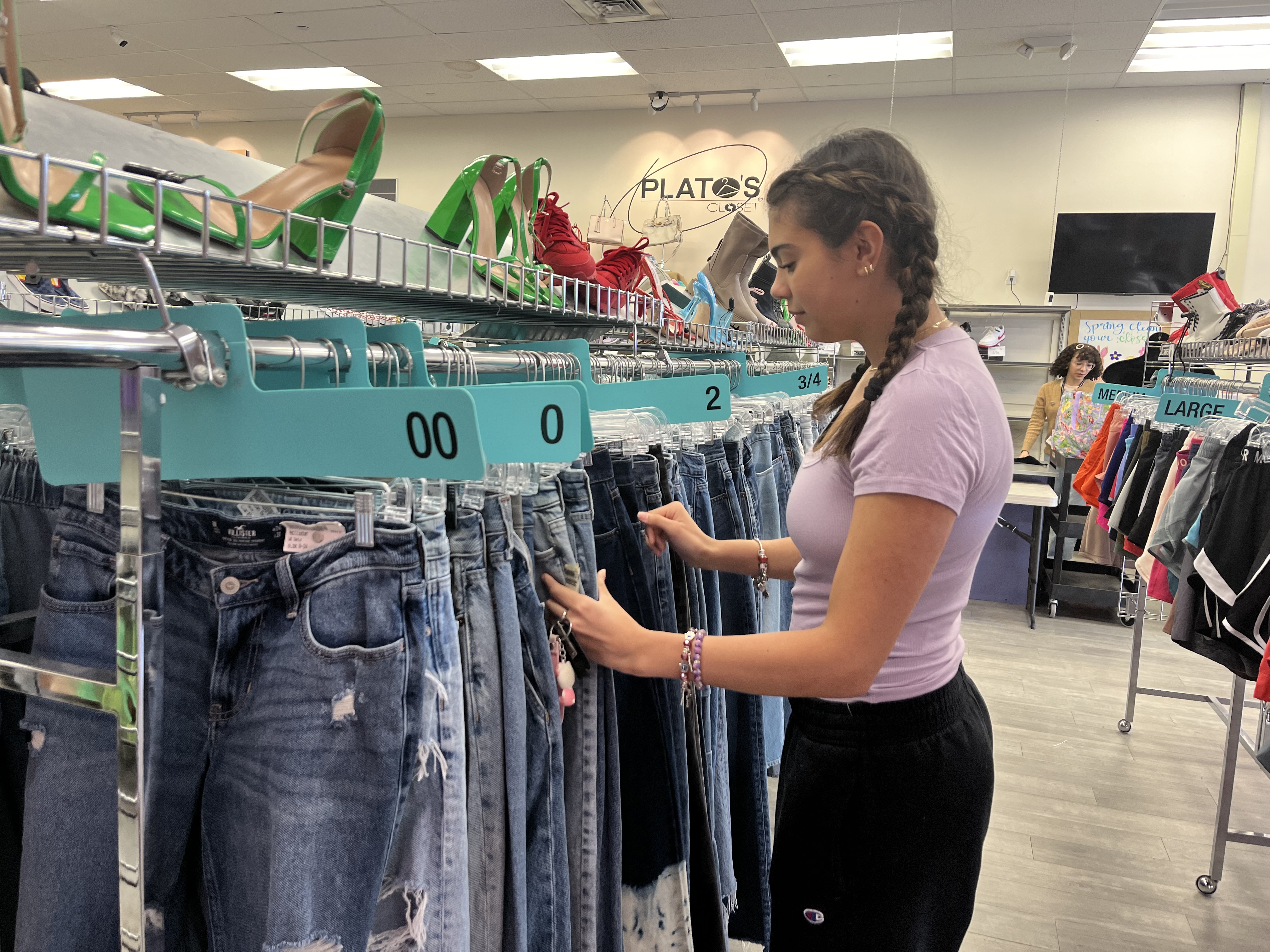
Plato’s Closet in Hamden features a variety of clothing such as t-shirts, sweatshirts, sweaters, jeans, dresses and shoes for a younger demographic.
“We cater to teens and young 20s,” said Rick Myers, owner of the Plato’s Closet in Hamden. “So I say like 14 to mid 20s. People of all ages shop our store. People of all ages can find things in our store.”
Myers explained the impact that the rise of fast fashion has had on his business.
“Our challenge is that, we’ve been in business going on 9 years, so many people now are buying very inexpensive items off the internet like SHEIN and brands like that,” Myers said. “So that’s what they have to sell to us. Do we buy that stuff? Yea, but don’t expect to get more than a dollar or two for those items because they are only three, four, five, six dollars online so.”
2nd Street
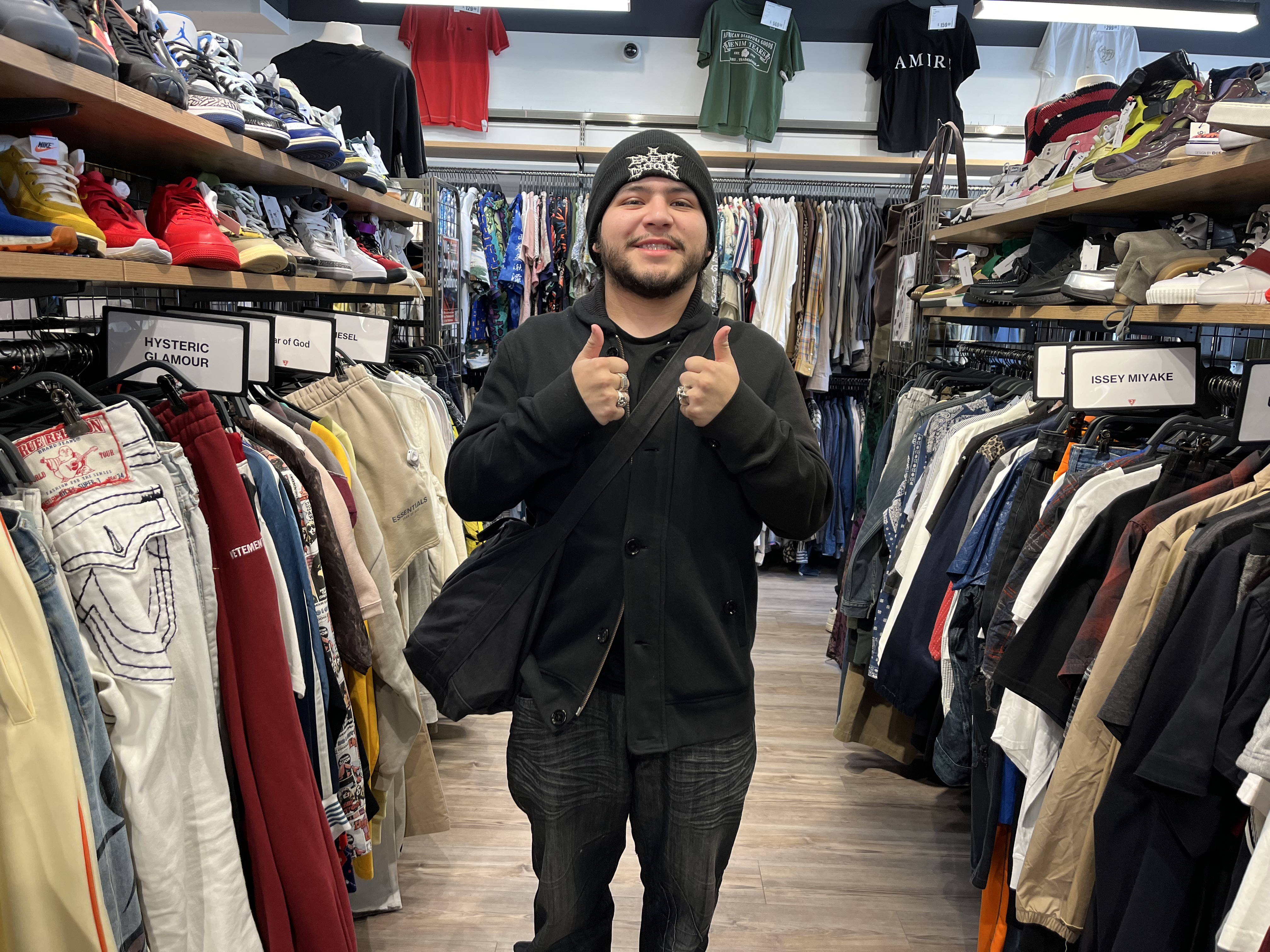
2nd Street in New Haven is lined with racks containing various forms of clothing such as t-shirts, sweatshirts, sweaters, sweatpants, jeans and even jackets in almost every color. They have shoes such as sneakers, heels and boots. As well as accessories such as handbags, wallets, belts and jewelry.
The store is divided into categories based on type of clothing, style and in some cases even by brand.
Jordyn Morris was in 2nd Street looking for particular fabrics such as velvets, leathers and clothes that are double stitched.
“This one piece right here (the jacket draped over her shoulder in above photo) that I just found, I think it’s so awesome because it’s weighty and I don’t really find that in something more modernly made,” Morris said. “Even the buttons are made out of, like, real metal and I think these are like glass and that’s not something you find at Urban Outfitters.”
Daviana Rodriguez has been to 2nd Street in New Haven a couple times and she said she typically thrifts in Texas where she is from because she said the prices are better and she finds better stuff.
“It has become this trend to thrift and I think that’s part of the reason why a lot of thrift stores are overpriced now, because it is becoming trendy,” Rodriguez said. “They can make a profit off of college students who otherwise wouldn’t need to thrift. I grew up going to thrift stores and I can’t imagine being that kid that needs to go to thrift stores now because you can’t afford even second- hand stuff now.”
Diego Lopez said he’s thrifted in the past but this was his first time shopping at 2nd Street. He said he usually shops for casual wear but on this trip he was looking for a suit.
“So right now I’m at the suit section,” Lopez said. “Suits can be kind of expensive. So if I want something form fitting, I maybe have to spend like $1000 to get like a tailored suit. So otherwise, it makes more sense to come here where I can find quality suits for not like an insane amount.”
Vintanthro Modern & Vintage
Vintanthro Modern & Vintage is not an average thrift store but a curated collection of vintage items ranging from candles, prints, household items and accessories such as clips and pins. They also have clothing such as dresses and even a children’s department ranging from clothes to books and toys.
Victoria Armentrout, manager of Vintanthro Modern & Vintage and one of the buyers, explained that her and Melissa Gonzales, the owner, grew up in different generations but both grew up with a relationship to vintage fashion collecting.
One of the ways they gather items is by going to properties that are being cleared out and they sort through whatever bins they have, said Armentrout. She also said that they have a section on their website where people can reach out with items that they want to sell.
The two shop around 2-3 times per week and bring in about 150 new items a week, said Armentrout. She added that they typically look for older vintage such as vintage GAP, Banana Republic, Levi’s, Ralph Lauren and Donna Karan, in terms of clothing.
“We try to pay close attention to fleeting pop culture fashion and so you know, if barrel jeans are doing their thing, we will look for barrel jeans,” Armentrout said. “If we should be shortening our skirts, then we’ll go back to some of our 1950s sets and we’ll take the minis instead of below the knee. We always try to find things that are colorful.”
Aside from clothing, Vintanthro Modern & Vintage sells a lot of candles in containers such as tea cups and ephemera which are older prints and graphic images, said Armentrout.
“They’re (the candles) priced by the ounce and they’re novel and a great gift,” Armentrout said. “So we sell a ton of candles, even though there are no fires allowed in dormitories I suspect there are some candles burning. We sell a lot of what we call ephemera, which are the older prints and graphic images and fashion imagery that’s all matted, or we sell them loose. Everyone loves in the fall to design their room(referring to college students).”
But, Armentrout explained that really people of all ages shop at the store.
“We get 10 year olds with their pocket money,” Armentrout said. “We get tons of college students on the weekends. We get mothers and daughters, we get post grads, young moms, because we have a kids department downstairs. It’s a very broad range.”
She said that the demographic has shifted because Westville in New Haven, where the store is located, has a lot of foot traffic because of cafes, brunch spots and pubs in the area. As well as other vintage stores such as Lower Forms.
Lower Forms is a smaller thrift shop in New Haven, compared to a larger chain like 2nd Street or Plato’s Closet.
“I really do have a good spread of all ages,” said Justin Bryant, an employee at Lower Forms, when asked about what ages typically shop in the store. “I want to say teenagers and like college students mostly, but it’s not a disproportionate amount. We get tons of parents, moms, grandparents, who like shopping here and like buying clothes here too.”
Bryant said that they always try to have what’s popular but they also have essential items such as work clothes.
Thrift stores versus fast fashion
Some people talked about the negative effects of shopping from fast fashion retailers.
“With fast fashion, I know it’s bad, but at the same time, the affordability is kind of where I’m grappling with everything,” said Caroline Daria who was shopping in Vintanthro Modern & Vintage. “If I do get fast fashion, I thrift it so that way it’s not as bad as me just contributing to the consumerism, if that makes sense. I have like a huge internal battle with fast fashion but overall, I like, don’t feel great about it.”
Some people mentioned how the affordability of it can appeal to college students.
“It sucks, obviously but it is kind of like, how do you avoid it,” Rodriguez said. Especially as like a college student, I can’t afford to be dropping like $200 on a dress, for a formal or something. So I think that’s kind of why thrifting is also a really nice alternative. But then when you come into a thrift store and like it’s like, $80 for a dress, what’s the point? So, I think fast fashion is unfortunately unavoidable, especially, if you don’t have the ability to buy outside of that.”
Some talked about the effect fast fashion has on the fashion industry as a whole.
“Fast fashion is killing fashion as a culture,” Morris said. “It’s a plight of cancer… I hate it very much, the essence of it, the waste byproduct of it. It is suffocating the earth, because humans are meant to consume and consume and consume. Well, not meant, but humans, by nature, consume and consume and there’s a certain point where if you don’t see exactly where that item goes, it’s not in your mind. You’re not thinking about like the 20-30 items that you threw out three years ago.”
Others touched on how it diminishes the worth of high-end fashion items.
“It destroys the worth of buying something,” said Alexis Aguirre who typically shops high fashion in thrift stores. “When a high fashion house makes something or invents something new, after a year or two of a gap, that’s when it becomes somewhat cheap and like Temu or SHEIN start remaking what they have and it starts becoming something way too easy to access.”
Will thrift stores actually benefit from the rise in tariffs?
With the price of clothing in retail stores and from fast fashion-retailers rising, thrifting could be a good alternative for consumers and local thrift stores may actually benefit from this.
“I think the second hand stores, thrift stores, second- life, consignment, we use all these fancy terms, initially they will benefit because a lot of people, they may consider buying a new dress or a new trouser, new shirt, new skirt,” Elahee said. “Maybe they’ll go to these thrift stores, because a lot of people, maybe they would sell stuff that’s out of fashion. They’re in good conditions. So the second hand market will initially get a boost.”