
While Cryptocurrency and Blockchain Technology are closely aligned, they are not the same. Cryptocurrency is a form of cyber payment which began in 2009. Cryptocurrencies are considered digital assets that represent value and are made possible through the use of Blockchain Technology. Cryptocurrencies are assets used as cryptocurrencies, crypto commodities and crypto tokens. (https://guides.loc.gov/fintech/21st-century/cryptocurrencty-blockchain). Cryptocurrencies are quickly becoming an exciting and competitive form of currency in the world of finance.
Blockchain Technology began shortly after the financial crash of 2008 when Satoshi Nakamoto developed “peer-to-peer electronic cash system where the protocol became the foundation for distributed ledgers called blockchains. These blockchains are public and operated by volunteers around the world allowing a person to send money safely to another without going through a bank or financial service provider.” (https://guides.loc.gov/fintech/21st-century/cryptocurrency-blockchain).
(Courtesy Canva)
Local Connecticut-based universities are designing and implementing curriculum specializing in the study of cryptocurrencies and blockchain. Quinnipiac’s own Professor, Tan Gurpinar, has spearheaded the rise of blockchain and cryptocurrency studies through the Business School at QU. Most recently, Professor Tan helped organize and select panelists for the 2025 Game Forum conference in NYC where I was able to interview two experts in cryptocurrency David Han, Institutional Research Analyst for Coinbase and Jamie Pielock, Vice President Head of Sales EDX Markets.
In 2024, Professor Tan and other QU colleagues, compiled a large amount of research to include data from around the country showing the growth of blockchain technology programs being offered in higher educational environments. Quinnipiac is joined by The University of Connecticut’s advancements in the study of FinTech along as are Yale University and Trinity College.
Top Cryptocurrencies – Names and Symbols
| Ticker | Name |
| BTC | Bitcoin |
| ETH | Ethereum |
| USDT | Tether |
| BNB | Binance Coin |
| USDC | USD Coin |
| XRP | Ripple |
| ADA | Cardano |
| DOGE | Dogecoin |
| MATIC | Polygon |
| SOL | Solana |
(https://www.forbes.com/advisor/investing/cryptocurrency/top-10-cryptocurrencies/)
With no real clear academic path, many higher education institutions scrambled to designed and implement classes and programs in the study of Blockchain and Cryptocurrency where the opportunities are many for new explorers of the FinTech age. Here are some of the things Professor Tan sees coming down the pike here at Quinnipiac as this program broadens to accommodate and assist providing QU students the tools they need to be successful in this new world.
https://www.youtube.com/watch?v=Wcu3cb6ON7E (Interview with Professor Tan)

According to Professor Tan, Assistant Professor of Business Analytics and Info Systems at QU, “There are many opportunities for college graduates to get in on the ground floor in the world of cryptocurrency and blockchain as long as they understand the fundamental concepts.” Tan believes one does not need to be an accounting or computer science or engineering major to jump in, right now, just the desire to learn and the ability to understand the concepts behind this new cyber currency exchange. Professor Tan feels that there is unlimited growth potential for young people who are interested in working in this industry.
A point in case is former QU alumni student who holds a BS degree from the School of Business, Ryan Stuebe. Fidelity began mining in 2015. Stuebe got in early and was able to help pioneer one of the world’s foremost financial institutions in their new cryptocurrency and blockchain division where he rose very quickly. He is currently Vice President of Bitcoin Mining in Fidelity Center for Applied Technology. (https://fcatalyst.com/meet-the-team/ryan-stuebe)

https://www.fidelity.com/crypto/overview
In 2024 Professor Tan and several colleagues collected data and published “A Review of Blockchain Technology Programs in Higher Education” hoping to seek relevant information about higher education’s commitment to this new world. They found that “Blockchain technology has emerged as a transformative force across industries, promising enhanced security, transparency, and efficiency where the collaborative nature of blockchain integration underscores its complexity, as it requires coordination across multiple functions, each contributing its unique discipline and expertise.” Tan and his QU colleagues go on to say, “Integration and operation of blockchain solutions necessitates a holistic approach that considers interdisciplinary cooperation and management.” Tan’s report details how universities around the world are charging forward and building better curriculum around this new area of cyber business, security, and information technology; they have to in order to compete in what will be the future of finance and many other disciplines.
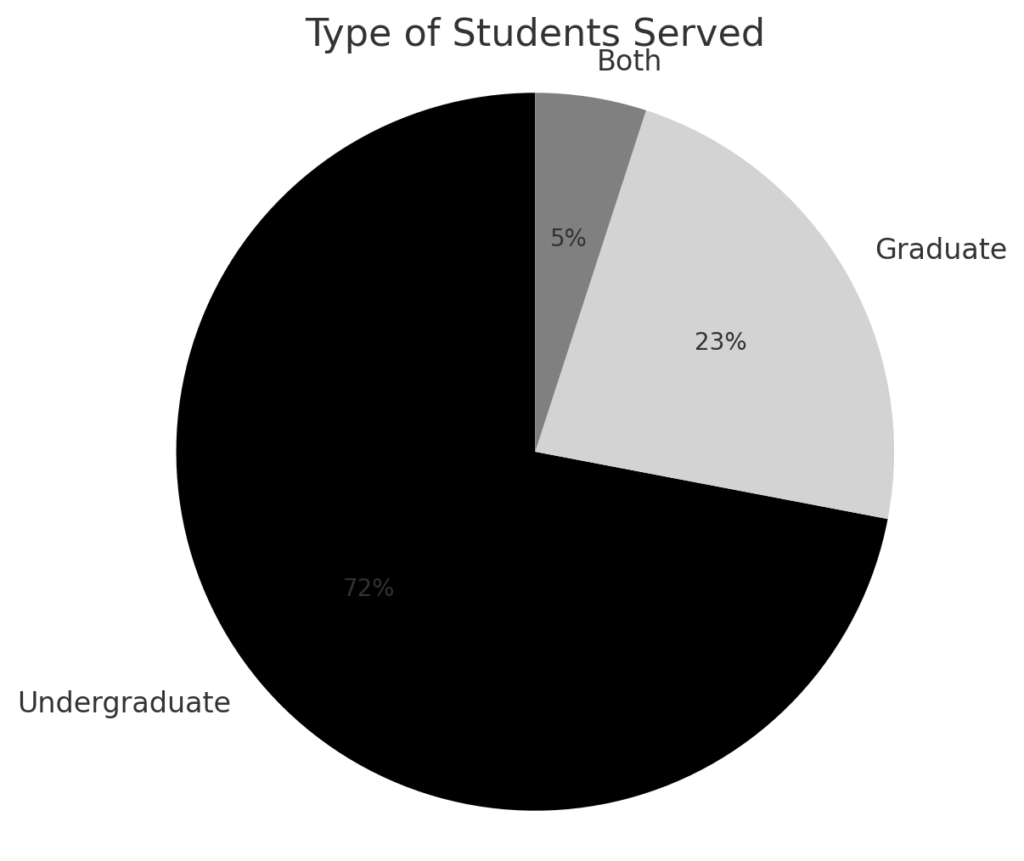
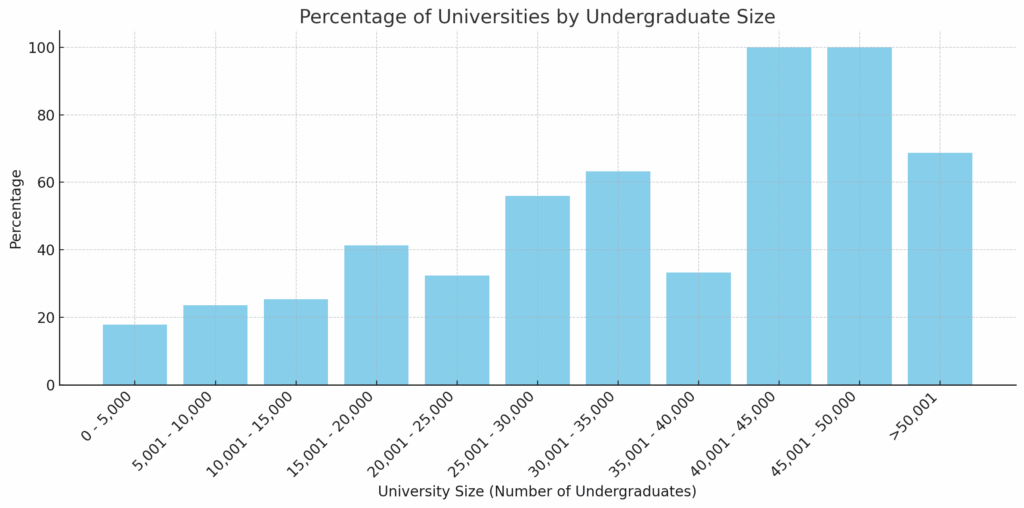
Below are two studies that Professor Tan and his colleagues performed. The first shows that, “In general, universities that have a larger undergraduate population offer at least one blockchain course. Universities with 25,001 to 30,000 students have 56% offering at least one blockchain course. Those with 30,001 to 35,000 students have 63.2% offering at least one course. Ultimately, all the schools reviewed with an undergraduate size of 40,001 to 50,000 offer at least one blockchain course.
The second study shows that the majority (72%) of blockchain courses being offered are at the undergraduate level, 23%at the graduate level, and 5% can be taken at both the graduate and undergraduate level.
(https://cryptoforinnovation.org/crypto-courses-are-growing-heres-why/)
Some of the world’s higher academic institutions are encouraging the study of cryptocurrencies and blockchain and in some cases offering to take cryptocurrency for tuition payment. This is a clever way to entice younger people to attend their new academic programs who are already knowledgable about the world of cryptocurrency. (https://www.tradingview.com/news/todayq:49ab57b1c094b:0-the-rise-of-crypto-education-from-courses-to-campus-payments/)
University of Connecticut was early to jump on board developing a Financial Technology major in 2010 to include undergraduate classes in the foundations of Fintech offering: Fin-Tech Economics and Business Models; Introduction to Cryptocurrency and Blockchain Technology; Mobile Application Development; Risk, Trust, and Modern Security; and Career Development in FinTEch. (https://undergrad.business.uconn.edu/academics/majors/financial-technology/). UCONN also has a masters program in FinTech (https://fintech.business.uconn.edu/programs/ms-in-fintech/).

Additionally, UCONN has a very active student-run program dedicated to Cryptocurrency and Blockchain Cryptocurrency and Blockchain Club. UCONN’s article “Bitcoin Believers” attempts to breakdown the mystery behind Cryptocurrency using Bitcoin as an example where author, Peter Nelson, explains how UCONN’s Professor David Noble uses pizza and poker to explain Bitcoins. (https://magazine.uconn.edu/2018/05/04/bitcoin-believers/)
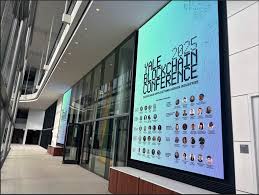
In August of 2022, Yale University received a 5.7 million dollar grant to be used over 5 years to fund PAVE: A Center for Privacy, Accountability, Verification and Economics of Blockchain Systems. Yale has historically offered fewer than half the blockchain-based courses that Cornell has, but with this new grant Yale will be a bale to amp up its blockchain research to become a contender in the new world of cryptocurrency and blockchain.
Yale’s new center will be focused on courses in blockchain design, security, economy regulation and cryptocurrency and will find the most talented students they can to help them broaden their academic scope in this area. Yale has a very large student run Blockchain Club where the university will pull their most talented students on board the PAVE program
(https://www.coindesk.com/layer2/2022/09/26/best-universities-for-blockchain-2022-yale-university)
(https://engineering.yale.edu/news-and-events/news).
Trinity College in Hartford aggressively jumped into the academic world of cryptocurrency and blockchain partnering with Ripple (a cryptocurrency platform launched in 2012 by Ripple Labs) and Trinity College Dublin, Ireland) to advance blockchain technology as it pertains to cryptocurrency and cyber security. Ripple is committed to this academic collaboration (UBRI) University Blockchain Research Initiative giving $50 million to start; it has grown substantially since UBRI began. UBRI’s partnership with 50 universities and 26 countries also shows its level of commitment to partnering with Trinity College in “Forging a Blockchain Revolution” (https://coinmarketcap.com/academy/article/b68dd90b-788e-43a6-b4a3-05b6da5fb449)


Professor Tan helped organize the blockchain section of the event which took place on April 12th, at the 2025 Game Forum in NYC, at the Marriott Marquis. The event proved to be a thrilling experience for the students who participated.
Two of the featured panelists sat down with students to answer questions after their presentations.
Jamie Pielock, Vice President and Head of Sales at EDX Markets, and a 2015 graduate of Trinity College, was happy to share his work experience. When asked how he got his start at EDX Markets, Pielock shared that he had initially worked with TS Imagine, a cyber trading company in New York. He later became the Director of Sales and Training at Sterling Trading Tech, which eventually paved the way for his current position at EDX Markets.
The interview then turned to digital assets, where Pielock expressed his thoughts on cryptocurrency. Pielock was familiar with the Ledger Hard Wallet and the associated risks around these Wallets, particularly regarding the storage of customer seed phrases. Pielock admitted that he wasn’t fully up-to-date on the issue, but acknowledged it as a concern.
When asked about his favorite cryptocurrency, Pielock explained that he didn’t have a particular favorite, but expressed a preference for ETH and BTC. He then turned the question back to the students, who shared their admiration for ISO2-compliant coins such as XRP, XLM and HBAR.

David Han, an Institutional Research Analyst for Coinbase, was asked about the differences between Cold Wallet Exchanges and Centralized Exchanges like Coinbase and Binance. When asked for his perspective, Han explained, “Platforms like Coinbase are naturally positioned to serve users who prioritize convenience and ease of use over the technical details of security. Coinbase and platforms like Coinbase are naturally positioned to serve a certain kind of customer—people who prioritize convenience and ease over the technical nuances of security.”
Han also mentioned that many users are not keen on the complexities of managing private keys or setting up Cold Wallets. “Even if cold wallets offer more security, platforms like Coinbase will likely continue to thrive by offering a smooth, user-friendly experience,” he noted.
The conversation then shifted to the future of Stable Coins. When asked whether he believed Stable Coins would play a central role in the future of finance, especially with the USD being at risk, Han said, “I don’t foresee Stable Coins taking over, but he did express optimism about their potential impact.

A growing number of students are discovering ways to engage in cryptocurrency and blockchain across various academic fields. One communications student, highly interested in the subject, was excited to learn that sports and crypto are rapidly merging disciplines—two areas that closely align with their passions. They pointed to an eight-week “cutting edge” Sports Cryptocurrency Course that explores how the sports industry can and will benefit from sports cryptocurrency and NFTs (Non-Fungible Tokens) in major leagues such as the NFL, NBA, NHL, and UFC. Fourth year Computer Science major at QU, Kash Syla says, “I have loved the UFC for so long and seeing how involved they are getting with cryptocurrencies is really exciting because it brings both of my passions, sports and cryptocurrency together.”
(https://www.sportsmanagementworldwide.com/courses/sports-cryptocurrency).
Interview with Derek Danis
Fourth-year QU Computer Science major, Derek Danis, shared how he got involved in blockchain and cryptocurrency. He explained that he had been studying the topic independently for a while before discovering a class being offered at Quinnipiac University during his junior year. When he saw the course offered, he eagerly enrolled, and it was through this class that he met Professor Tan.
Danis said he loved the class. His favorite part was the final project, which involved designing a white paper for a cryptocurrency of the student’s choice. He described the experience as, “Very interesting, and while I initially didn’t think i would know how to do it, my background in self-study and understanding of cryptocurrency concepts helped him succeed in creating the final project.”
Interview with Brendan Quinn
Fourth-year Business major, Brendan Quinn, is taking Professor Tan’s class this Spring semester, and was eager to share his experience. Quinn went into the class not knowing much about blockchain or cryptocurrency. “When you enter the class, Tan teaches you really well so you can understand it from the beginning to the end, and you really gain a lot of knowledge,” said Quinn. Quinn also said, “I really enjoyed the class and that it is honestly something I’ve become really interested in perhaps pursuing as career.”