
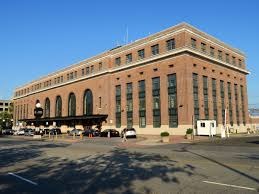
When you ride an Amtrak train into New Haven, Connecticut’s Union Station, you are greeted with the familiar sights of a Metro North railyard, more tracks than you can count and a giant brick building.
“This block has looked the same for years – a lot of empty space, a few older buildings that haven’t been used in ages,” says local resident Alicia Bennett. But soon, the downtown New Haven greeting card will be getting a face lift, as the welcoming scene will start to feature the beginning stages of long-term construction.
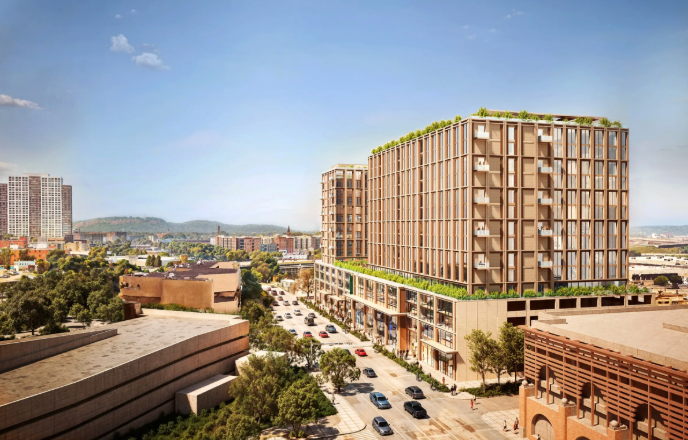
All across the city, there are new housing projects either already in progress or set to be under construction next year. The biggest one is the new development by Union Station, which, according to Polanski, will include just under 500 new apartments, 118 of which will be affordable units, alongside more than 28,000 square feet of retail and commercial space, 26,000 square feet of residential amenities, and 294 parking spaces to serve both tenants and transit customers.
The simultaneous smaller developments include projects on State and Crown Streets, as well as at Wooster Square and West Ridge. All of which say they have the city’s best interest in mind, as each of these developments are part of a collective effort to improve New Haven and the surrounding area.
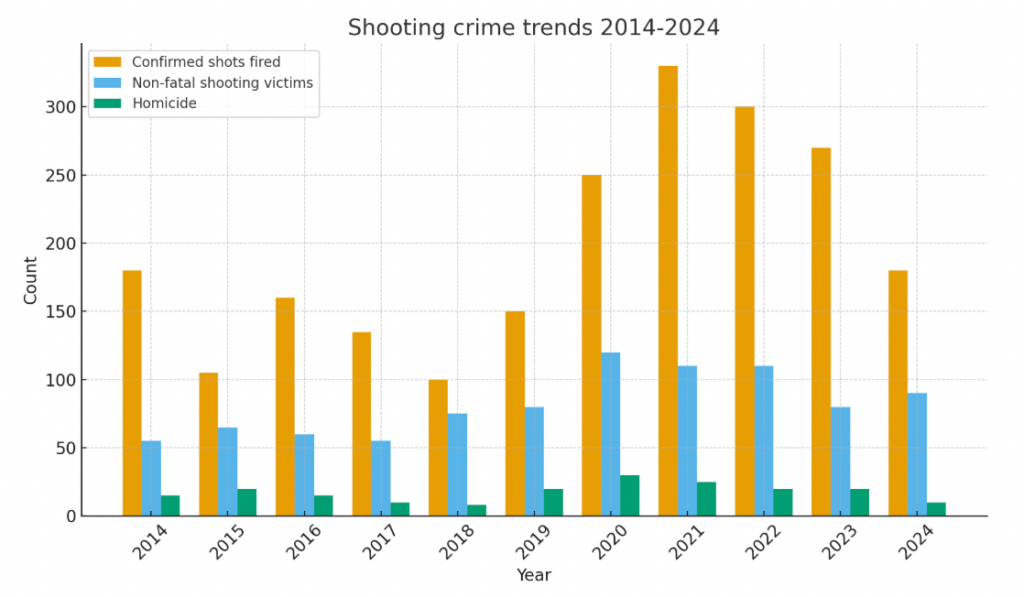
New Haven has consistently claimed a crime rate higher than the national average, but recent statistics show a decline in the current year. Violent crime decreased by 46% in the first half of 2025, compared to the same period of 2024, according to Neighborhood Scout.
[COURTESY OF NEW HAVEN INDEPENDENT]
With the city seemingly taking a step in becoming a safer and more desirable place to live, especially for people who are financially well-off, the Connecticut Department of Transportation decided the time is now to take initiative and get the Union Station project off the ground.
Governor Ned Lamont is hopeful of the impact these developments will have on the city of New Haven, and the rest of Connecticut’s metropolitan cities.
“This is exactly the kind of forward-thinking development we need to see more of in Connecticut,” Lamont said. “We’re creating new housing, including affordable units, while strengthening public transit and growing the local economy. It’s a win for New Haven and a model for the rest of the state.”
Local resident James Rodriguez had some strong thoughts on New Haven’s future.
“There’s been a lot of talk about transforming this whole area once construction kicks off in 2026. It’s exciting, but I think people are still a little unsure what it’ll mean for the neighborhood,” Rodriguez said. “Union Station is such a big part of New Haven, but the area around it could definitely use a boost. I just hope that the development doesn’t turn into another luxury complex that regular residents can’t afford.”
When asked about the high number of affordable housing units planned, Rodriguez responded with a smile.
“That’s one of the things that gives me hope. Affordable housing is in short supply right now, and it’s driving a lot of people out. If the city really sticks to that 25% or whatever it is, and makes sure those units are genuinely affordable – not just “affordable” by technicality – then this could make a real difference for working families.”
As seen on the map above, Union Station is not the only part of New Haven getting a facelift. There are major developments happening all across the city, one of which is right down the street from the train station at 10 Liberty Street.
Ground was broken in November 2025 for this new, 150-unit affordable housing complex downtown. The idea behind all of this building is to bring new, wealthier individuals to town in an effort to bring more of a balance to the city, according to Zaretsky. Local residents are optimistic about the new changes, but skeptical as well.
“‘Affordable’ is one of those words that can mean different things depending on who you ask,” says Bennett, the New Haven resident. “If they’re serious about keeping units available for people in the neighborhood – teachers, service workers, folks earning regular wages – then it could help stabilize the area. If not, it’ll just attract outsiders who can afford higher rents and shift the neighborhood dynamic,” she said.
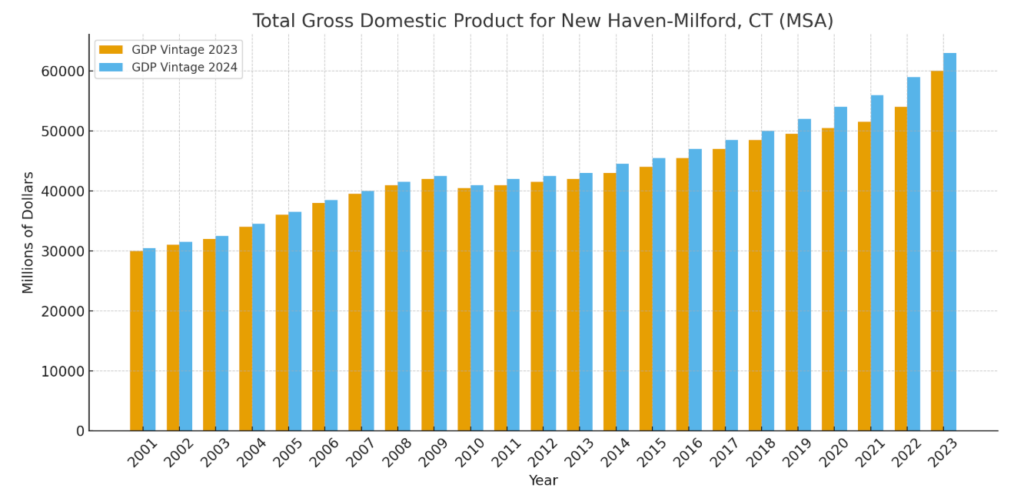
Other residents had similar opinions on the matter, as all of these new projects are sure to include affordable units. The feeling around the city among those who live there is that if managed right, it can be monumental in New Haven’s effort to lower crime rate even more than it already has been, as well as boost the local economy with all new money entering the city. A city, by the way, that has already seen a consistent increase in economic success over recent years.
[COURTESY OF FEDERAL RESERVE BANK OF ST. LOUIS]
Critics say that affordable housing comes with crime, just based on the idea that the people moving into these units are not as well-off financially as others, but there is no factual evidence to support that. In fact, a study done by Colgate University found that building new affordable housing can actually lower crime rates and increase property values in the surrounding area. This is likely due to the economic benefits that affordable housing can bring to a community, such as allowing essential workers to live in the community they serve.
Daniel Price, a resident of the high-crime Winchester neighborhood sees a lot of potential in the new building going up there.
“The area’s been improving, but there are still empty parcels that feel stuck in limbo. Housing could bring more activity and make the green feel safer at night,” he said.
The Winchester Green section of New Haven has also seen improvements over the years but the general consensus among people who call that area home is that when the sun goes down, you would be well-advised to avoid it. But with the hope that the new building will bring a fresh group of tenants and, perhaps, a small business or two – as Price mentioned his desire for a small cafe or grocery store nearby – New Haven locals are seeing a brighter future for the Winchester neighborhood.
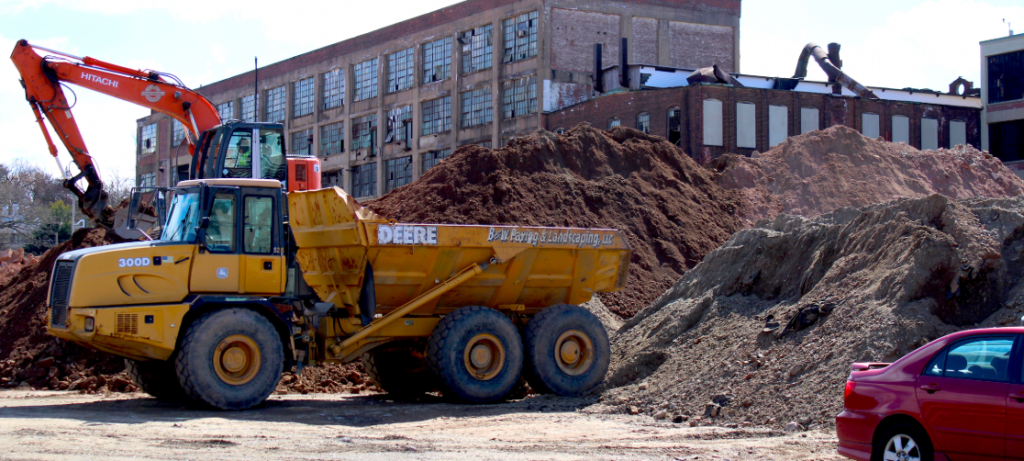
Another aspect of the new construction that should not be overlooked is that of the number of jobs that have been and will continue to be created. From contractors to carpenters and everyone in between, these projects are beneficial to many.
Shaun Donnelly, a carpenter on site at the Wooster Square development spoke candidly on that very subject.
“A lot of the people doing the physical labor on these sites live in New Haven and they deserve housing options too,” he said.
Donnelly continued to discuss how these projects, if successful, could have even more of a domino effect on the city, saying, “Once one building goes up successfully, developers start looking at nearby lots. It can kick off a whole wave of projects.”
And if Union Station’s massive project was not enough, or the Winchester Green and Wooster Square developments, or the new apartments on Liberty Street, there’s still one more block that’s getting a makeover. Over on the corner of State and Chapel Streets, in the Ninth Square neighborhood of the city, a brand-new 1,000-unit complex is set to be completed shortly. In addition to that, a recently-approved building on George Street is expected to house 171 apartments – 51 of which will be deemed “affordable,” with income limits ranging from 30 to 80 percent of the area median income (which currently translates to an annual income of between $27,300 and $72,800 for a two-person household), according to the New Haven Independent.
Maya Thompson, who grew up and still lives in the Ninth Square section of New Haven, sees both good and bad with these changes, and hopes the neighborhood doesn’t lose its charm.
“Some people don’t love the change, but I think new residents will keep the arts and food scene alive, which is important to me and I think you could say the same about most of us that live here,” she said.
Thompson continued, “A lot of artists and service workers used to live here and many have already moved out. I hope this project gives some of them a chance to come back.”
When asked about how these projects have affected daily life in Ninth Square, Thompson was understanding of needing to give in order to take as well.
“There’s been more noise, more traffic, and more waiting at crosswalks. But also more business for the shops here, so there’s obviously good and bad,” she added.