
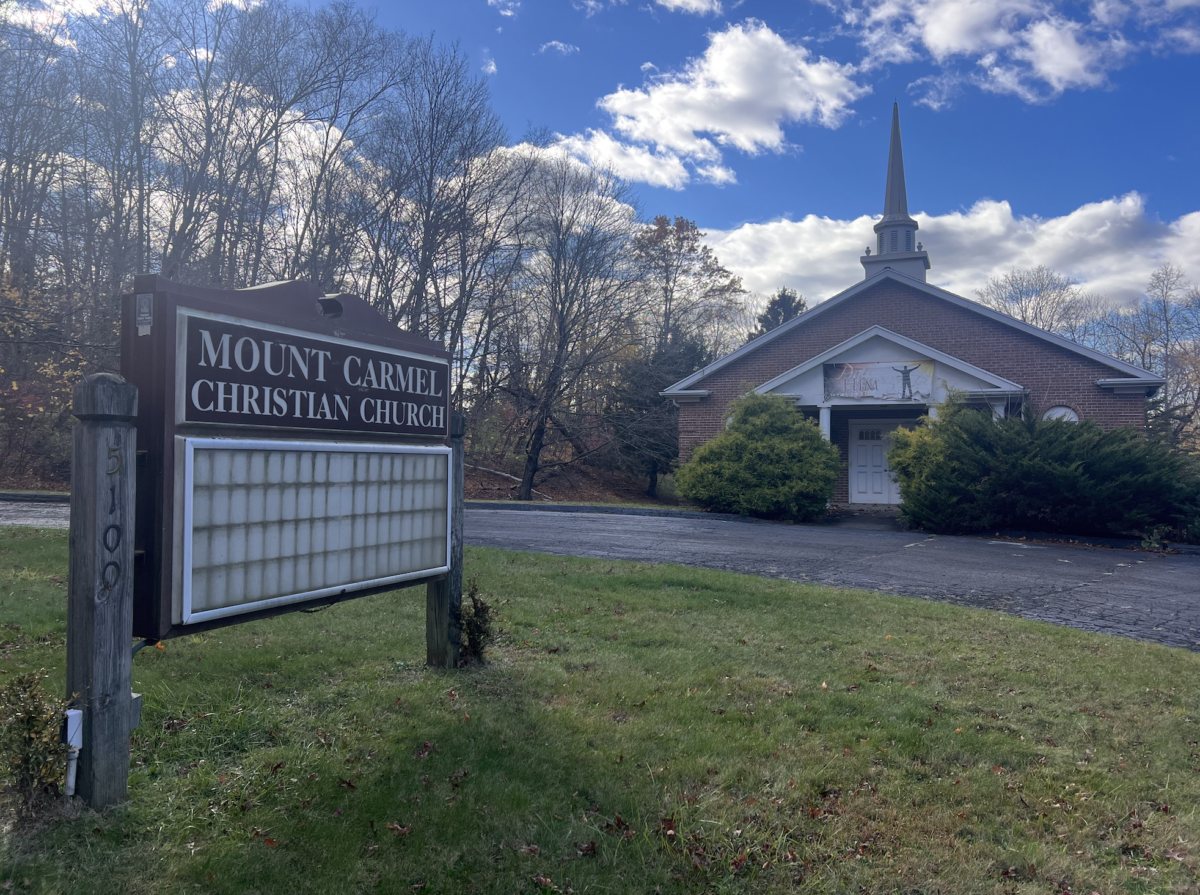
Along a narrow residential road, just over the North Haven-Hamden border, sits a former church.
The small brick building is held by the hillside. The church’s steeple juts perfectly straight, perpendicular to the paved, half-moon driveway that connects the aged sanctuary to the windy neighborhood road.
Unkempt bushes overtake the front door. Just above the entrance rests a weather-worn sign. It’s barely legible from a distance.
It says, “Praise him.”
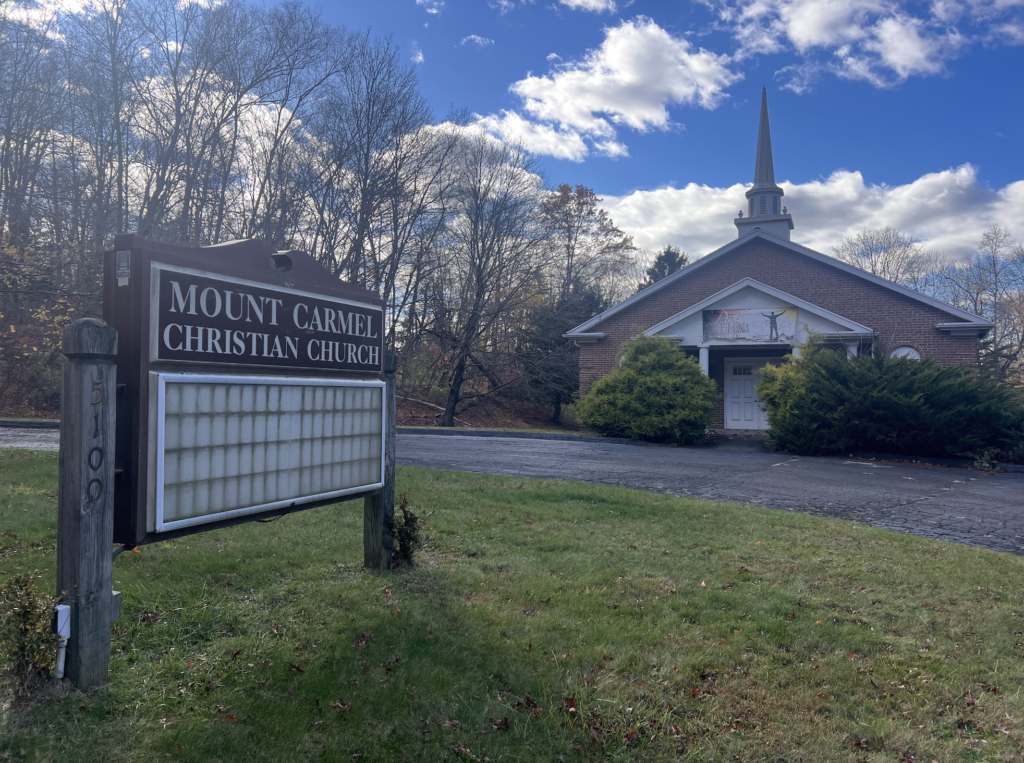
There are no messages on the sign out front. All it says is the building’s old namesake: Mount Carmel Christian Church.
credit: Geneva Cunningham
The church was built in the 70s. It has since been decommissioned.
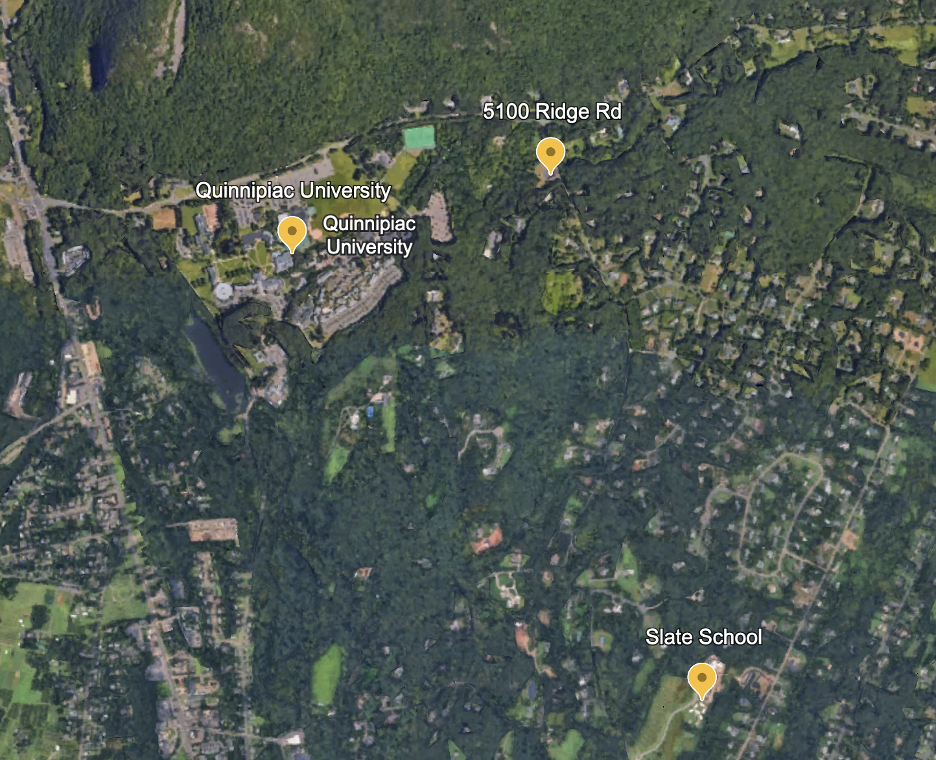
Slate School and Quinnipiac University, two local institutions, saw an opportunity to re-imagine the building and its surrounding space at 5100 Ridge Road, North Haven.
credit: Google Earth
Both saw a future educational setting for older learners.
But both institutions faced serious pushback from neighbors, leading petitions and lawsuits spanning several years.
Slate School is an independent K-12. Its philosophy is nature-based, interdisciplinary studies. It envisioned creating an ‘Upper School’ for older students among rich wildlife.
The ‘Upper School’ would pair with their Lower School for grades K-6. It would hold approximately 90 students in grades 7-12.
In March 2019, Slate School purchased 5100 Ridge Road for $700,000, according to the Town of North Haven’s property records.
It submitted a special land use proposal to the North Haven Planning and Zoning Commission in November 2020.
The project would span three acres across three locations, 5060 Ridge Road, 5100 Ridge Road, and 5200 Ridge Road, per Patriquin Architects.
The ‘Upper School’ would have an outdoor amphitheater, a large storm water retention pond, an expanded septic system, the installation of lights and parking spaces.
The project called for a widening of Outer Ridge Road, according to residents.
“We are concerned,” said Maria V. Acampura. “We are not sure if the road can be widened.”
Acampura has lived at 5060 Ridge Road since 2008. She requested the Planning and Zoning Commission mark the road with flags so others could see where the developments would be.
Another resident, Johanne Mangi of 5 Lindsey Street, felt similarly. She wondered why anyone would think the site was suitable.
“The scale of the project is so overwhelming for the site that the road needs reconstruction and an unproved septic system,” Mangi said.
While Susan Hoyer Dannenhoffer, of 1277 Mount Carmel Ave., said Slate School’s plans threatened the town’s character.
“Preserve the sensitive ecosystem of this area of our town,” Dannenhoffer said. “Preserve its pastoral character, adhere to the POCD [North Haven’s Plan of Conservation and Development] and deny this application.”
North Haven’s Plan of Conservation and Development records demographics, existing or proposed land use, and strategies for land use and zoning in the town. It is 112 pages.
Goals expressed in the POCD prioritize the protection of high-quality wetlands and their ecosystem services, encouraging appropriate use of the wetlands and improving the visual character and sense of place in the Town Center.
Several residents cited the POCD in their letters to the North Haven Planning and Zoning Commission as reason to deny the proposal.
Other community members were focused on the potential positive impact that an ‘Upper School’ could have on North Haven’s educational character.
Kathleen Mountcastle grew up in North Haven. At the time of her petition to the Planning and Zoning Commission, she was a college sophomore at Salve Regina University in Newport, Rhode Island.
She believed an ‘Upper School’ would elevate the town to new levels of excellence in student-centered education.
“I understand firsthand, the educational experience in North Haven, and I believe in the promise of a great education that’s available for all future students in our town,” Mountcastle said.
Kathleen Mountcastle is also the daughter of Julie Mountcastle, who heads Slate School.
credit: Geneva Cunningham
Mary M. Quinn-Devine, a retired teacher, also endorsed Slate School’s plans.
“An excellent, expansive curriculum, skill in nurturing and guiding student’s curiosity, and intentional concern and care for the environment,” Quinn-Devine said. “Their intent to preserve and repurpose the abandoned church building is a noble undertaking.”
Oppositional voices to preserve the area spoke out louder.
At the public hearing, residents saw the plans as a hamper to North Haven’s allure. They feared potential economic impacts and wildlife concerns, light and noise pollution and increased traffic.
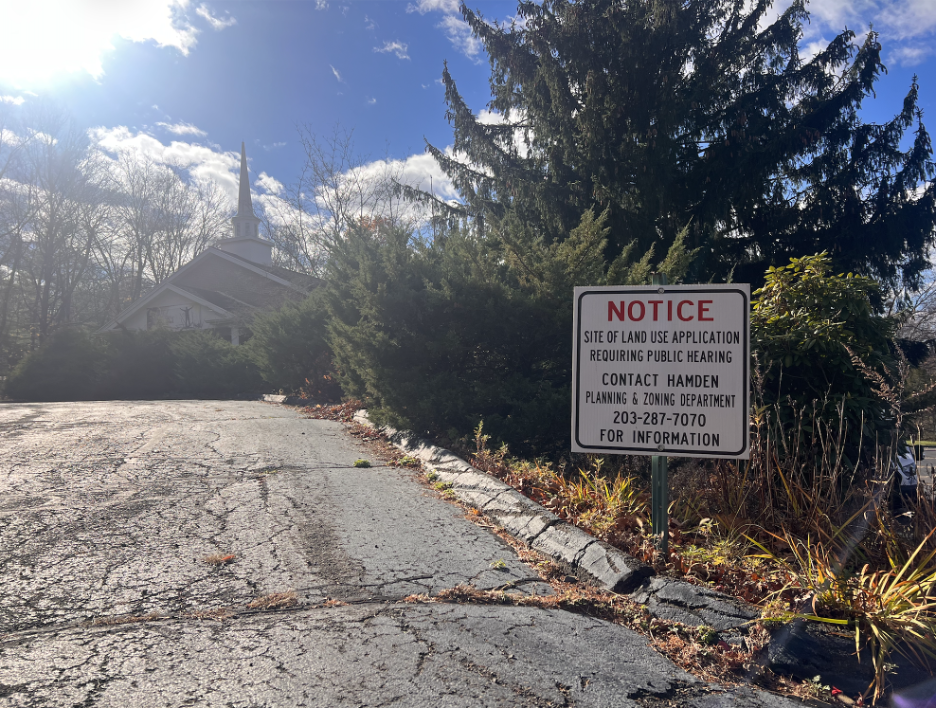
credit: Geneva Cunningham
After four months, 83 pages of resident letters, and a change.org petition with 45 signatures as of December 2025, the Planning and Zoning Commission denied Slate School’s special permit and land use request.
The vote was 3-2 against, according to meeting minutes.
Slate school appealed the decision at the New Haven Superior Court. The school argued that the decision was made by factors outside the zoning regulations.
In 2022, Slate withdrew the appeal. They went back to the drawing board and drew up a different plan for the “Upper School.”
This time, the Planning and Zoning Commission approved.
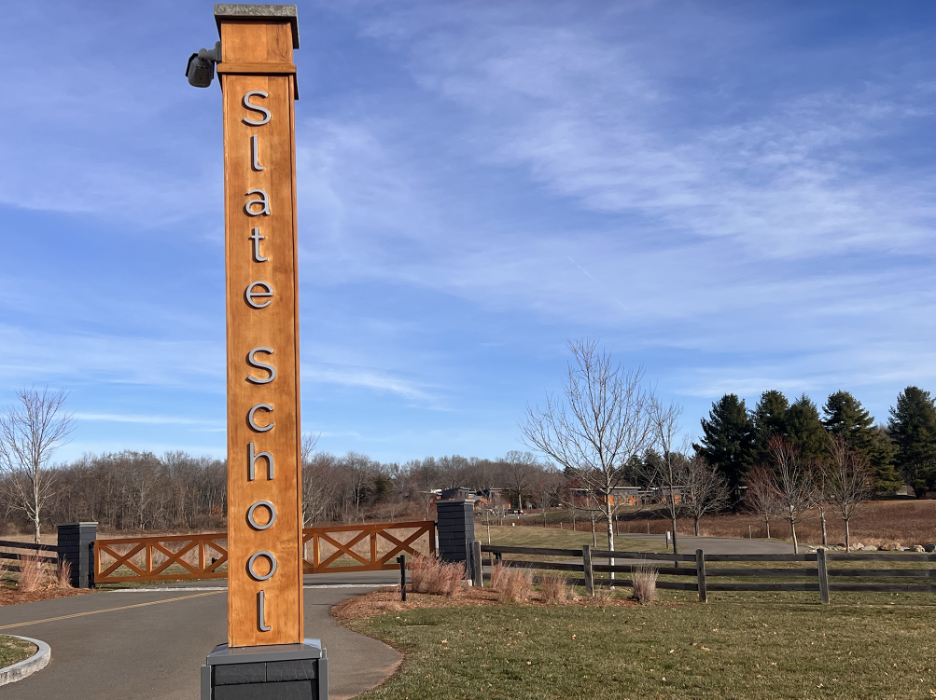
The Upper School opened in Fall 2024 on Kings Highway, nearly adjacent to the Lower School, located at 124 Mansfield Road, North Haven.
Both Upper and Lower Schools are on the same 40-acre campus.
The Upper School plans to grow by one grade each year. It will reach full capacity of 90 grade 7-12 students in Fall 2029.
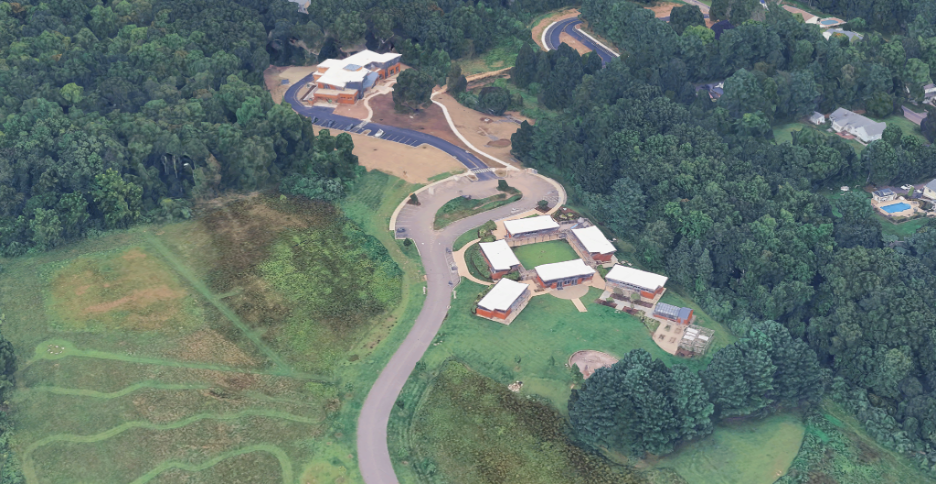
credit: Google Earth
In March 2024, Slate School also gave up the rights to 5100 Ridge Road. They gifted it to Quinnipiac University for free, according to property records.
Quinnipiac envisioned the former Mount Christian Carmel Church to be a new University Lifelong Learning Center, per court documents.
It would be a space for adult learners and career professionals that offered workshops, symposiums, and panel discussions on education, health, communications, and technology, according to John Morgan, the school’s associate vice president for public relations.
Quinnipiac was not able to begin construction until they received approval from the North Haven Planning and Zoning Commission.
The first public hearing was set for September 2024 and postponed to October.
At the public hearing, residents echoed similar concerns as they did in the Slate School controversy. They argued traffic safety, light and sound pollution, ecological impacts, decreases in property values would change the character of the neighborhood.
Quinnipiac revised its plans. North Haven Planning and Zoning Commission members said this was admirable, but they still resisted.
A real estate consultant by the name of Stanley Gniazdowski advised against Quinnipiac’s proposal in a direct reference to Slate School’s application.
“After analyzing the 2021 Slate School application denial of the current Quinnipiac University proposal,” Gniazdowski said, “[the] education center is a more intense use than the Slate School application.”
The Planning and Zoning Commission denied Quinnipiac’s application. The decision was unanimous.
Quinnipiac filed an appeal in January 2025, arguing the denial was unsubstantiated. The university alleged two North Haven Planning and Zoning Commission members, Mark Parisi and Roderick Williams, had conflicts of interest.
Parisi was an alternate at the time of the vote on Quinnipiac’s special permit application. He happened to be a voting member that day because a full member, Ken Quick, did not sit for the vote.
Quick tried to comment during deliberation. He was denied the opportunity to speak because he chose to not sit for the vote.
“Even though I was part of the beginning?” Quick said.
The committee members said no. They invited Parisi to speak instead.
Parisi said Quinnipiac’s proposal for the land was intense for him, since he has a personal connection to the area. He said he grew up in the cornfields where the church now sits.
credit: Town of North Haven Government Television
Though Parisi was not a Planning and Zoning Commission member during the Slate School controversy, Williams was. In the town’s meeting broadcast, Williams recalled the previous application as reason for denial.
Williams joined the commission as an alternate in November 2019.
He has lived in the neighborhood for the past 16 years, according to his statement in the meeting.
He did not recuse himself in the September 2021 vote on Slate School’s proposal, nor the vote on Quinnipiac’s proposal.
Quinnipiac accused both Williams and Parisi of failing to recuse themselves, and for that reason, the board’s denial should be reversed, according to the New Haven Register.
The town of North Haven’s ethics code upholds officials and employees to act in the best interests of the town and its residents and not in self-interest.
The code also states that if a conflict develops or is discovered after proceedings have begun, the conflicted member should inform the chair and recuse themselves as soon as possible.
Both Williams and Parisi were re-elected this past November, with Williams as a full member and Parisi as an alternate, despite controversy with Quinnipiac University’s ongoing lawsuit against the Commission.
According to the State of Connecticut Judicial Branch’s Superior Court Case Look-up, the lawsuit has not yet progressed to a formal hearing.
QNN reached out to Quinnipiac University for an update. The university declined to comment on pending legal matters.