
By: Hannah Freshman
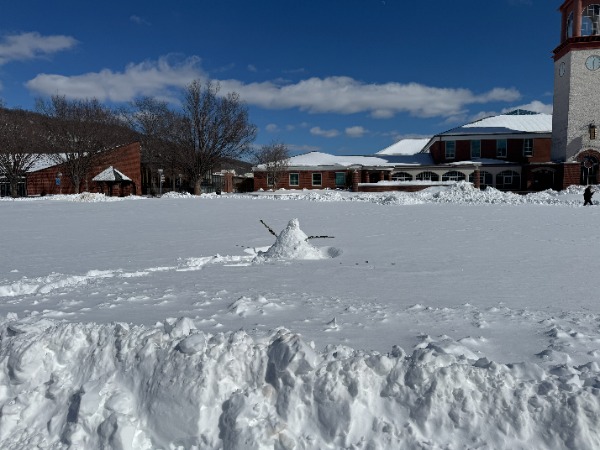
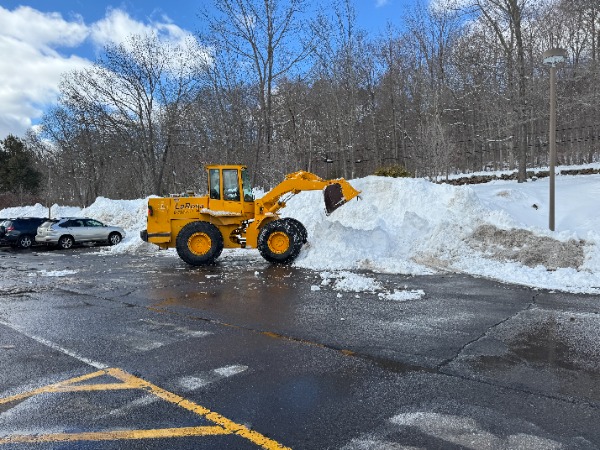
A winter storm dropped nearly 19 inches of snow in Hamden Monday, shutting down schools across Connecticut and forcing Quinnipiac University to hold virtual classes on Feb. 23. The next day, the university delayed the start of in-person classes until 10:30 a.m., but students still had to navigate snow-covered lots and streets to get to campus.
For students commuting from off-campus housing, the delayed start did little to ease the challenges. Genevieve Brintnall, a senior double-majoring in economics and environmental science, described her experience.
“I haven’t been able to attend classes this week unless they are remote—the snow has made it unsafe for me to drive with an unreliable car,” Brintnall said.
By: Genevieve Brintall.
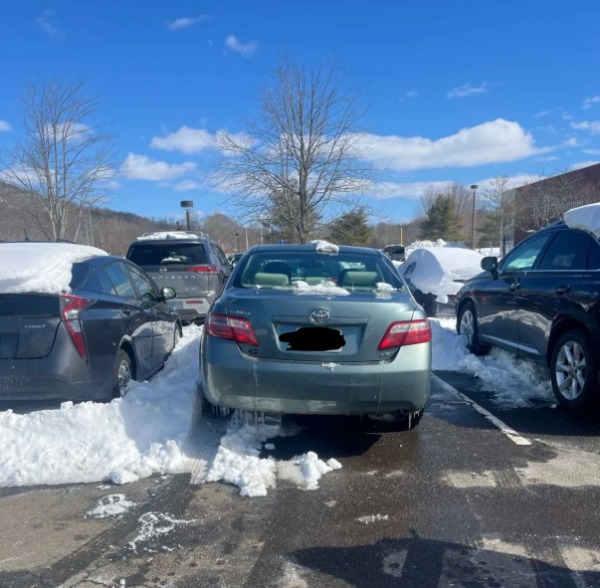
When she did make it to campus, finding a parking spot was another hurdle.
“There was no parking available that had been plowed, and I had to drive through a foot of snow to get to a spot. I didn’t even find a cleared spot—I just drove through snow and had to freeze my feet when leaving my car.”
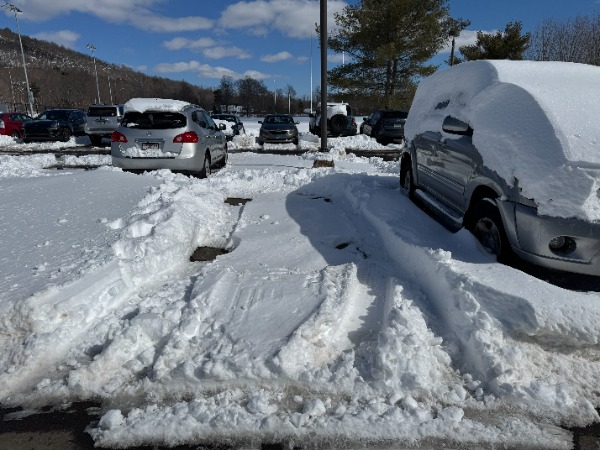
Other commuters experienced the storm differently depending on their location and timing. Nicholas Degraff, a senior international business major who lives off campus in North Haven, drove to his 11 a.m. class. He described how the roads were mostly clear until approaching campus, where conditions quickly became slushy and slippery.
“Coming up Mount Carmel, going past Sleeping Giant toward North Lot, the roads turned very slushy and very slippery pretty quickly,” he said.
These experiences were reflected online, where frustration and humor circulated side by side.
“I did see the Yik Yak post about the delay. It seemed like everyone was, if they weren’t joking, genuinely frustrated and annoyed. Some people were blaming President Hardin, others were concerned about how they were going to get to class,” Degraff said.
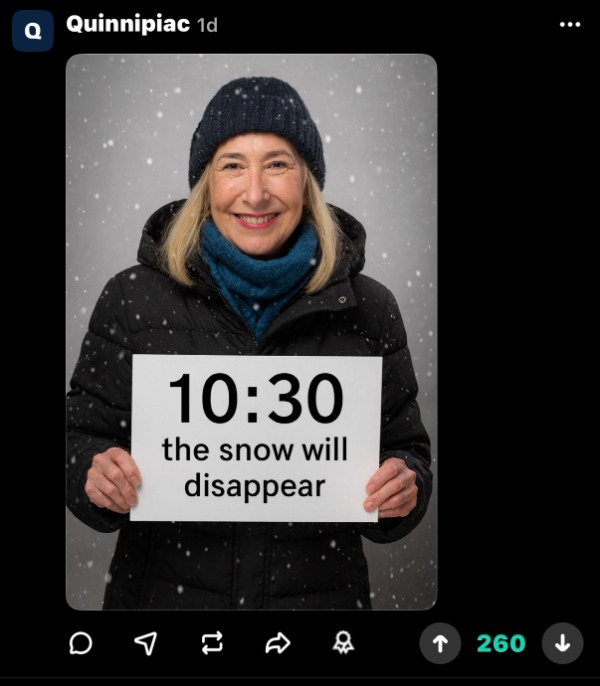
Students took to the anonymous app Yik Yak to share their thoughts on the delayed start. Some posts were lighthearted, including an AI-generated image of Marie Hardin holding a sign that read, “10:30 the snow will disappear.” Others, however, showed genuine concern, particularly for commuters who felt the decision did not reflect the conditions they faced.

For commuters traveling longer distances, the storm created additional barriers before even reaching campus. Victor Constanza, a junior behavioral neuroscience major drives about 40 minutes from New Britain. Constanza described how road conditions and snow removal at home determined whether attending class was even possible.
“It was actually pretty dangerous because a lot of the roads were not cleared,” Constanza said. “I had to shovel my way out, and I ended up skipping because the roads were too messy.”
Constanza said the storm’s impact varied across the student body, with residential students largely unaffected compared to those who commute.
“Most students who live on campus weren’t as impacted—you saw more of the annoyance from commuters,” Constanza said.
Beyond the physical challenges, Constanza described uncertainty about how weather decisions are made added to the frustration
“I actually don’t know how these calls are made when it comes to deciding what’s a delay or what’s a snow day. I know it’s a group of admin, but I don’t know what that process looks like,” Constanza said. “The way that admin decides these things, I think there has to be a little bit more transparency because I don’t think anyone knows really.”
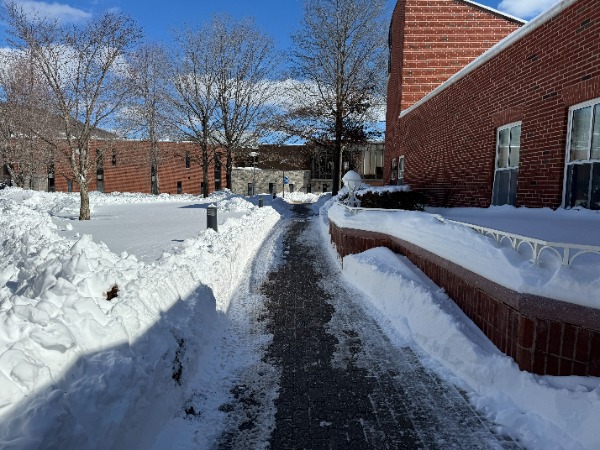
While plows cleared pathways and classes resumed, the storm highlighted a divide in how severe weather affects Quinnipiac’s commuter and residential populations. For some students, Tuesday’s delay was a minor inconvenience; for others, it meant weighing attendance against safety. Between icy sidewalks, buried parking spots, and playful Yik Yak posts, Quinnipiac students weathered the storm both on campus and online.