
Quinnipiac University is an ever-changing campus, with each passing year it seems like the school takes on a new construction project. The Quinnipiac of ten years ago would be almost unrecognizable today.
Mount Carmel Campus is constantly developing into something new, whether that change is positive or negative is up for debate. It’s a give and take relationship that can put students into a tricky spot.
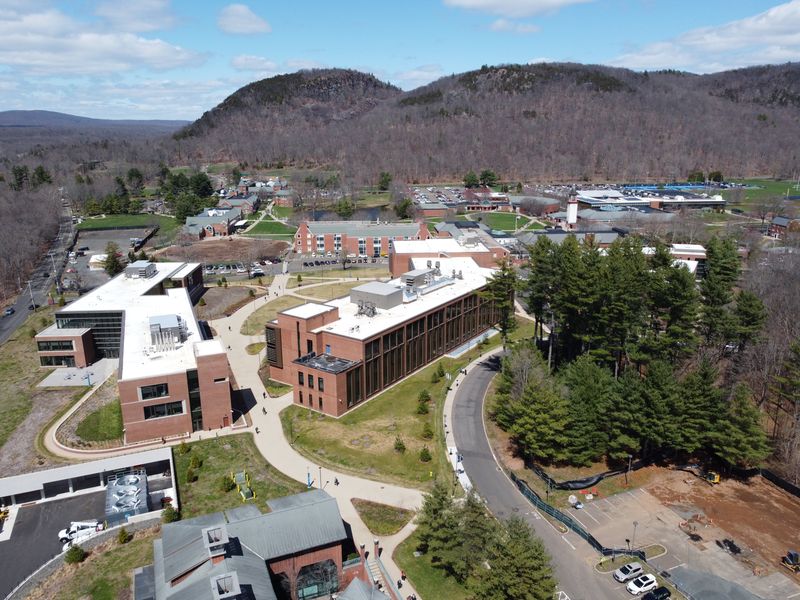
Taking a closer look at some of Quinnipiac’s latest construction projects reveals that although the University is constantly looking to make student life on campus better, it sometimes leaves others behind.
The South Quad
One of Quinnipiac’s latest achievements is the brand new South Quad, which features the School of Business, the SITE Building and The Grove. The project totals over $293 million according to Quinnipiac Today.
The School of Business is Quinnipiac’s latest hub for innovation, a place that designers created with student input in mind. Students operate the Waking Giant cafe, and picked all the furniture used in public spaces and classrooms.
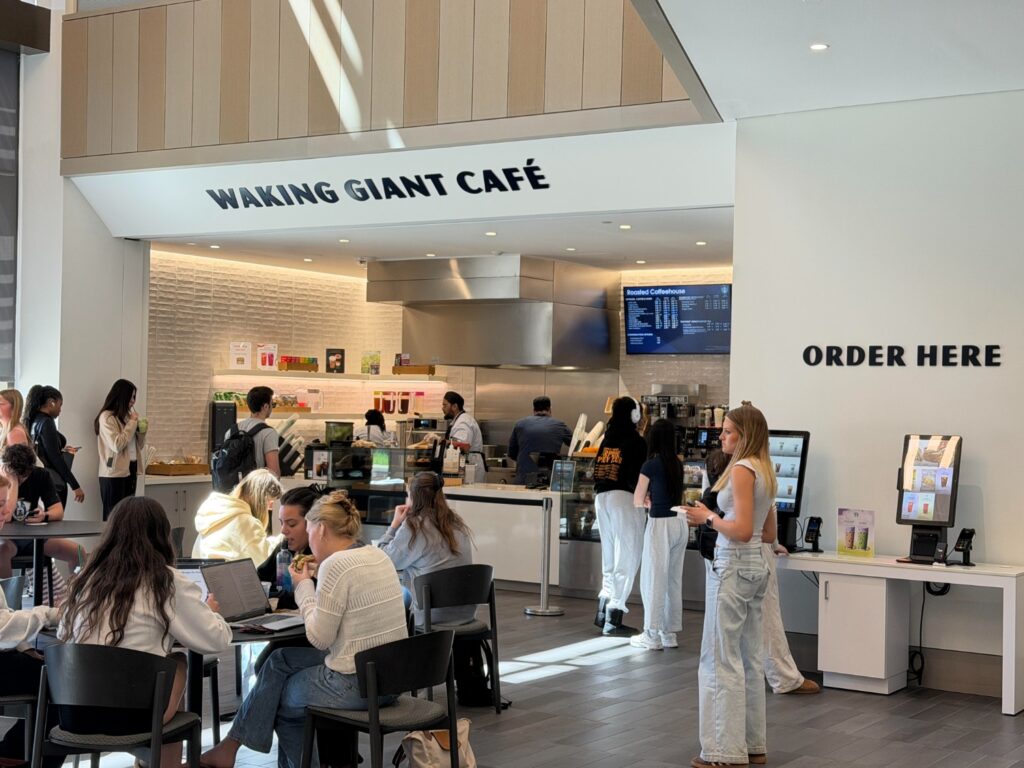
“It’s inspiring to see nursing students using the whiteboards in a classroom studying,” Dean of the School of Business Holly Raider said. “Students are not just learning while doing, they’re able to give back through places like the Waking Giant Cafe. It’s so meaningful that it’s a student managed business.”
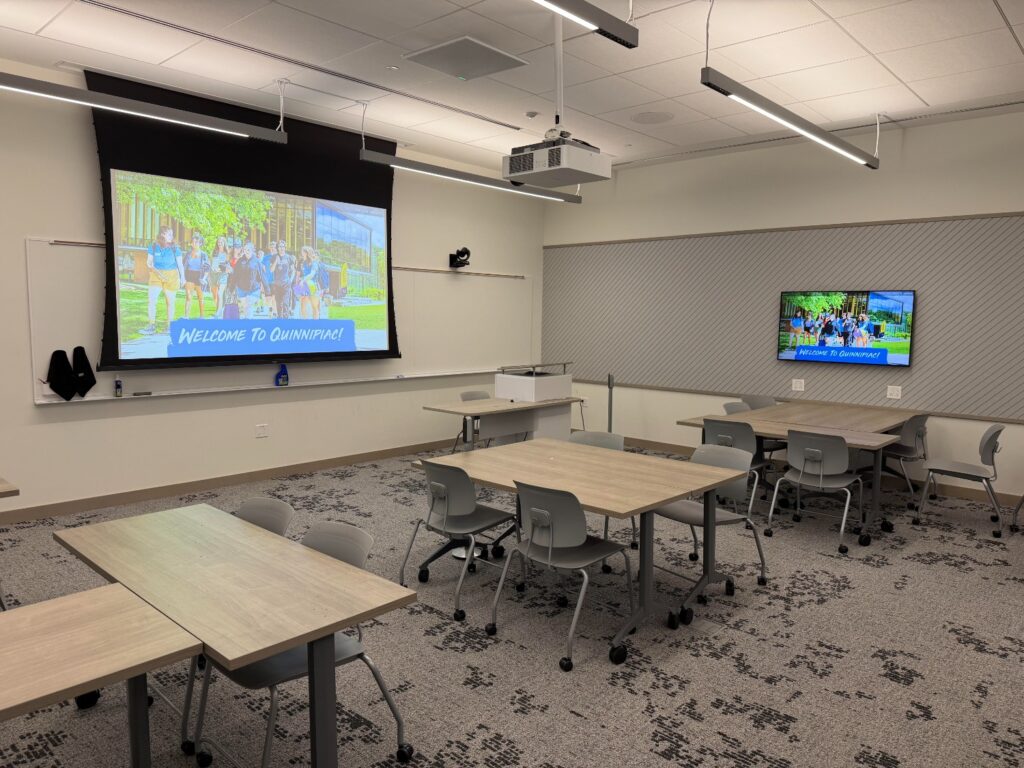
The Grove is Quinnipiac’s latest residence hall, the four story building has 232 rooms, the nicest furniture on campus and it houses upper and lower classmen.
It wasn’t cheap, the project in total cost $39,936,877 according to Hamden Records.
The name isn’t random either, before a residence hall stood in its place, a man-made Grove of thousands of pine trees that were planted sometime in the 1950s.
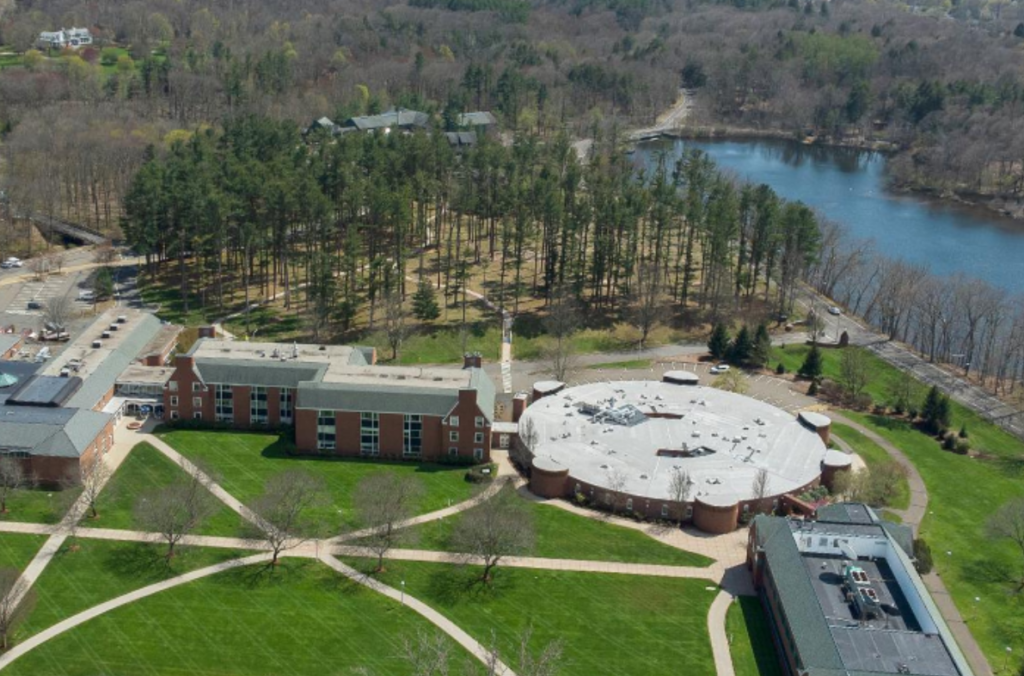
It may seem like an environmental contradiction to tear down a real Grove to construct a Grove of residence halls. But the area where those pine trees sat wasn’t always the perfect place for the Earth’s herbs to grow.
In May 2018, a tornado hit Quinnipiac and damaged what was once a luscious grove of trees. And according to Quinnipiac Vice President for Facilities and Capital Planning Sal Filardi, the wind storms affected the pine grove more than once.
“Everybody knows the tornado and it really caused some damage, but [the pine grove] actually got hit three times,” Filardi said. “There was a microburst that came through and probably took out 100 trees.”
Over the years, that pine grove began to suffer more and more damage. It got to the point where the area simply looked unrecognizable.
“Those pines are soft wood, they kind of support each other through heavy winds and when they start to thin out they get weaker,” Filardi said. “After the tornado there was another heavy windstorm and we lost 1,000 trees total.”
Because the pine grove had thinned out so much, every time the winds grew strong there would be trees hitting the ground. Quinnipiac’s solution was to replace part of that grove with the new South Quad.
For every tree that Quinnipiac cut down for the project, they replanted one in the same area. But the University did not replace the trees that fell during wind storms.
“Those are some really tall pine trees that were a hazard because they don’t do well in strong winds,” Associate Teaching Professor of Chemistry Marta Clepper said. “I think they did a really good job with the task they were assigned to do.”
Clepper believes that Quinnipiac did their best with the tools they were given and did a proper job at addressing some of the outside factors separate from the environment.
She received a Ph.D. in geology from the University of Kentucky, and feels that the University was able to properly address potential erosion problems the new buildings faced.
“They did a really good job of reducing the slope which reduces erosion,” Clepper said. “You really want to make sure you have the right drainage with underground infrastructure… because the runoff is where flooding occurs which leads to sediment pollution and all kinds of environmental problems.”
While Quinnipiac may not have been able to replace every tree lost in the pine grove, the University has been able to address environmental concerns with its new buildings.
All buildings on the South Quad have a LEED Gold Certification, a globally recognized standard for environmentally friendly buildings.
“It’s the way the glass is glazed,” Raider said. “It is when you go up and you see the rock gardens on the roofs, it’s the materials, even the construction material is recycled every step of the way.”
While the South Quad is certainly Quinnipiac’s biggest project in a long time, it’s certainly not the only one. There’s a building that was once housed directly next to Tator Hall that is now noticeably missing.
Buckman Theater
Clarice L. Buckman Theater has been — or was — around for decades.
In 2017, the writing was on the wall for Buckman Theater as Quinnipiac finished construction on a new theater space. The 12,000-square-foot facility, located in Hamden a few minutes away from main campus, houses the University’s Theatre Arts Center which includes a black box theater.
By 2026, Buckman Theater was no more. Dirt now covers the ground where it once stood, with no immediate plans to build something in the area.
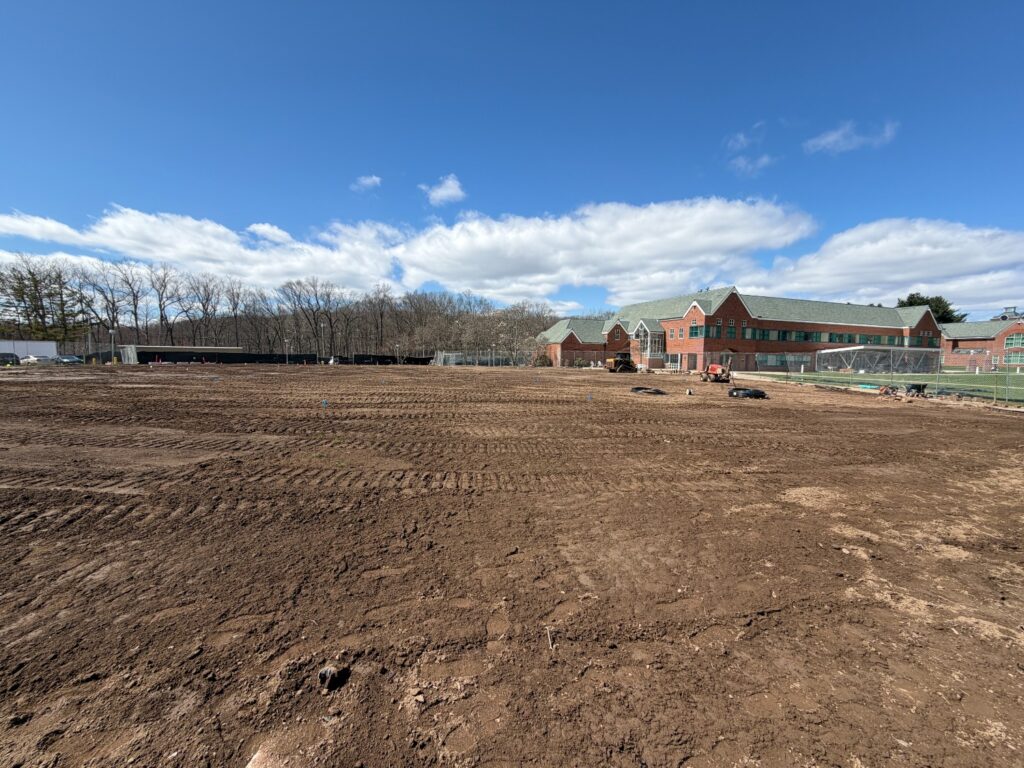
“We’re refocusing our strategic objectives as a University,” Filardi said. “And then we’ll follow it up and put an update on the master plan that will address the new strategy.”
While the cost was nowhere near the construction of an entire residence hall, the demolition of Buckman was more than just a pretty penny. In total, tearing down Buckman cost around $800,000 according to Hamden records.
The decision to close Buckman Theater reflects the University’s recent decisions on Arts programs on campus. Quinnipiac’s theater major is now simply a minor, and the only real theater where students can perform and take classes is located just below York Hill campus.
“Theater already has such a small presence on this campus,” senior theater major Quadira Shaw said. “The only other real space we have is off campus, a lot of people don’t travel to it, it’s very out of the way.”
The loss of Buckman Theater has limited how many productions the program can afford to put on per year. While last year the theater program put on a fall musical and spring play, this year they were only able to put on one show, a musical adaptation of “Legally Blonde.”
For theater majors and future minors, it’s a stab in the heart to see a building with nearly a decade of memories fade into dirt on the ground. The emotions range from sadness to pure frustration.
“Buckman had so much character, all the new buildings we got are just bland squares,” senior theater major Evelyn Keay said. “If I was Clarice L. Buckman I’d be pissed because that theater had her name on it, and they just tore it down.”
But Buckman wasn’t just home to the theater program, it also housed science labs and classes for many years. With most labs now in the SITE building, people in the sciences are pleased that they no longer have to deal with the deteriorating conditions.
“I’m actually kind of happy there were so many problems with that building,” Clepper said. “It was just so old, the lab room was not the best so I’m happy to get out of Buckman.”
While there is a building on Mount Carmel that can act as a theater, it simply isn’t one at heart. The SITE Auditorium can house up to 700 people, but people familiar with theater programs at Quinnipiac say it’s simply not an optimal space.
“[The SITE Auditorium] is a room full of windows,” Keay said. “That’s not a theater space.”
Students familiar with the theater program simply feel like the auditorium doesn’t serve much of a theater purpose. In their eyes, they can’t perform on Mount Carmel.
But for a program that now lacks resources and support waning from the University, there is a glimmer of hope.
“I think it’s a great conversation to have,” Raider said. “To understand what would be [the theater programs’] needs and interests and how between the business auditorium and the SITE auditorium, what would be possible?”
Quinnipiac’s constant construction habits aren’t going anywhere, with the “master plan” evolving year by year, it’s not out of the question to say that the Quinnipiac of today won’t be the Quinnipiac five years from now.
While that may drive more potential students to enroll at Quinnipiac University, it doesn’t bode well for current students who are watching their former glory slip away.
“We need a more expansive curriculum for students and programs that are being left behind,” Shaw said. “We need more professors, we need more support.”