Melissa Kaplan, Hamden resident and English professor at Quinnipiac University, contemplated putting her two children in private school after being told the school district was not good enough.
“I kind of second guessed myself and said ‘What are you doing?’ The whole point is not to run away, but to make the schools stronger themselves and to not participate in that problem, but actually do something about it,” said Kaplan.
Twelve years later, she is making changes to fix those problems and running as a democratic candidate for a four year term as an elected official in the Board of Education (BOE) in the upcoming elections, happening on Nov. 7.
Alongside making changes in the Hamden school district, she is changing the lives of many students at Quinnipiac University.
About three years ago, Kaplan became the Associate Director of the Honors Program at Quinnipiac. Now she is the Interim Director of the program.
Since her move to the town, Kaplan has been actively involved in her children’s education as well as the greater Hamden school district.
Kaplan was sworn in on the BOE in September to fill in a seat that was recently vacated due to an unexpected resignation of another BOE member. She applied for the position with this letter of intent.
Kaplan has always been political; she believes that teaching itself is political, and when it comes to the upcoming elections in Hamden, she believes anything is possible.
“I think one of the things we’ve learned from this past election is that there are no guarantees,” she said. “Hamden is a traditionally blue town and out of the nine districts, eight have traditionally been democratic, but it’s not to say that we don’t have a tough race ahead of us.”
Although the elections are approaching soon, Kaplan has been actively involved with her political career outside of the race.
She recently took her ‘intersexual feminism ideology’ and her activist actions outside of the classroom in various ways.
She was involved with the BOE before running for the position, as well as being apart of other groups such as the Hamden Parent Supporting Education Excellence (SEE) and The Connecticut Parent-Teacher Association (PTA).
One of her duties, due to the current political situation, was ensuring the safety of transgender and non-binary students in the Hamden school district.
“You can’t cherry pick your issues,” said Kaplan. “If you are going to stand there and fight against sexism, that is intersexual, and so it’s also fighting homophobia, racism, classism and all the various classes of ‘isms’ that exist. So for me, advocacy was really very important.”
Kaplan has only been apart of the BOE for less than two months, however, she is very excited about it and looks forward to working on fixing issues within the community.
“[We are] Getting different initiatives passed and dealing with issues of diversity and inequality in our school system and also focusing right now on the state budget and funding and making sure that our students’ needs are taken care of,” she said.
Kaplan has had a voice in the Hamden community as well as within the Quinnipiac community, so she fights for those who do not but need their voices to be heard.
Although the BOE deals with different topics, one of Hamden’s biggest issues of the moment is the financial situation.
“We have a bunch of different committees, some of them deal with curriculum and policy. Others deal with finance, and that’s one I had a lot to learn about,” said Kaplan. “I think that’s also the most important one because we are dealing with a lot of budget cuts and so we need to find a way to make the most out of the little that we’re given.”
Jody Ian Goeler, the Hamden Superintendent of Schools, proposed this budget for the 2017-2018 school year.
Other issues include special needs education and sexism within the school district.
“I think there needs to be initiatives to really provide equity and equal opportunities for students,” she said. “One of my projects also, I’m sure it’ll be met with some resistance, but I’d like to get rid of the sexist dress code.”
Kaplan is the newest member in the BOE and believes she has a lot to learn from her colleagues, who have connections and knowledge and are helping her fight her battles.
“It’s very humbling to be mentored by these people,” said Kaplan.
When it comes to balancing her schedule between the BOE and being a full-time employee at Quinnipiac, she laughs and says it is stressful, however, so far she has been able to manage.
“I think it’s kind of dealing with competing jobs in terms of my time,” she said. “But I think they are also complimentary as well – supporting students in the classroom and advising students, and then supporting students in my school district.”
Although she cannot be in two places at the same time, she makes time for both jobs and for all students she has been involved with, especially her students in the Honors Program at Quinnipiac.
“I absolutely love the students in the Honors Program and it’s a privilege to work with them,” Kaplan said. “As much as students have learned from me, I have learned from them as well.”
Kaplan sees many activist actions coming from her students at the university and she feels proud to think she might have had something to do with their initiative and courage.
“I’m always moved by their acts of activism,” she said. “It’s something as singular as a student coming out in class for the very first time – the courage, the bravery. Or students who create organizations on campus where they feel the need for something where the school isn’t perhaps feeling a need for them so they create that space and that arena for themselves.”
Another thing she loves about her students is their passion for knowledge.
“They are not there for the grade, they’re there to learn and what meaningful learning is something that not only just happens in the classroom, but it transcends,” said Kaplan.
Kaplan is also very passionate about creating a connection between her two jobs, therefore, creating a connection between Quinnipiac students and students from the Hamden school district.
In the past, students from the Honors Program at Quinnipiac have served as mentors for students at Hamden Middle School and Kaplan wants to expand this program.
“I would love to branch it out and have students outside of the Honors Program to mentor in the elementary schools and even the high schools,” said Kaplan.
Kaplan, whether she is working for the BOE or Quinnipiac, wants to maintain the relationship between Hamden schools and Quinnipiac and hopes that more students and faculty take initiative to make that happen.
There’s a warm aura that surrounds Professor Kiku Jones. Her yellow top matched her warm personality on a grey Tuesday Morning. It is easy to see why she was one of the professors to receive a Center for Excellence Award.
“It’s absolutely amazing. I am so lucky to be able to do this and to get an award for it,” she said. “I can’t even process it. It’s just hard to say. I am absolutely blessed to do this.”
2017 has been a good year for Jones, she attended the award ceremony on October 19, she recently got tenure, and as a Kentucky basketball fan the recent changes to the Quinnipiac men’s basketball team have her excited.
“We were like ‘oh this is great, he’s (Baker Dunleavy) got basketball in his blood, it’s like a long line’ we were really excited,’ explained Jones. “We’re super excited and we’re definitely going to be at the basketball games.”
It’s been five years since Jones began teaching at Quinnipiac. She is originally from Kentucky but was teaching in Oklahoma before she made the move to the Northeast.
“We were there for nine years and everything in Oklahoma is kind of dead and flat. It was hot and nothing grew on the trees,” Jones said laughing. “My sons … we were driving and they said ‘Mom look, the trees are green’ and I thought that’s the saddest thing I’ve ever heard. We love it here. We absolutely love it here.”
Jones, a professor of computer information systems, made the move to New England because she was interested in the School of Business IT for Good program. The Kentucky native is also very passionate about giving back, she is always part of the big event and has gone to Guatemala twice to help different organizations build websites. She also wants to show her students that they can work outside of their expected career paths.
“For the senior capstone I try to have different projects that are based on non-profits so that the students can see that their skill sets can be used in that way, and I want the students to really see that the skills that they’re doing don’t only have to benefit themselves,” Jones said.
It’s clear to see that Jones doesn’t only love her job but her students too. She describes herself as a behind-the-curtains person who wants to help build her students.
“I succeed when they succeed and that’s what makes me happy.”
“Why are you intimidated by what makes me unique? Why are you intimidated if English isn’t the language I speak?”
There were some tough stories to hear this past Monday at the Your Voice, Our Quinnipiac event and there were also some tough questions to answer.
The questions were posed by freshman Jamien Jean-Baptiste in his spoken word piece. This wasn’t something that he got up and thought of on the spot, Jean-Baptiste spent the weekend immersing himself in learning about movements like Black Lives Matter in order to better prepare himself. He mentions that he would not have spoken for the right reasons at the event if he had not spoken to Tatyana Youssef, the student government association’s vice president for student experience.
“It enabled me to do a little research into the topic itself, step outside of my comfort zone and talk in front of an audience about something that people find uncomfortable,” Jean-Baptiste explained.
According to Jean-Baptiste he used rhyming to make it easier for people to follow what he was saying. Lines such as “power can provoke unity, power can uplift communities, power can dwindle the differences between you and me” accomplished Jean-Baptiste’s goal of portraying his subject matter in a unique and different angle than what most are used to.
“I feel that translating what we’re trying to do into different mediums like poetry or music, I feel like that can really hit people,” Jean-Baptiste said
Jean-Baptiste doesn’t just speak at SGA events, he is also a member of the organization as a representative for the class of 2021. The behavioral neuroscience major joined SGA because he wants to avoid being the student that complains but doesn’t do anything to change it.
“It’s a real privilege and it’s a real honor to just be able to make change,” Jean-Baptiste explained. “I really want to fight for the things that people want to change rather than just complaining about them.”
It has been less than two months since the new members took their position and the organization is already facing some difficulties, particularly after the same event Jean-Baptiste spoke at. After the general board meeting on October 25, some SGA members have pushed to begin the impeachment process of two members of the class of 2020 after questionable conduct at two different events. But this does not deter or waver Jean-Baptiste’s belief in the organization, in fact he “guarantees” that it will make history at Quinnipiac.
“I’m really happy I went to that voice series, and i’m really looking forward to attending more of those,” Jean-Baptiste said. “I really encourage that everyone try to make it to these events because it’s just so empowering and it made history because of what happened that night, and you could either be a part of that history or take an early nap. I really encourage everybody to come.”
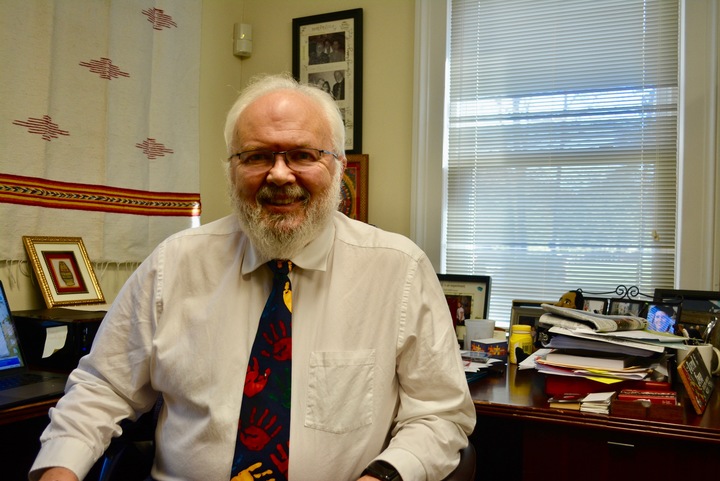
David Ives is the executive director of the Albert Schweitzer Institute, also known as the white house on the corner of Mount Carmel Avenue and New Road.
Ives is also a Nobel Peace Prize nominee and has been teaching at Quinnipiac for 15 years as well as leading students to volunteer in different countries and attend Nobel Peace Summits since Jan. 2002.
David Ives in his office
“A friend of mine named Mohammad Elahee said he thinks that I brought the world to Quinnipiac and sent Quinnipiac students into it. So it’s something I’m proud about, ” Ives said.
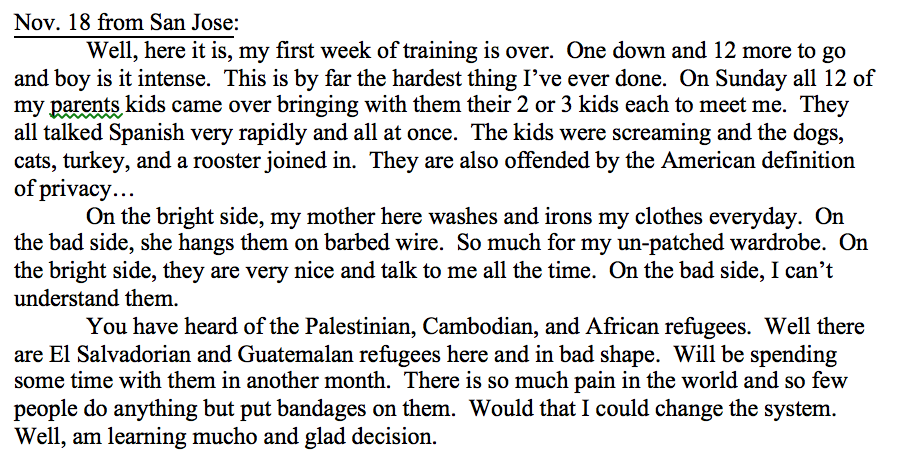
This mission to bring Quinnipiac students to the world began 30 years ago when Ives was a Peace Corp volunteer in Costa Rica where he was measuring the height and weight of babies. During a visit to one family, he noticed that their daughter was having trouble breathing and decided that he would take her to the hospital. The only way to get to the hospital was through a boat that left at four am.
Excerpts of Letters from David
Ives said he would take the baby and pay if there were any charges. He remembers that the family was late getting to the boat and the captain threatened to leave without them, but Ives made it clear that he would throw the captain into the lake if he even tried to do it. The family got to the boat but they told him that the baby could not breathe. Ives tried to give her mouth to mouth resuscitation but he could not get any air into her lungs and half way across the bay, Ives says he felt her soul leave her body.
“I’ve never gotten over that since then,” Ives explained, “and that motivates me to do what I do, in terms of getting Quinnipiac students overseas.”
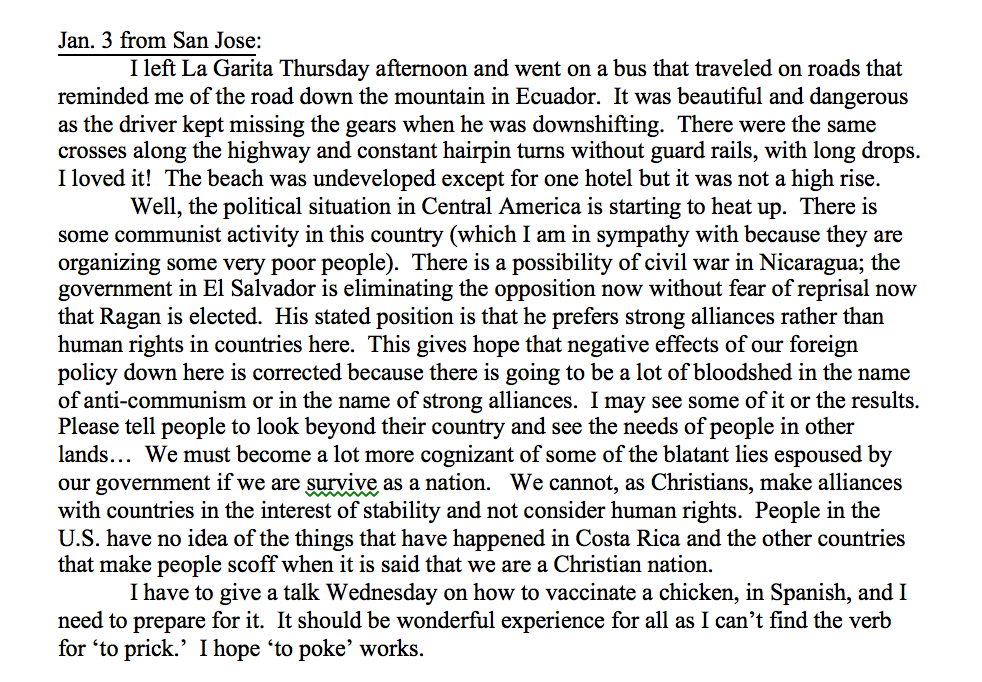
When he came back, he found that not too many people knew or seemed to care about people from other countries. Ives believes that we are all connected in one way or another regardless of where we live. Here at Quinnipiac, Ives tries to take students on a trip outside of their lived experience, he tries to ‘shock’ them by exposing them to different ways of life through living with host families.
Excerpts of Letters from David
According to Ives he has been criticized for not being academic enough but he has countered that by designing a program where the student goes to a particular area, ‘gets shocked,’ then comes back and takes a class that explains the nitty gritty of the situation in that particular country.
“There are academic aspects to the problem of the world but first you have to give a damn about them. I wanted to create a situation where people cared about other people around the world and then do the reasoning behind the poverty,” Ives explained.
Something else that has motivated Ives to continue his work is having had four different diseases. Polio, post polio syndrome, Guillain-Barre syndrome (a disorder in which the bodies immune system attacks the nervous system), and he is currently dealing with Parkinson’s. He has found that his own struggles help those in developing countries stop stigmatizing certain conditions. His selflessness and caring nature have led many students at Quinnipiac to love not only the work he does but who he is. One could say he has his own following, something he did not know.
“I deeply care about students and I try not to be pretentious and I try to act human in classes, and I’m a storyteller,” Ives said. “I don’t lecture, and I’ve had real world experiences from having polio and recovering from that and to helping people learn to walk in other parts of the world.”
Ives describes the students as his ‘lifeblood,’ so much so that even though this is his final year at Quinnipiac, he will be back to teach courses on nobel laureates and Albert Schweitzer. To fill the time between his classes, there are endless possibilities, he may write a book, a play may be written about his life or he may win the Nobel Peace Prize.
“I was pretty excited, I don’t talk about it much but I don’t deny it either. I hope to get it one day but I am not holding my breath for it.” Ives said of his Nobel Peace Prize nomination.
Alumni celebration at Quinnipiac kicks off this weekend
By Ryan Chichester
Quinnipiac University will be recognizing its past students and graduates this Friday and Saturday for Alumni Weekend across campus.
According to the Quinnipiac Alumni website, more than 1,000 former students and their families and friends attended last year’s festivities on campus. Festivities included alumni softball games, family block parties in the Alumni Gardens and a tailgate party at York Hill prior to the men’s ice hockey team’s game against Northeastern. The tailgate featured beer tasting, music and a photo booth to capture the memories.
This year, the tailgate will be held prior to the men’s hockey match against Colgate on Saturday night. The weekend is expected to attract both Braves and Bobcats, even those who just recently tossed their hats at graduation.
“I’m very excited for alumni weekend,” 2017 journalism graduate Gabbi Riggi said. ” Not only is it exciting as a recent graduate to come back and see the people that are still in school, but to see the growth that has already happened since I left.”
The university sent out postcards to members of the Alumni Association and advertised the event through multiple social media platforms.
Strong winds, heavy rain and flash flooding impacted many towns and cities across Connecticut Sunday night.
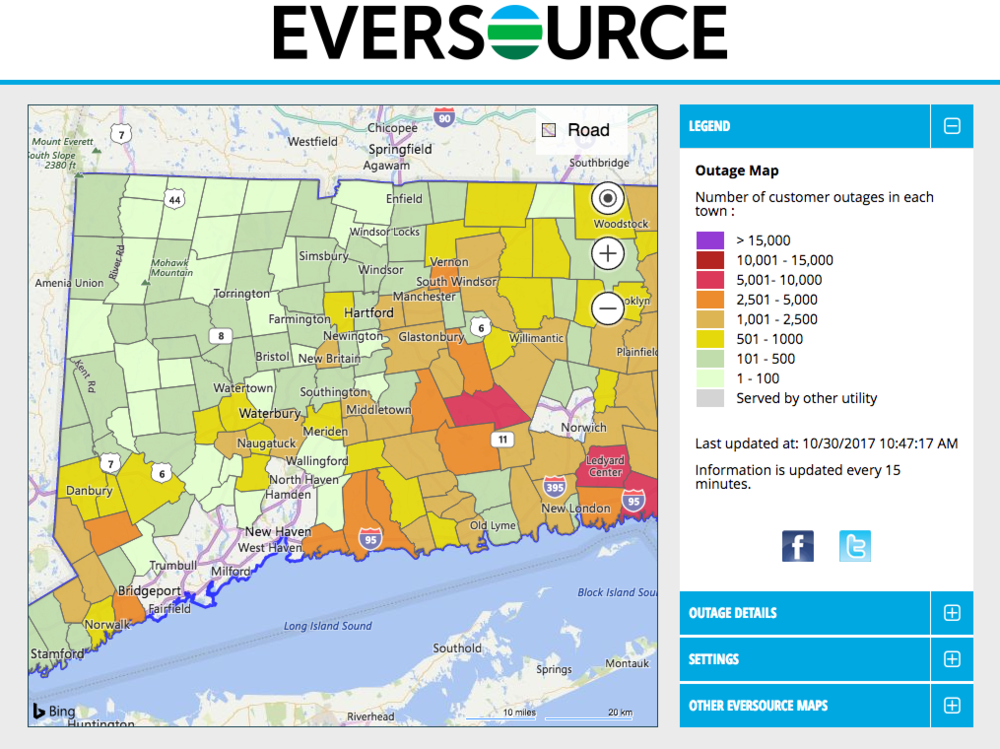
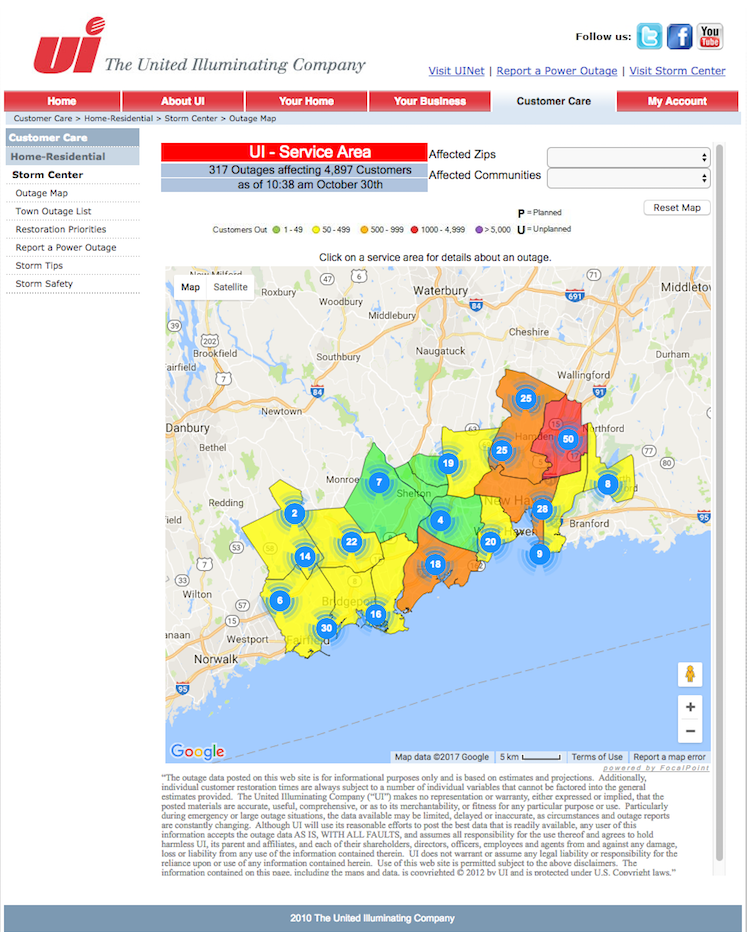
Trees and power lines came down as a result of the severe weather, which came on the five year anniversary of Hurricane Sandy. Eversource Energy is reporting that over 139,000 customers in Connecticut did not have power as of 10:41 a.m. Monday. An additional 4,900 United Illuminating customers are without power, 507 of them are Hamden residents.
A map showing the number of Eversource Energy customers in Connecticut without power as of 10:47 a.m. Monday.
A map showing the number of United Illuminating customers in Connecticut without power as of 10:38 a.m. Monday.
The storm debris created difficult driving conditions and many schools near Quinnipiac closed. Hamden, Cheshire and North Haven public schools closed Monday, according to WTNH.
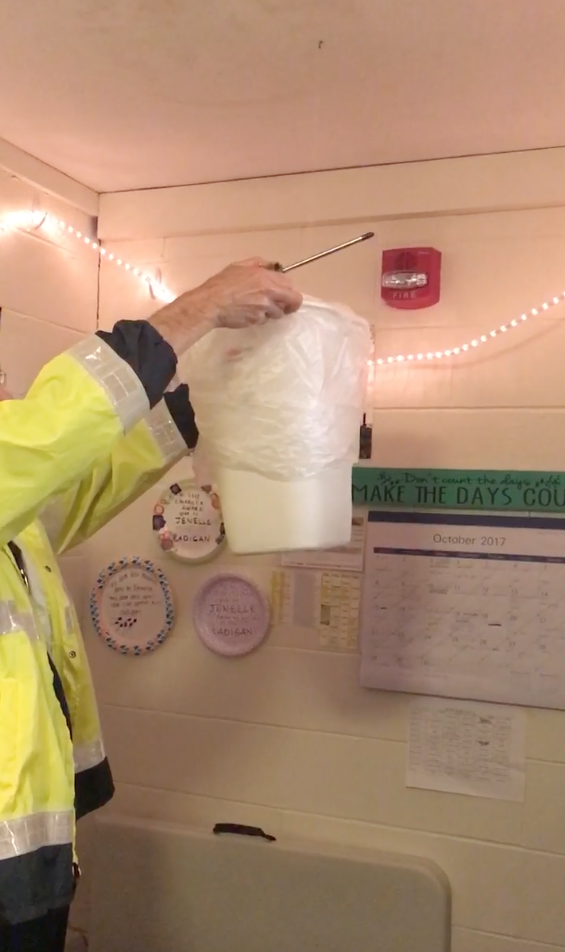
Despite there being much debris on campus, Quinnipiac did not close or have a delay. Several residence halls have been leaking including Irma, Dana, Ledges, Perlroth and Larson on the Mount Carmel campus and Crescent on the York Hill Campus. The Athletic Center, School of Business and Arnold Bernhard Library are also leaking, according to the Department of Facilities.
A Facilities worker holds a bucket up to a leaking roof in the Dana Residence Hall.
The Hamden Fire Department responded to twenty-six storm related emergency calls overnight in Hamden.
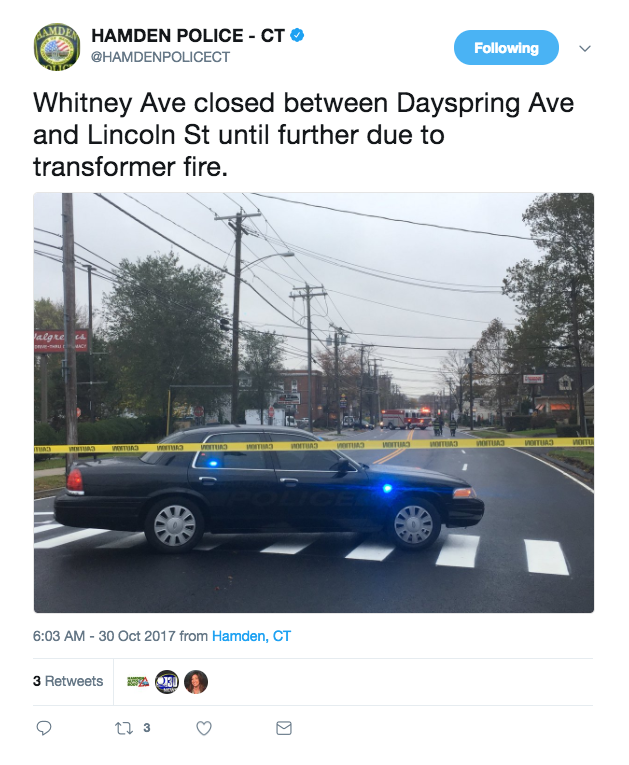
Hamden Police also responded to several transformer fires overnight, one happening on Whitney Avenue near Walgreens.
For more updates on the impact of the storm, follow HQ on Twitter @hq_press
The 2017 Atlantic hurricaneseason has already proven to be extremely active and extremely dangerous. So far this year there have been 15 storms, 10 hurricanes and six major hurricanes (category 3 or stronger). These weather systems have resulted in more than 400 deaths, and more than $188 billion in damages. Connecticut has been spared the worst, but there is still a month to go in the season.
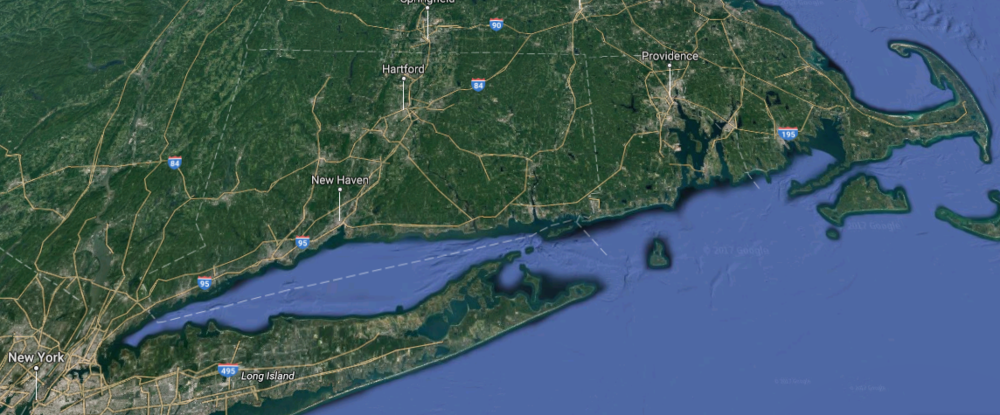
Connecticut’s coastline (photo via Google Earth)
On October 29, 2012, Hurricane Sandy tested the limits of Connecticut’s emergency preparedness programs. According to the National Weather Service, Sandy was a “worse-case scenario for storm surge for coastal regions.” By the time Sandy got to New Jersey, it was downgraded to a post-tropical cyclone, but the storm surge hit Connecticut right at high tide, causing massive amounts of flooding.
The Tropical Cyclone Report created by the National Hurricane Center reports that there was storm surge over nine feet in New Haven, resulting in floodwaters as high as six feet above ground level. Approximately 3,000 homes were damaged, and the state sustained more than $300 million in damages.
Five years later, is the state of Connecticut ready for another hurricane… or not?
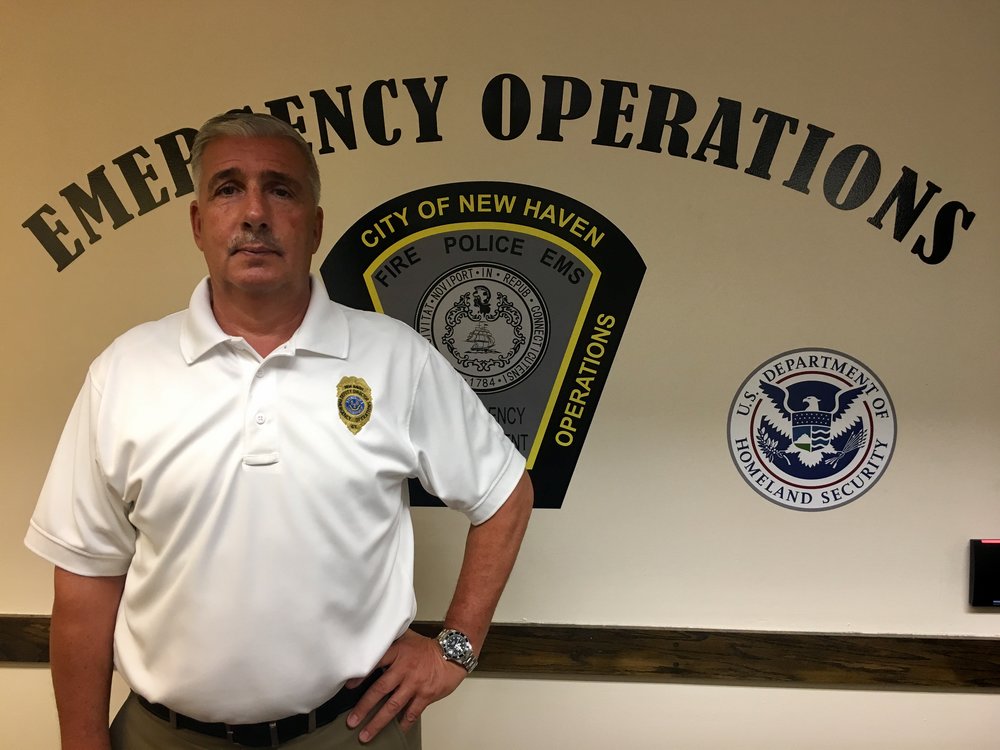
Rick Fontana, Deputy Director of Emergency Operations – New Haven
“Our biggest fear in the city of New Haven is a hurricane,” says Rick Fontana, Deputy Director of Emergency Operations in New Haven. “It’s number one. It really is. We’re on the coast, and I think we’re pretty resilient, but when storm surge hits … that becomes a very significant issue.”
In the event of a hurricane, Fontana would work to develop strategies that will lessen the impact of a storm, plan and prepare for different types of storms, and help with the response to and recovery from a storm.
Fontana also serves as one of five regional coordinators in the state for emergency management. His job there is to communicate with the 30 towns in Connecticut’s Region 2 throughout an emergency, and relay information up to the state coordinators.
Quinnipiac’s Plan for Emergencies
Quinnipiac University, located in Hamden, Connecticut, falls under Region 2. Edgar Rodriguez is the chief of Public Safety and is also co-captain of the emergency management team at Quinnipiac. The team is made up of about a dozen members from various university departments, including public safety, facilities, health services, and academics. Rodriguez says the team has extensive plans when it comes to storms.
“We’ve come up with an emergency evacuation plan and we talk about if there’s a hurricane or a storm coming, what are we doing, how are we preparing for it,” Rodriguez says, adding that although the plans haven’t been approved by the state, they are still important to have.
When a storm comes, those plans get put into action.
The team begins a 24-hour-to-landfall. Members track the storm, gather information from the state and submit that information to Quinnipiac President John Lahey and Provost Mark Thompson, who ultimately decide whether students should stay at school or be sent home.
Once that decision is made, the emergency management team starts prepping all departments for landfall. Quinnipiac’s emergency management team only goes through the regional coordinators for assistance if it’s a minor, isolated emergency – such as power outages on one specific campus. In the case of an event as major as a hurricane, the protocol is to bypass the region and work directly with the state.
“The rule of thumb is every town or city should be able to sustain themselves for 72 hours,” Rodriguez says, explaining that Quinnipiac acts as its own sort of town for those 72 hours after landfall, with the emergency management team in charge. “Then after that, you start getting assistance from the state. But the entire time that’s happening, you’re communicating back and forth with the state.”
All the information goes up to the state emergency operations center in Hartford, is organized and then is sent out to the public.
“Every hour [the state is] sending us an update on the storm and we take that update and send it to everybody,” says Rodriguez. He feels that this system of organizing the information is a good way to keep consistency and keep everybody on the same page at a time when there could be a lot going on at once.
A building-Block Approach
Dan McElhinney, federal preparedness coordinator and national preparedness division director for the Federal Emergency Management Agency (FEMA), explains that everyone takes a building-block approach for providing and receiving assistance after 72 hours.
“At some point [the town] may have to bring in mutual aid from surrounding communities,” McElhinney says. “When the mutual aid has been exhausted, they’ll ask for county level assistance, then they go to the state … then the state will declare a state of emergency. The governor then gets special powers to extend additional dollars to direct other state agencies to assist the local community. When the state no longer has the capacity, the governor will ask the president for an emergency or major disaster declaration. That’s when FEMA gets involved.”
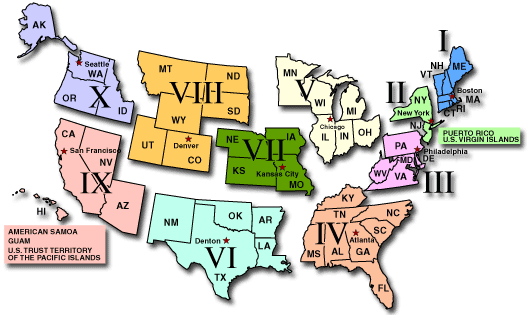
FEMA’s regions (photo via FEMA.gov)
FEMA is divided into 10 regions, and McElhinney is in charge of FEMA Region 1, which includes all New England states. He says although FEMA can respond in numbers that would outweigh the state help 100-to-1, they are there to support, not to supplant.
“Basically under the Stafford Act, we pretty much have tasking authority over all the agencies and departments to assist the state in response and recovery,” McElhinney says. “We provide a lot of technical assistance, but we are not there to take over.”
Mandatory training
Not only does FEMA provide assistance in the aftermath, but it also provides training services. According to the Quinnipiac website, those who are on the emergency management team have to complete FEMA’s National Incident Management System training. This training is similar to the statewide Emergency Preparedness and Planning Initiative training exercises.
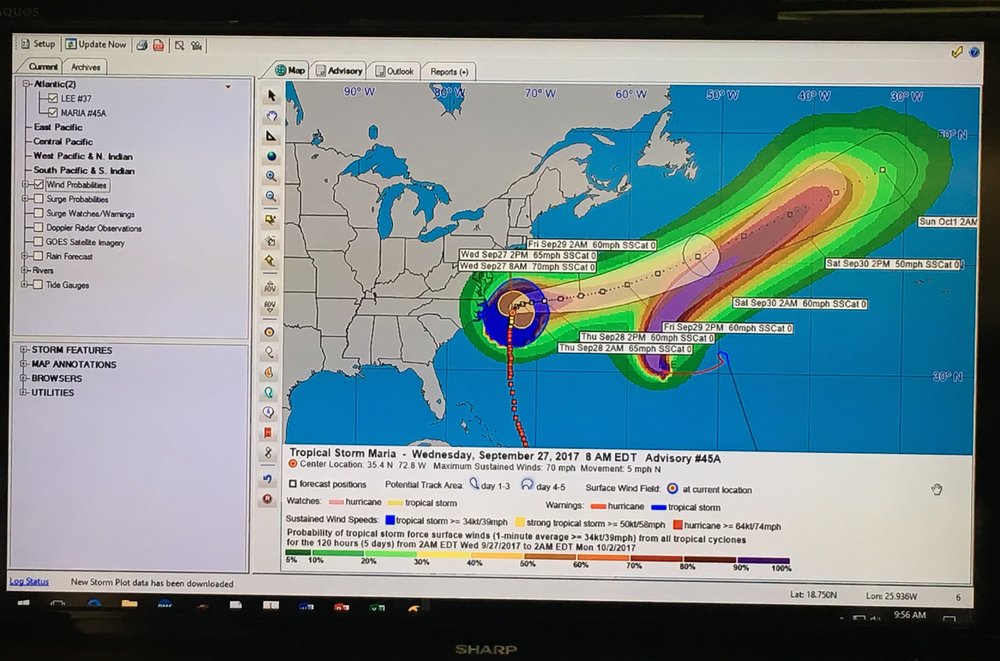
Map of Hurricane Maria on the monitor in the New Haven EOC
“The state of Connecticut has gotten very aggressive on keeping everyone prepared,” Rodriguez says. “Every year in October or November we do a drill. It’s mandatory for every town and every city through the state of Connecticut and the last few years have been some type of a hurricane.”
During the two-day statewide drill, state officials provide updates as if there were a real hurricane approaching. The state sends out maps of the storm and asks participants to respond to ongoing situations.
“You just lost all power in your town, what are you doing? You’ve got multiple trees that are down, what are you doing? Are you opening up a shelter? How are you transporting people? How much help do you have? Is the fire department on standby? And you have to keep reporting back and forth,” Rodriguez says.
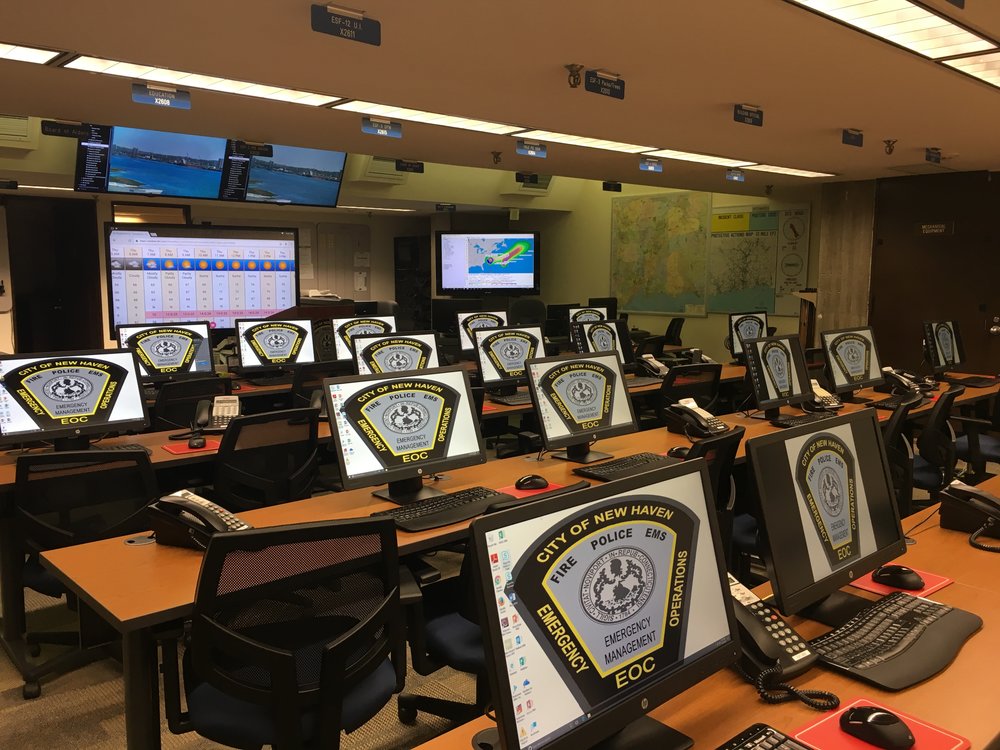
Emergency operations center – New Haven
The exercises are meant to be intense, but they’re also meant to replicate a real-life situation so that if and when a hurricane does hit, everyone is prepared. And apparently, you can never be too prepared.
“When a hurricane strikes, people kind of become complacent and never think it’s going to be as bad as it is. We’ve been fortunate, but … our departments on the preparedness level always scale one level higher than we normally would,” says Fontana. “We’re always prepared but we always prepare above and beyond because it’s easier for us to scale back than it is to scale up in the middle of a crisis.”
The training drills are mandatory for cities and towns that want to receive grant money in order to build resiliency in places along the shorelines or rebuild after a weather event occurs.
coastal resiliency and innovative thinking
Giovanni Zinn, city engineer – New Haven (photo via Yale.edu)
Giovanni Zinn, an engineer for the City of New Haven, explains why that grant money is so important.
“There’s a lot more land now and it’s low lying land,” he says. “In the large storms we face two major threats: coastal storm surge, where water is piling up in the harbor and coming up the rivers, and large rain events of six, seven, eight, nine, 10 inches in a short period of time. Where does the water go? When you get both at the same time, you have a particularly bad problem. And there’s no getting around the laws of physics. There are certain situations where you can’t drain the city.”
Zinn says that coastal protection methods — seawalls, living shorelines and storm surge barriers that are employed in some areas of the state — are “extremely expensive” and put financial pressure on local communities. He also said he thinks that those preventative measures are “not really a priority” and the long-term thinking tends to be put on the back burner.
But Guilford town planner George Kral says that hard infrastructure like a seawall is actually discouraged by the state of Connecticut.
“The view is that it doesn’t really solve the problem, it just pushes the problem from one place to another,” Kral says, adding that if anything, the goal is to implement green infrastructure instead.
Towns like Guilford have already completed major projects to raise the lowest-lying roads above flood level, as part of the town’s coastal resiliency plan. According to the plan, “coastal resilience is the ability to resist, absorb, recover from, or adapt to coastal hazards such as sea level rise, increased flooding, and more frequent and intense storm surges.” Kral says the plan has two goals: to educate the public on the the importance of coastal resilience, and to suggest actions local governments could take to make themselves more resilient.
And Guilford isn’t the only place thinking about preventative measures.
David Kooris, Director of the Rebuild by Design and National Disaster Resilience programs (photo via CT.gov)
David Kooris, the Director of the Rebuild By Design and National Disaster Resilience programs for the state Department of Housing, says that after Hurricane Sandy, the federal government reserved about a billion dollars in relief funding to be “competitively awarded to places that demonstrated a new way of recovery that better positioned them to be more resilient for future disasters.”
In 2012, the state of Connecticut had already received $160 million in federal disaster relief money, and was looking for more from the department of housing’s two competitions.
“Teams worked over the course of a few months and put together a proposal to the department of Housing and Urban Development (HUD) and to a jury of architects and urban planners to compete for portions of the discretionary funds,” Kooris says about the international Rebuild by Design program. “Seven out of the 10 were awarded funding – the largest being lower Manhattan at $330 million, and the smallest being Bridgeport and the State of Connecticut with $10 million.”
Based on the success of that first program, Kooris says HUD took another chunk of the Sandy money and created a new competition — this time at the national level — which became the National Disaster Resilience program. There were 68 eligible government entities (states, cities and counties) that could enter the competition, and 13 were awarded funding at the end – Connecticut coming in 9th place with $54 million.
Kooris says the purpose of competitively divvying the money up was to “move beyond the standard recovery funding through HUD and FEMA, which more than anything else is just rebuilding.” The programs forced cities and towns to work on disaster prevention, rather than disaster recovery.
“Rarely you get the type of project that is new infrastructure – not repairing what was damaged – and do so in a way that explicitly addresses social and economic vulnerabilities in addition to environmental vulnerabilities,” Kooris says.
Connecticut’s plan involved combining “grey and green approaches” as Kooris puts it, by using “traditional, hard engineered solutions combined with natural solutions that mimic the functions of the environment.” He says that the state is planning to raise roads, build berms and add other green infrastructure to mitigate flooding in Bridgeport, in addition to pinpointing other coastal locations with the greatest number of critical facilities — power plants, roads, hospitals, wastewater treatment — and putting the majority of the investments into protecting those places.
where connecticut stands now
Since Sandy, officials have had five years to revise and strengthen emergency weather response plans.
“We have developed an emergency operation plan that’s worked on on a daily basis,” Fontana says. “Our primary goals … are preparing our residents, making sure that they’re prepared for any type of a disaster and making sure our infrastructure is protected.”
If another hurricane hit tomorrow, there are mixed feelings on whether Connecticut would be ready.
“If it were some kind of extreme storm like a category 5, that is a whole ‘nother ball game. The impact would be severe,” Kral says about the town of Guilford. “Hopefully we’ve done a little better job in terms of planning, but that remains to be seen I guess. If we had 50 inches of rain, we’d have a lot of problems.”
Kooris acknowledges there are still some things that need to be worked on, but for the most part, he says he is “confident that we have implemented targeted infrastructure projects … that reduce risk from future storms.”
As far as Quinnipiac goes, Rodriguez admits “you’re never going to be 100 percent” prepared, but he is confident that the annual mandatory state training has everyone as prepared as they can be to respond.
And in New Haven, Fontana recognizes that a category 3 hurricane “would be devastation to the entire coast” but he is confident in his department, which he says “works every day” and “works hard.”
“We prepare all the time. We plan all the time. We don’t respond all the time, and we don’t recover all the time, but we’re confident that we have the necessary strategies in place to handle a hurricane,” Fontana says.
Adding to his confidence is the fact that FEMA recently awarded the city of New Haven a class 7 rating for flood preparedness and recovery – the highest rating available. Having this rating allows homes in the designated 100-year flood zone to get a 15 percent discount on flood insurance. “So I think that puts it in a nutshell.”
The most important thing through it all? Keeping the lines of communication open, Fontana says, at all times.
“Consistent, timely, good information. I always say, ‘Be first, be right.’”
Have you ever gone to your local coffee shop and the barista knows your name and order by heart?
College students have this happen on a daily basis. On a chaotic schedule going from class, to internships, to extra curricular activities and staying up until 4 a.m., whether in the library or out in the bars, majority of those students rely on coffee to keep them awake.
“I drink coffee to stay awake mostly, and I also really like the taste of it,” said Catherine Healey, public relations major.
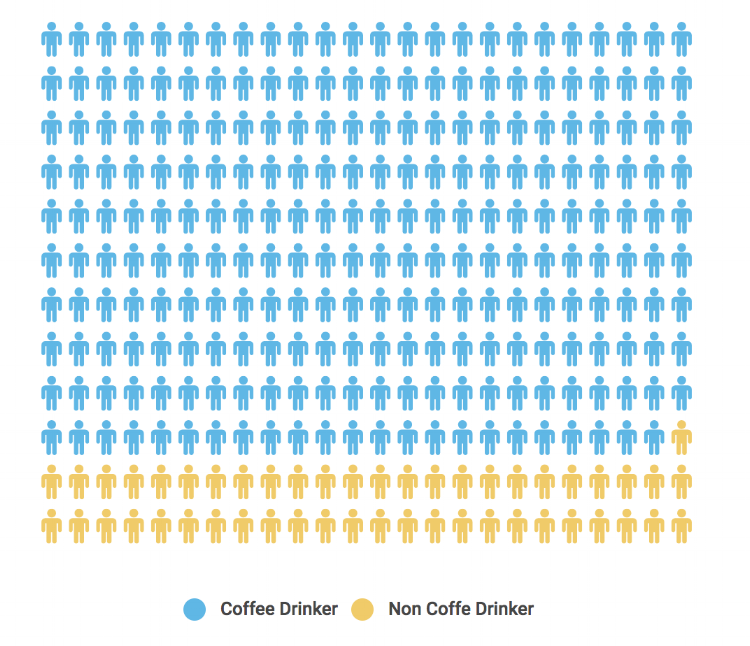
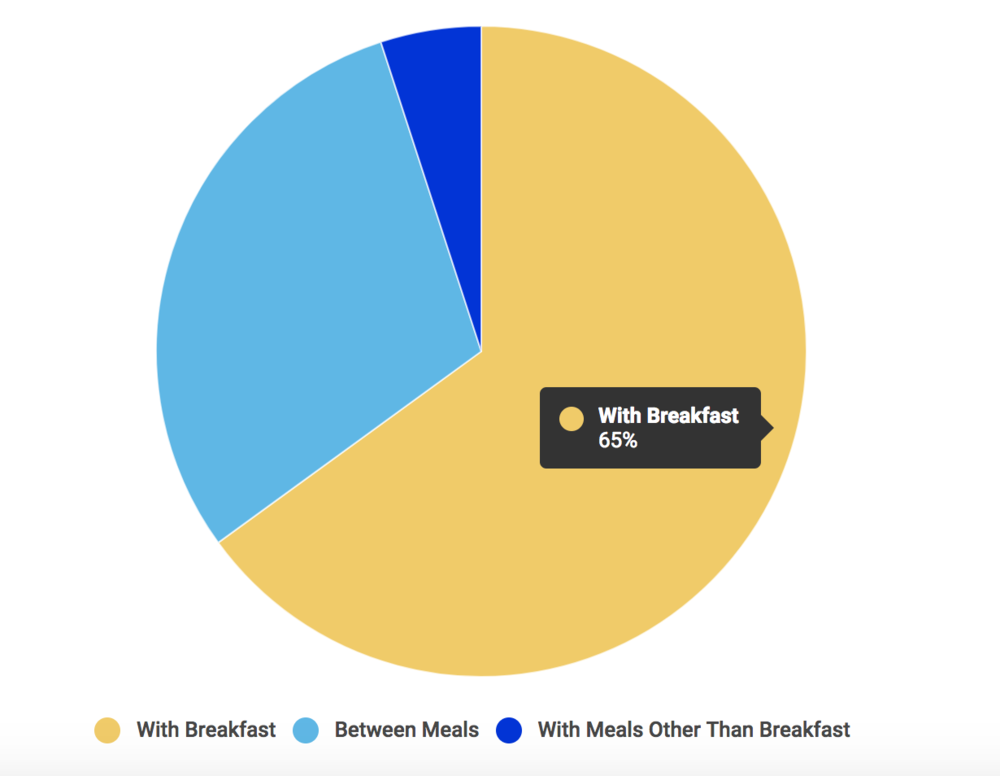
According to the American Association of Retired Persons, the average American drinks three cups of coffee per day, which translates to 83 percent of coffee drinkers not being able to imagine their life without their java.
How Many Americans Drink Coffee?
Dana White, Clinical Assistant Professor of Athletic Training and Sports Medicine, has been at Quinnipiac University for 10 years, working directly with students and athletes.
Throughout those years, she has often seen students with cups of coffee in her morning classes and informs her students and athletes to tweet about the dangers of abusing caffeine.
“I teach an 8 a.m. class and I’ll see everybody with their coffees so I’ll tweet it out ‘Coffee isn’t breakfast,’” said White.
The amount of caffeine in drinks varies, according to the National Institute of Health (NIH), but it is generally
An 8-ounce cup of coffee: 95-200 mg
A 12-ounce can of cola: 35-45 mg
An 8-ounce energy drink: 70-100 mg
An 8-ounce cup of tea: 14-60 mg
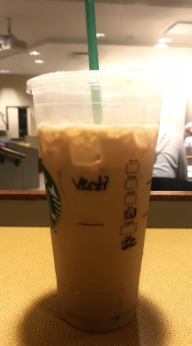
Starbucks offers six different sizes of coffee, each one with names that only regular customers know by heart
Short: 8 ounces
Tall: 12 ounces
Grande: 16 ounces
Venti Hot: 20 ounces
Venti Cold: 24 ounces
Trenta Cold: 31 ounces
White’s recommendation for coffee drinkers is that they should drink one coffee per day, however most people do not realize the different amounts of caffeine in different sizes of coffee.
“If you go get a ‘Venti,’ that is more than two cups of coffee, that is almost three cups of coffee,” she said. “So one cup might be multiple cups of coffee.”
Drinking too much caffeine, which is very common among college students, can lead to health problems, such as restlessness and shakiness, insomnia, headaches, dizziness, rapid or abnormal heart rhythm, dehydration, anxiety and dependency.
Studies have also shown that drinking more a larger amount of cups of coffee per day might have an impact on your GPA.
In a survey with more than 1,000 college students, it was shown that students who drank only one cup of coffee per day had a GPA of 3.41, compared to students who drank more than five cups a day had an average GPA of 3.28.
Although that are many risks about drinking coffee, there are also benefits to it.
According to Harvard’s School of Public Health, it may reduce the risk of Alzheimer’s and dementia, suicide risk, lower the chance of oral cancers and strokes.
Those statistics might be available to Millennials, however, majority of them do not care about it or choose to ignore it.
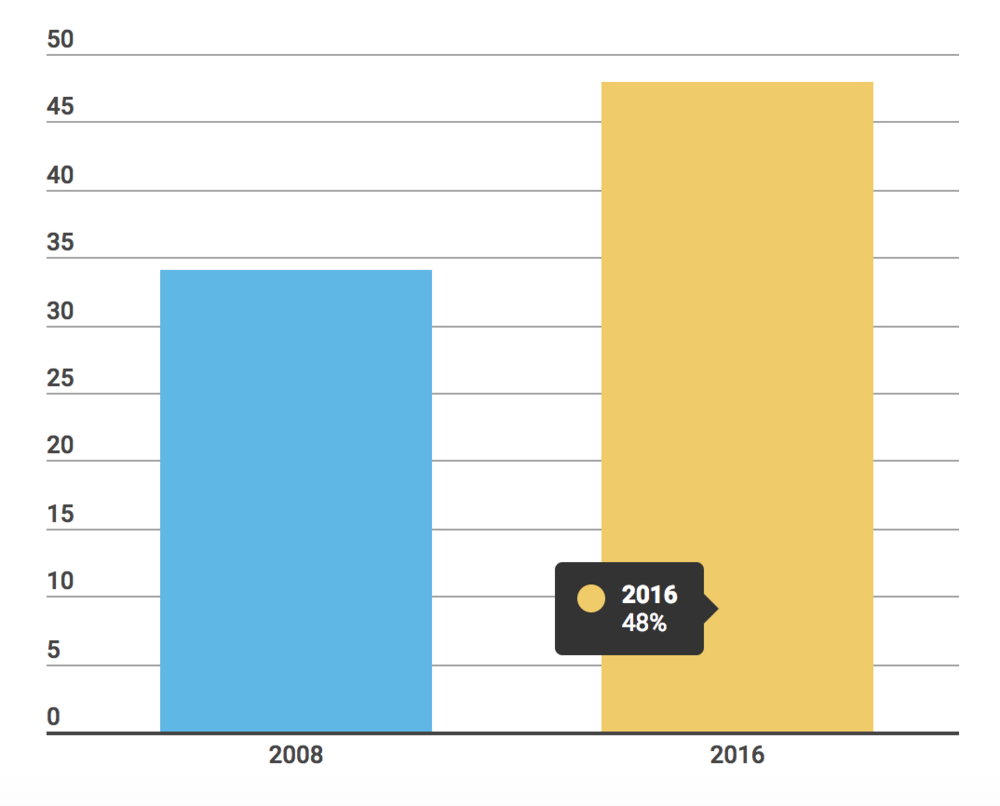
According to Bloomberg, Millennials count for 44 percent of U.S. coffee demand, an increase from 34 percent to 48 percent from 2008 to 2016.
Millennials are increasing the demand of coffee in the country and an example of that is the opening of Starbucks on Quinnipiac’s Mount Carmel campus.
White does not think that this event will affect students drastically.
“I don’t know that it’s really going to do any more caffeine damage if it wasn’t here,” she said.
Other students, like marketing major Ryan Lawson, have been drinking a larger amount of coffee since the opening of the new Starbucks on campus.
“I drink coffee every day, and sometimes more than once,” said Lawson as he got a Venti sized coffee at Starbucks.
Although Monday mornings aren’t as busy as expected, Starbucks on campus gets extremely crowded throughout the week.
“Usually in the mornings and around lunch time or early afternoon is when it is the most crowded,” said one worker.
Quinnipiac students have always been aware of the huge lines and waiting time at Au Bon Pain, in the first floor of the cafeteria. However, the workers have been seeing a difference.
“We’re definitely less busy since the Starbucks opened, but we still get a lot of students, mostly because of our sandwiches,” said a worker at Au Bon Pain.
A misconception about coffee is that it gives people the energy they could be lacking of in the moment, however, White thinks this is one of the bigger issues about caffeine abuse.
“The real energy you are going to gain is from calories, and a cup of coffee only has about five calories. You can’t just drink coffee and not eat food,” said White.
The United States spends $40 billion on coffee each year, according to the National Coffee Association, with the average price of an espresso-based drink being $2.45 and the average price of a brewed cup of coffee at $1.38.
“I probably spend around $50 on coffee each month, maybe a little less,” said Anica Lazetic, psychology major at Quinnipiac.
Although Starbucks is considered an expensive coffee shop, the fact that Quinnipiac students can use their meal plan money is very helpful.
“It’s mandatory to pay for $200 for meal plan when you’re off campus, and since I’m always cooking at home, I have been spending mostly of my meal plan with coffee at Starbucks,” said Healey.
Although majority of the students think of coffee in a positive way, White believes there are some measures they need to take.
“I think most college students need to be eating better, sleeping more and calming down, so [coffee] can work against you if you take too much of it,” said White.
An uproar has taken place at Quinnipiac University, and it’s coming from all of the Bobcat hockey fans. The university’s longtime hockey rival, Yale University is set to play in Hamden on Saturday, Nov. 18. This is during the mandatory Thanksgiving vacation for Quinnipiac students.
Students should not be discouraged until they know the outcome of the online ticket portal, which is known to be a high-intensity moment for most student fans. The Quinnipiac Bobcats’ ticket office releases a hyperlink to students that leads them to an online queue. From there, the student is prompted to generate a ticket for the game. Due to the popularity of the event, tickets go quickly. This also becomes an issue for some students due to the high traffic on the website, while using the same WiFi network.
This year, students will be sent a link in the evening of Nov. 5. According to Quinnipiac’s Assistant Director of Residential Life Mike Guthrie, students with a valid ticket will be able to file a late-stay request. They will be able to submit a plea to stay for the game taking place during the start of the break period. Requests must be made on the My Housing portal through the Quinnipiac student website, no later than Friday, Nov. 10. The late-stay request sign-up form will be released on Monday, Nov. 6.
A Quinnipiac issued ticket must be presented to one of the 20 volunteer resident assistants that are completing the room checks on Friday evening. The number on the ticket must match the student’s name that has requested to stay. Student’s will not be able to sell their tickets to others. That tactic has been popular amongst fans on campus in the past.
In a poll posted on HQ Press’s Twitter page, presented some potential results of involvement.
Do you plan on staying at school for the Quinnipiac-Yale game on the first weekend of Thanksgiving break?
Some students might also be sticking around campus for the game set to take place on Friday night. The Quinnipiac Bobcats will be playing Brown University in Hamden. A late-stay request is also available to students with a valid Quinnipiac generated ticket. Students granted permission for just this game must be out of the dorms no later than noon on Friday.
Another event that could potentially impact attendance is happening right down the street. One of the biggest rivalries in Ivy League history will be held at the Yale Bowl in New Haven. The Harvard vs. Yale football game is set to take place on Saturday at 12:30 p.m.
According to Guthire, the Eastern College Athletic Conference, ECAC, had made the hockey schedule far in advance. No changes would be made due to the university’s recess.
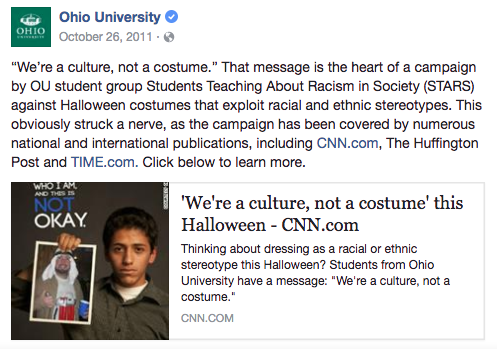
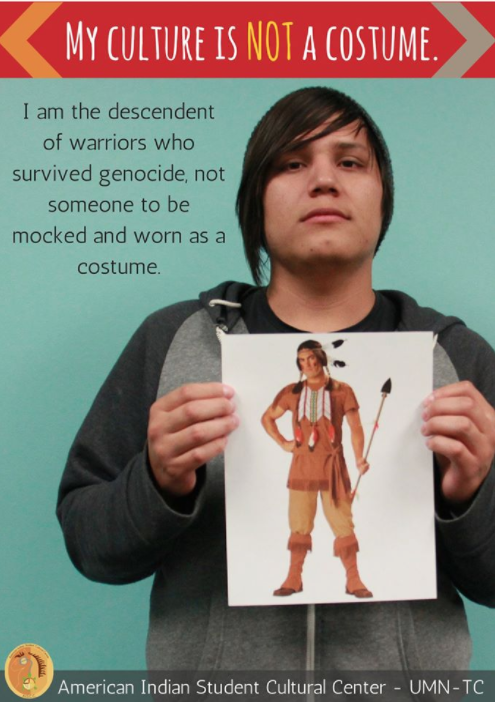
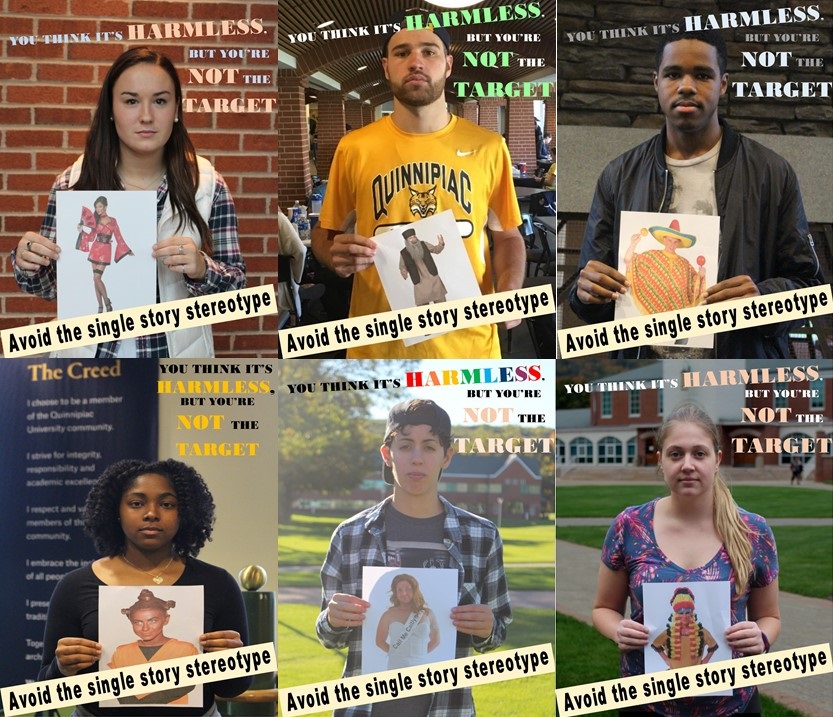
The “my culture is not a costume” campaign was first introduced to Quinnipiac University in 2014 by the Department of Cultural and Global Engagement (DCGE.) The campaign was inspired by the “we’re a culture, not a costume” campaign by the Students Teaching About Racism in Society (STARS) student group at Ohio University. Some of the cultural costumes in the campaign include the Native American costume, Mexican costume, costumes involving black face, geisha costumes and gay/lesbian costumes. Many of these costumes are still sold at Halloween costume superstores like Party City and Spirit Halloween.
The campaign aims to raise awareness on cultural appropriation during Halloween in hopes students will stop buying these costumes.
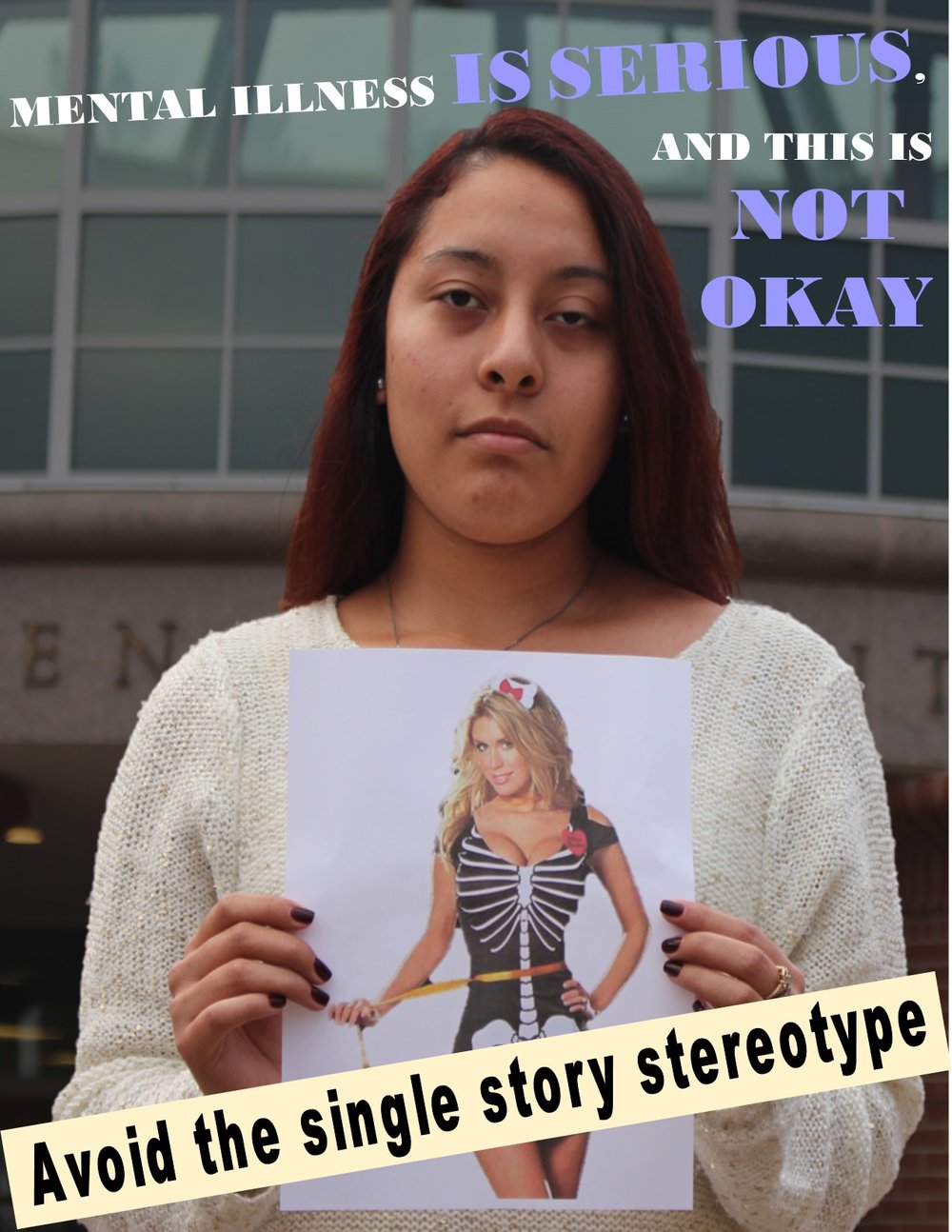
Over the years, many universities in different states in the the nation have recreated the campaign on their campuses. The Quinnipiac “my culture is not a costume” campaign included costumes that mock those who suffer from a mental illness, in addition to those that mock races, religions and ethnicities.
Photo courtesy of Abbie O’ Neill
Quinnipiac’s Latino cultural society president, Kelsey Bombon, was involved in the campaign. Bombon held a photo of an individual in an anorexia costume.
“Once the photo was published I felt no one understood it,” said Bombon. She added that the campaign in 2016 was rushed and the photos were marketed too late.
“My freshmen year, when they did it for the first time, it was was more impactful because orientation leaders were a part of it…many people knew who the faces of the campaign were,” she said.
“It started as students holding images of costumes that are not appropriate. The view on it was one of three things. Either students walked by and knew nothing of it, they saw their friends in the images and made fun of them or students would see it and recognize that they couldn’t wear the costume but didn’t understand why,” said Abbie O’Neill, DCGE director of student engagement.
O’Neill said this year she aimed to make the campaign more active than passive. DCGE alongside the student government association hosted various events to provide a space for students to tell their stories and have a discussion about cultural appropriation. The most recent was “your voice at Quinnipiac” on Oct. 20 in the piazza, where students volunteered to tell their personal stories related to cultural appropriation and discussed with others why it is wrong.
“I feel like there are still people who have a lot to learn…there are people who are aware of the campaign but don’t understand the deeper meaning of ‘my culture is not a costume,” said Yadley Turnier, student leader on the multicultural council.
Turnier attended “your voice at Quinnipiac” where she participated in discussions about cultural appropriation during Halloween.
“It happens all year round, but we only notice it around Halloween,” said O’Neill. Students face bias related incidents and hate crimes throughout the year.
Megan Buda, Quinnipiac director of student conduct, said the data student affairs has in relation to bias-incident reports does not reflect an increase in inappropriate Halloween costumes.
“Don’t remember having any reported bias incidents related to Halloween costumes that was reported to us,” she added.
Although there isn’t an influx of reports during the Halloween holiday, there have been more reports on bias-related incidents over the years.
“I think there’s more conversation around it now than when we first started,” said O’Neill.
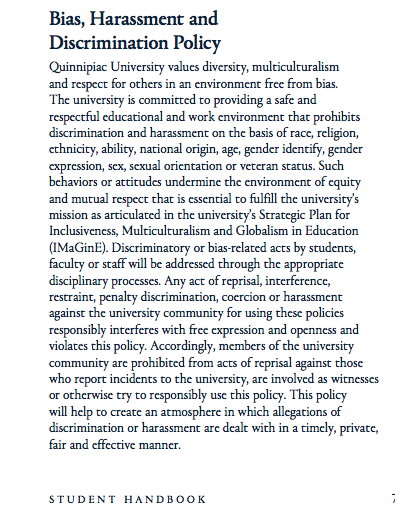
“Bias, Harassment and Discrimination policy” is defined in the student handbook. If you experience or witness such actions taking place, report it to Quinnipiac’s office of student affairs.