
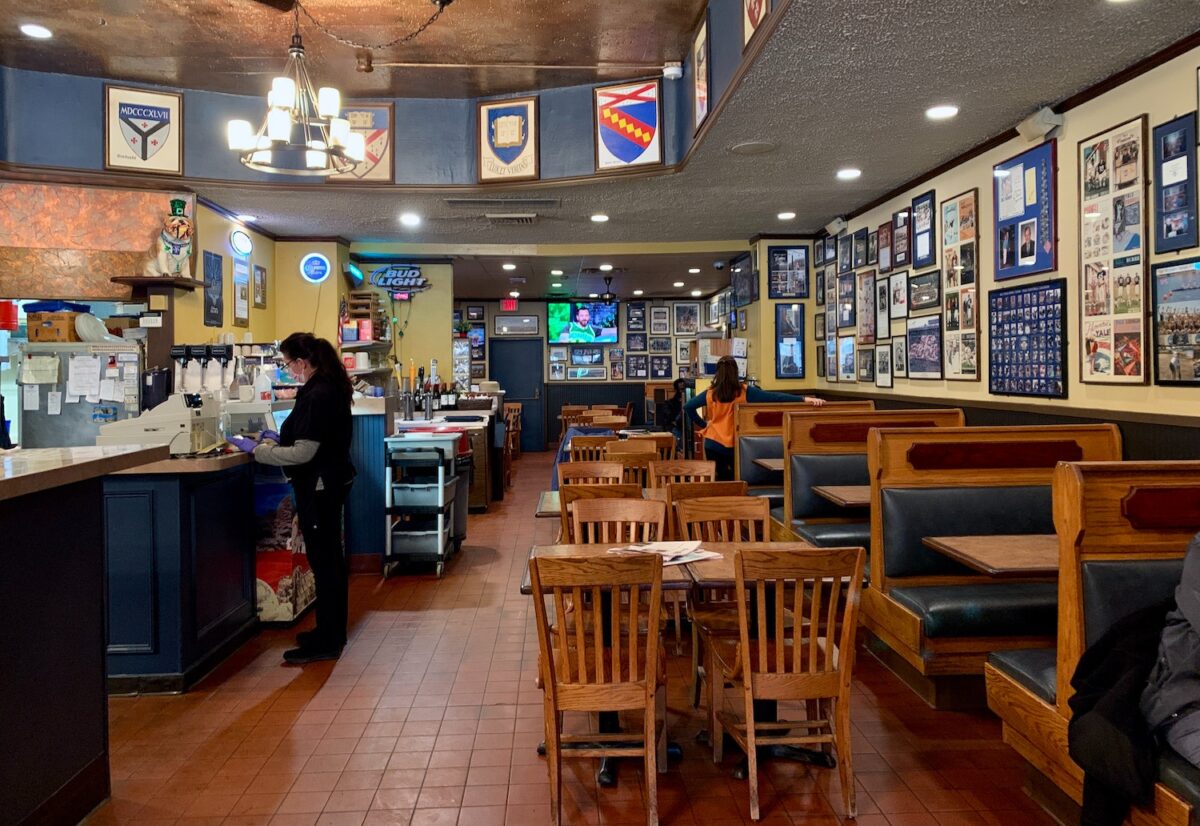
Students in the Toad’s line used to breathe down each other’s necks trying to push the line forward so they could get in. Once they were in, it was one large dance party, filled with sweaty students spilling their drinks as they danced in the crowd of random people. They hugged strangers and shared drinks without a care in the world. Now, the thought of this is unimaginable.
It was a time before masks and social distancing: When downtown New Haven could provide entertainment for many with its nightclubs, bars, and restaurants. downtown New Haven used to see a lot of foot traffic on the weekends with people going to these popular nightlife venues trying to find the best party scene, but COVID-19 has changed all that.
Due to COVID-19 restrictions imposed on March 16, 2020, these once popular nightlife locations have faced the economic challenge of trying to stay operational with minimal customers coming in and little space for those who do. New Haven small businesses received $47.7 million in loans under $150,000, according to the Together New Haven Economic Indicators report from December.
The pandemic has hit all small businesses hard financially, but nightlife businesses thrive on large crowds, dance floors and close contact, all of which are seen as unsafe and are prohibited due to COVID-19.
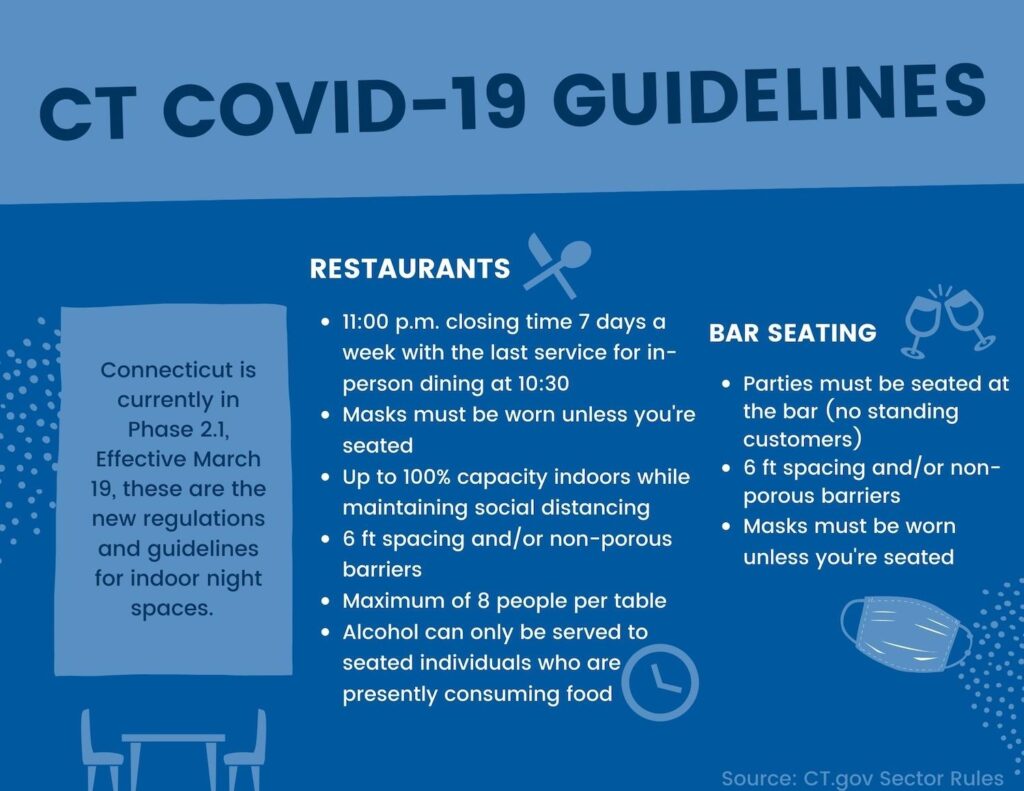
Businesses that want to remain open during the pandemic have to follow the Connecticut COVID-19 guidelines for whatever phase the state is on. Connecticut is currently in phase 2.1. Gov. Ned Lamont recently announced that Connecticut is easing some of its coronavirus restrictions on March 19, now allowing restaurants to operate at full capacity.
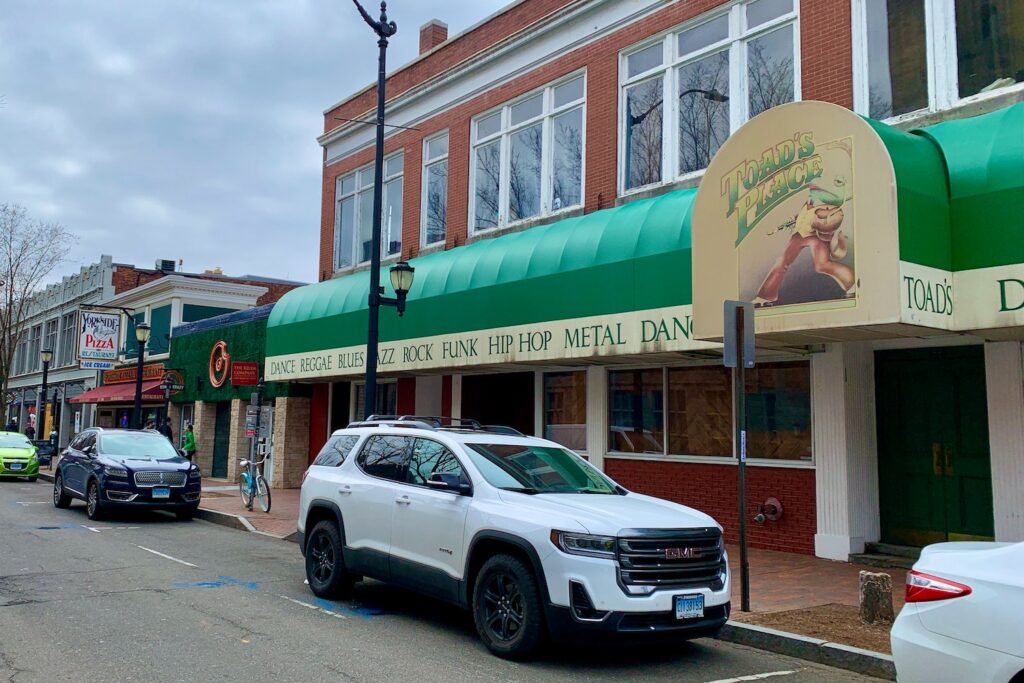
But while some restaurants are working with the guidelines to bring diners back and recover some of the lost business, clubs could not stay open during the pandemic due to the environment they require. Toad’s Place is one club and concert venue in New Haven that was among the most popular with college students, especially on its Saturday “college nights.”
“We go with the trends of where are people going to go and that really dictates things,” Jeremy Phillips, an old Toad’s bouncer said. “It builds a momentum. When you know groups of people are going to be there, you’re going to go. If you know you could get in there, you’re going to go.”
While the Toad’s marquee is still hanging at its York Street location, the inside has been devoid of customers since COVID hit. Toad’s went from being a hot spot for college students to what looks like an abandoned building practically overnight.
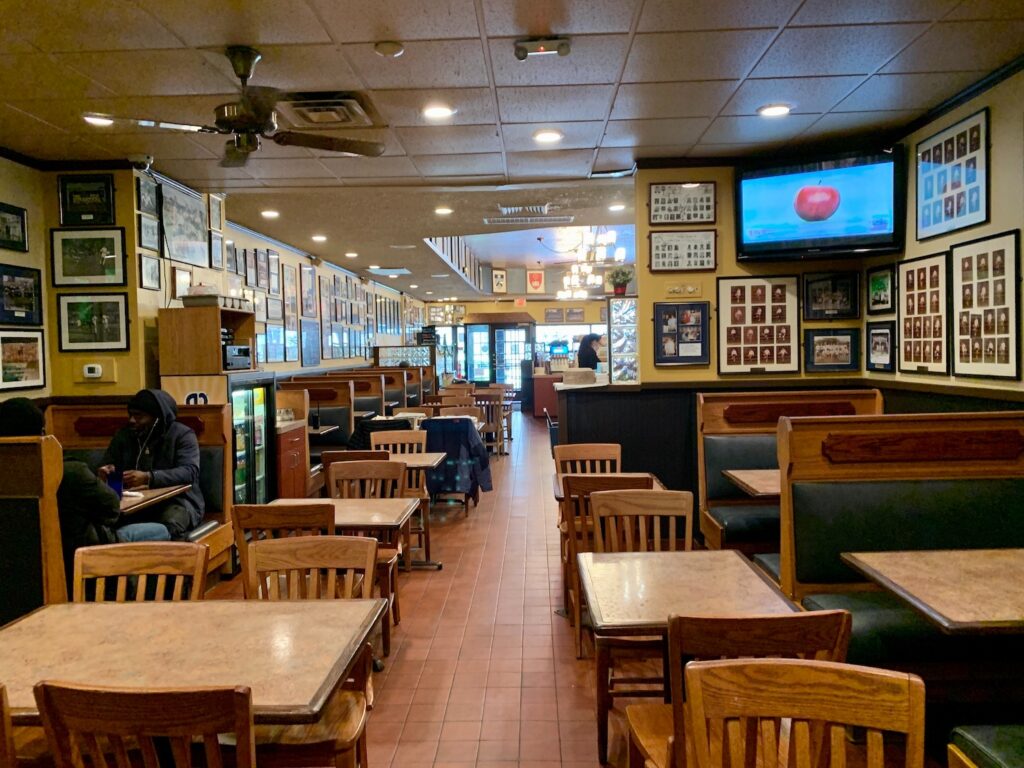
The impact of Toad’s closing has been felt as well by businesses adjacent to its York Street location. Located right in the center of Yale’s campus and next to Toad’s Place, Yorkside Pizza serves a lot of college students. The restaurant was recognized by the Huffington Post as one of the top 39 most iconic college town restaurants in North America.
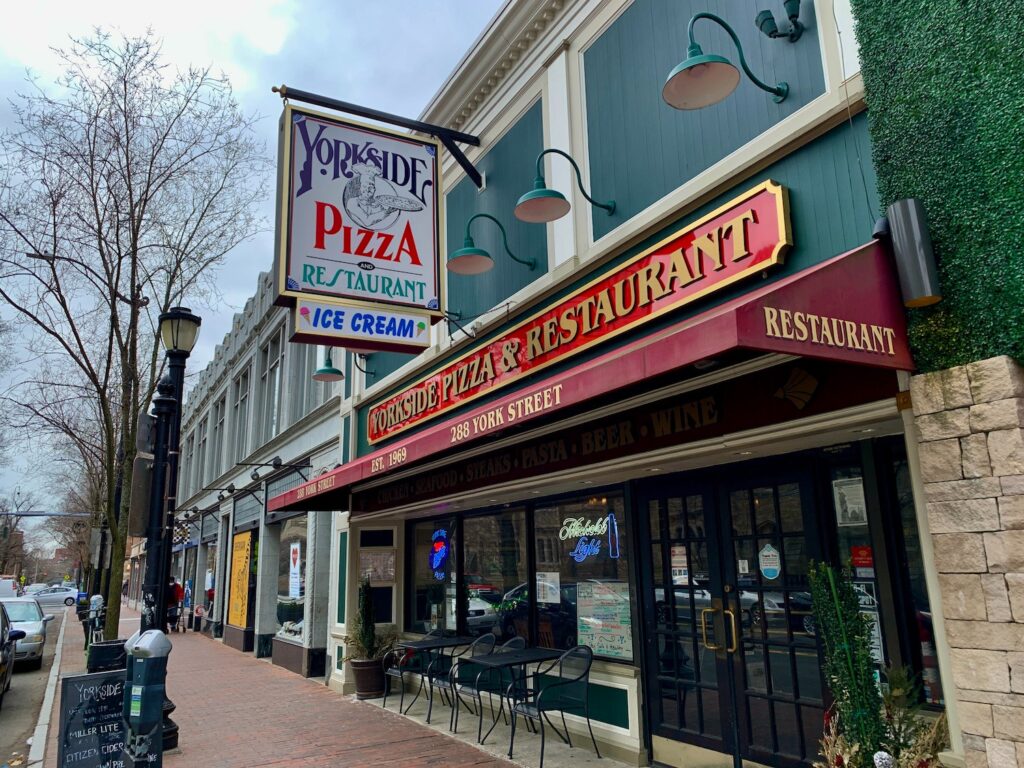
Yorkside has also been written up in books and is mentioned in Playboy Magazine. George Koutroumanis, Yorkside’s owner, said there is a half a page written about Yorkside in the New York Time’s best-seller, “Ninth House.”
Since Yorkside is right next to Toad’s and in the middle of Yale’s campus it saw a lot of its business coming from college students. Nicole Sarro, 19, sophomore radiology major at Quinnipiac University from New Fairfield, Connecticut, is one student who spent a lot of time at Yorkside.
“It was always packed on a Saturday night and usually had a lot of other college students there looking to get food, especially if they were drinking,” Sarro said.
While students used to visit Yorkside often, the pandemic slowed Yorkside’s business when it forced students to go home, extended breaks and implemented quarantines upon arrival. Koutroumanis said a combination of Yale being closed for so long and other universities not coming into New Haven has taken a big toll on Yorkside’s business.
Bars are also a big fraction of the nightlife venues in New Haven. Since 1991, BAR has been known for its brick oven pizza, while also offering drinks, private events and a nightclub. Frank Patrick, BAR’s general manager, said they were having their busiest months yet at the beginning of 2020.
Patrick specifically mentioned the events BAR hosted for different universities. He said Yale School of Public Health and Quinnipiac Law School would have private events at BAR throughout the year, and that Quinnipiac events typically had around 80-100 people attending.
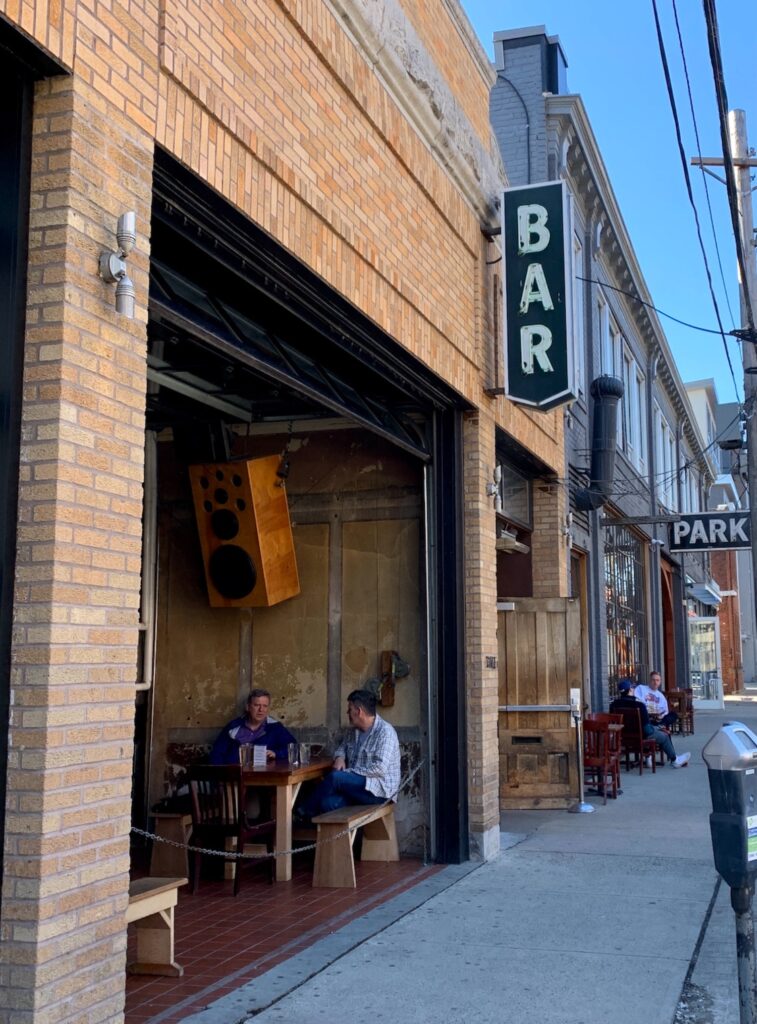
“So that’s just not students. That’s also faculty, and you know administrative staff that comes for these events too,” Patrick said.
Yorkside also relied on the business of universities, which is not just limited to the students. Koutroumanis said their business is a blend between Yale and New Haven. He said that any time there’s a game or event it brings a lot of people to the area and customers to Yorkside.
“The area that we’re in, we’re 50 percent college-oriented. You know, all colleges mixed. Predominantly Yale because they’re here every day. A lot of the other colleges are here on the weekends and special occasions,” Koutroumanis said.
According to a survey with 64 Quinnipiac student participants conducted in February, over half of the respondents have been to Yorkside before. However, with COVID-19 forcing students to adjust their weekend plans, fewer students are going into New Haven, and Yorkside’s business is down about 40 percent, according to Koutroumanis.
BAR felt the initial impact of COVID-19 deeply. They were down 81 percent of their business in their first three months of the pandemic. Patrick said they were doing 19 percent of what they should have been doing, and it happened overnight.
After a devastating first three months, outdoor dining opened up, and BAR got their business back up to 40 percent. However, their business was cut in half again when the cold weather hit, and the government added new restrictions. BAR has been able to hold on during the pandemic, but Patrick wonders how other businesses in New Haven are still operational.
“I mean most of the places in New Haven either closed down or closed for the time being,” Patrick said. “When I see these other businesses right on the block here, I don’t understand how they’re holding on because you know, the fact that we have a lot of square footage gave us enough room to space out tables inside.”
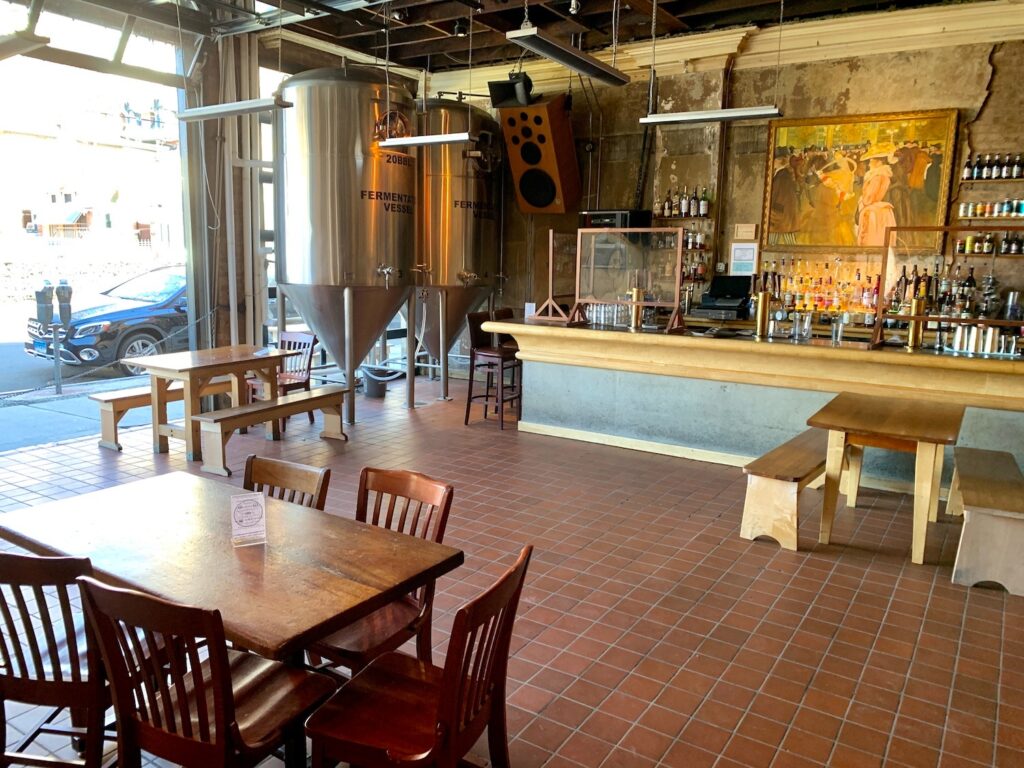
Photo Credit: Alyssa Naumann
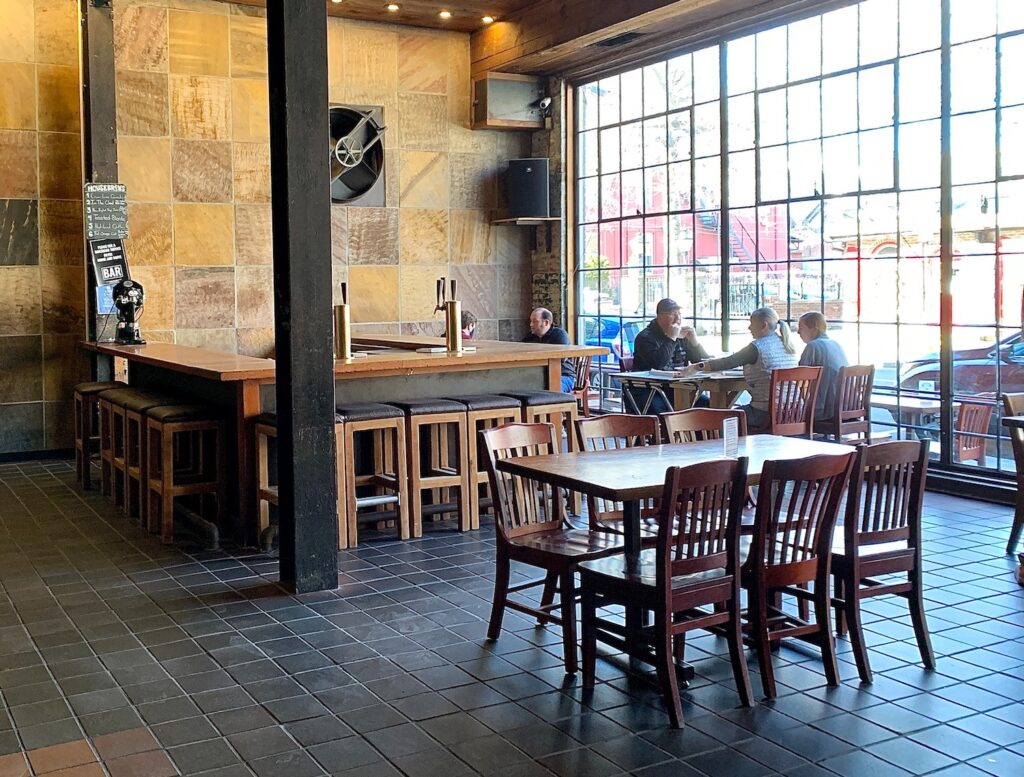
Photo Credit: Alyssa Naumann
While some businesses are still holding on, others had to close either temporarily or permanently. According to the Economic Indicators report, there have been 24 permanent business closures and 8 temporary closures in New Haven since March. Out of these 32 businesses, there are 12 nightlife venues just in downtown New Haven alone.
Click through the black points on the map below to view downtown New Haven nightlife businesses that had to close due to the pandemic.
While there have now been 36 total business closures of some sort, there have also been 43 business openings since March, resulting in a net gain of 7 businesses.
The City of New Haven’s Economic Development Deputy Administrator Robert Ellis said that the new business openings were a result of a combination of things. He said people wanted to do something different, stable and to take advantage of their downtime during the pandemic.
“It was a creative time and the best time to try and apply their creativity considering the economy,” Ellis said.
Sheila Hummel, small business and community development director for the State of Connecticut Department of Economic & Community Development, had similar thoughts about why people decided to start businesses during the pandemic.
“Some people have been displaced and they’re thinking ‘OK, this is the time. I’ve been thinking about opening a restaurant. This is the time to do it,’” Hummel said.
Ellis said that New Haven is growing, and the biomedical and bioscience industries have brought more people to downtown. Hummel also said that New Haven is an up-and-coming city, and with more clients coming in, people are trying to capitalize on the new market.
“They demand more services. If you are coming from Brooklyn, New York, Manhattan, you’re used to having all these restaurants and specialty shops.”
Ellis also said that landlords were willing to help those startup businesses since they had vacant spaces and were still paying mortgages, making rent and lease agreements more attractive to new business owners. But while some people were able to find success in their COVID businesses, others were not so lucky.
Since clubs rely on big crowds and close contact, there was no salvaging their business with the COVID restrictions. Now, students are finding other ways to socialize instead of going into New Haven every weekend, like they did before COVID.
“For the most part, I’m just hanging in my suite with my buddies. On the weekends we do go to New Haven, obviously not to the clubs but we’ve been to BAR, Geronimo, and places like that,” said Ian Conway, 21, a senior marketing major at Quinnipiac from Chester Springs, Pennsylvania.
Conway said he’s been to all the popular places in New Haven like Vanity, Toad’s, Gotham and Box 63, but his first time at BAR was during COVID. He said they had good food, good drinks and good spacing.
While college students typically love the party scene, some have been trying to be as COVID cautious as possible while at school. According to the survey, 43.2% of the students from Quinnipiac have been mainly attending dorm parties and gatherings to socialize, instead of going out.
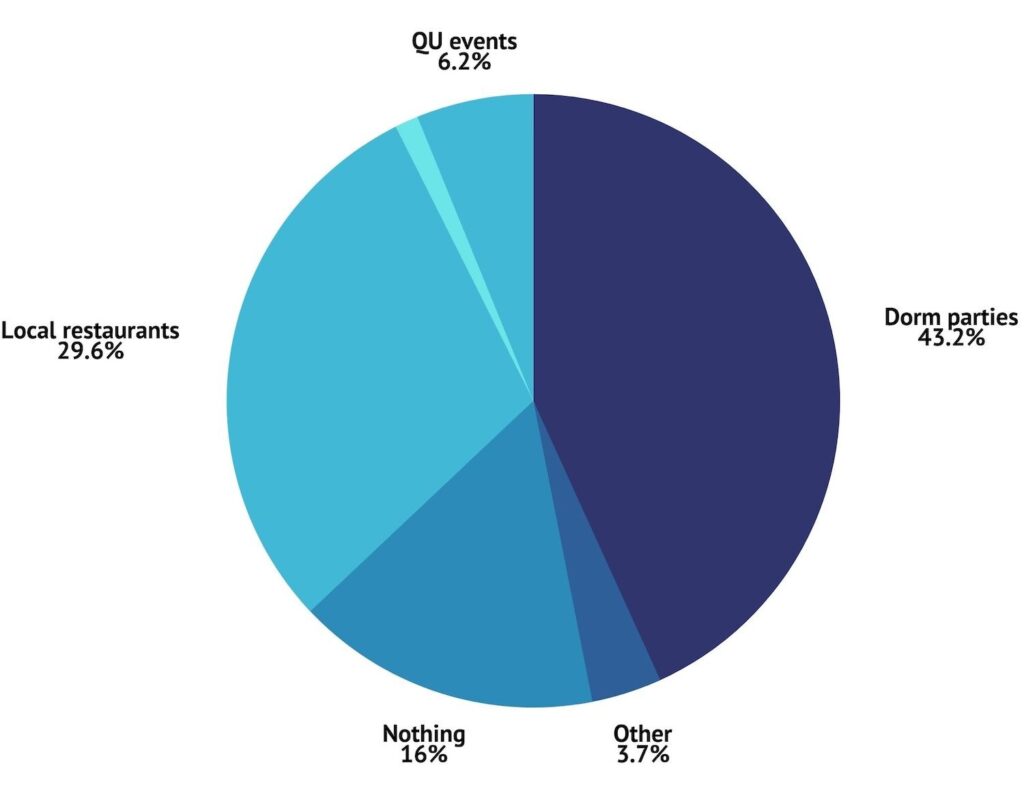
While all but one of the survey respondents have been to a bar, club or restaurant in New Haven before, only half have been to New Haven since COVID. Also, about 70% of respondents said it is important to them that nighttime businesses in New Haven follow COVID protocols.
“I am willing to go to restaurants in New Haven during COVID because of the restrictions and social distancing,” Maya Narvekar, 20, junior occupational therapy major from Mineola, New York said. “I feel that I am only exposed to the people who I came to the restaurant with, rather than strangers. It is still a risk at times, but we make sure to wear our masks and stay away from people who we don’t know or trust.”
Narvekar said she has been to a few New Haven restaurants during COVID like Barcelona, Olives and Oil, and Te Amo Tequila Bar. However, she said if she is at an establishment that seems unsafe or unsanitary, she immedietly leaves to stay safe.
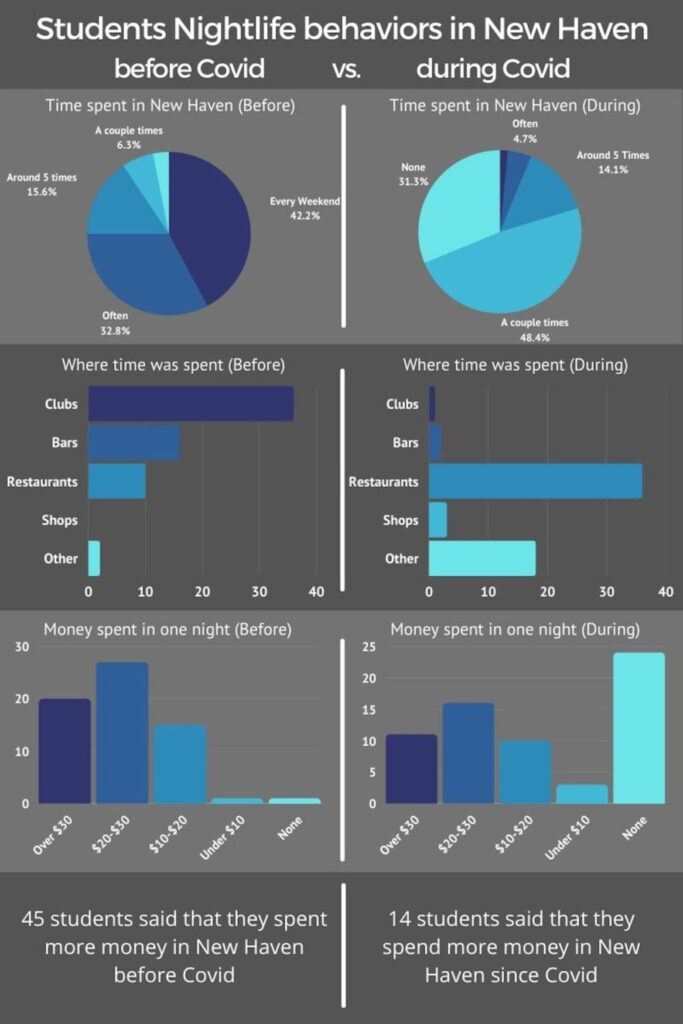
See below for some of the other information gathered about Quinnipiac students’ behaviors in New Haven during the pandemic.
Graphic by Alyssa Naumann
Although students have shifted their nightlife behaviors and are spending less time and money in New Haven, BAR has found that their biggest challenge has come with the inconsistency in regulations coming from the government.
“For the government to constantly tell us this is going to be three months, it’s going to be six months, they kept changing the end game for us which was really hard,” Patrick said.
Patrick said the way the government handled the pandemic took the biggest toll on the employees looking to get rehired after being laid off last spring. He said they had to focus on preserving their management and kitchen staff for when the pandemic finally blew over. This meant laying off around 60 employees.
“Having 80 employees to having to layoff almost all the employees,” Patrick said. “When COVID hit it was just myself, one manager and my kitchen staff. So, for those first three months, nobody was really here. Maybe 20 people working on a rotating basis.”
Yorkside also dealt with laying people off. Koutroumanis said that when there was no in-person dining in March, all of Yorkside’s servers were laid off.
One of the biggest challenges during the pandemic has been unemployment, and the city of New Haven is no stranger to this struggle. Unemployment claims peaked in New Haven in July, according to the CT Department of Labor on the Economic Indicators report.
Over 20% of the New Haven unemployment claims since July have come from the accommodations and food services industry, which is shown on the Monthly Unemployment Top Ten Industries chart on the Economics Indicator Report.
“The arts, hospitality and tourism sector represents 16% of the workforce for Greater New Haven so the pandemic has deeply impacted both jobs and economic vitality in this sector,” Michael Piscitelli, AICP, Economic Development Administrator for the City of New Haven said in an email.
While the pandemic has come with its challenges, the nightlife venues are getting a break from the crazy weekend crowds. Koutroumanis said they faced a lot of abuse dealing with drunk, obnoxious and uncooperative kids. He hopes when people go to dine in-person that they remember to follow the golden rule.
“When the pandemic is over, I hope people will remember just to be kind, courteous and remember that server, that guy behind the counter is somebody’s father, mother, somebody’s friend, somebody that would like to be treated like yourself,” Koutroumanis said.

One reply on “Nightlife on hold: The impact of COVID-19 on New Haven clubs and restaurants”
[…] local pushback, however, as many of these business owners have struggled financially due to the impact of the pandemic on small […]