
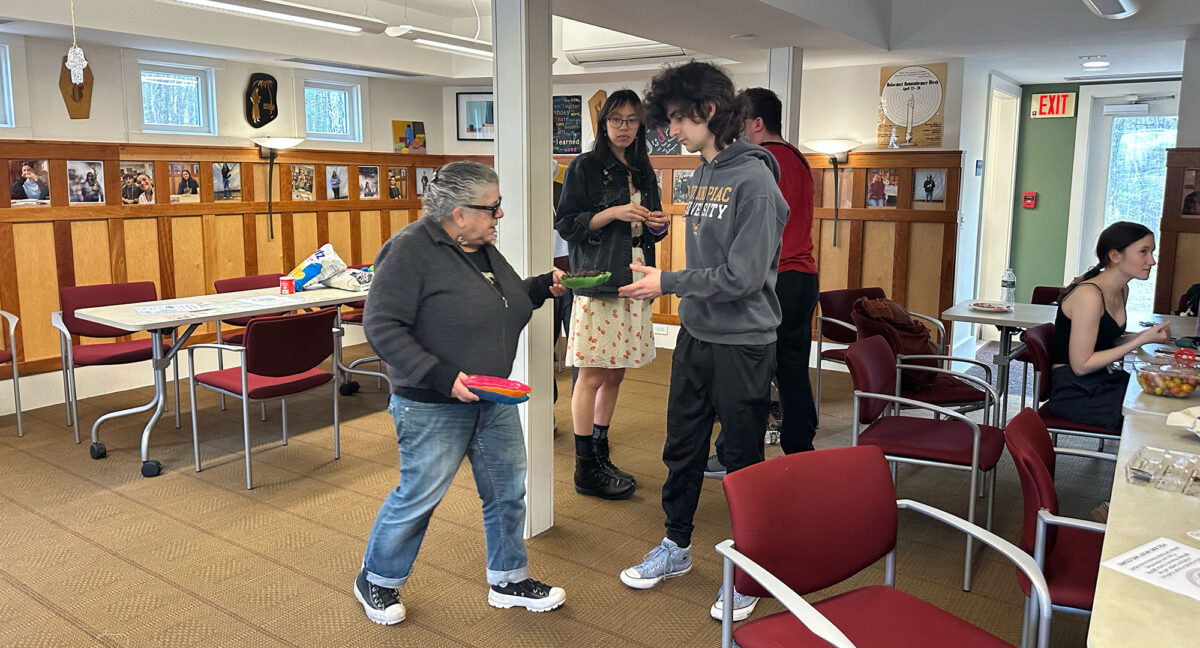
Rabbi Reena Judd, the Jewish chaplain at Quinnipiac University, believes that hate crimes have increased in her environment during the recent presidency of Donald Trump, especially after Hamas attacked Israel. She noted that she was called crazy several times and was afraid to express her opinion simply because it differed from the prevailing Jewish faith.
“Trump is the devil. I used to go to Palestine every year, but eight years ago I decided never to go to Israel again after my husband, who is also a rabbi, was detained at the Tel Aviv airport for several hours to check his Jewish origins,” says Rabbi Judd.
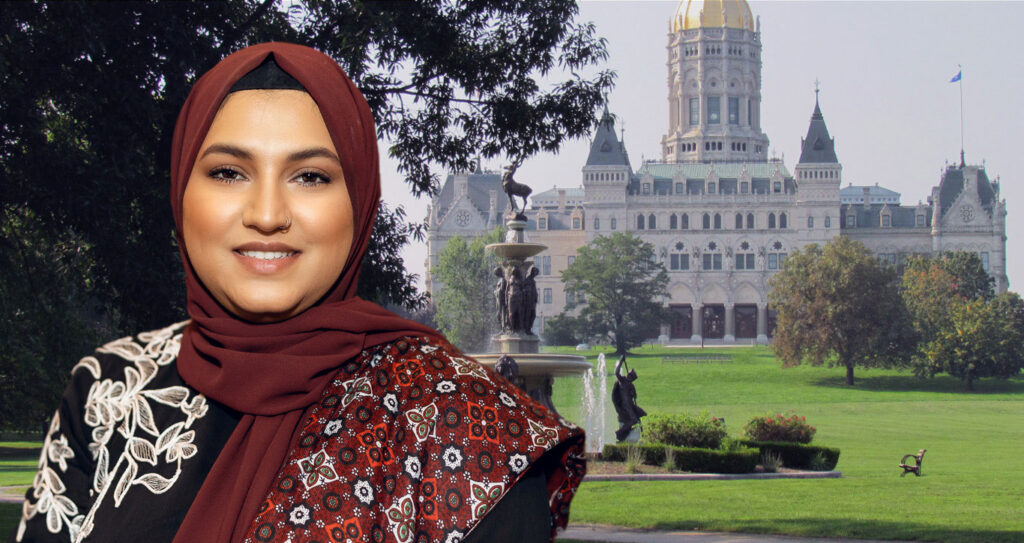
Maryam Khan, the first Muslim woman elected to the Connecticut State Legislature, feels real fear in the current climate.
“International and non-American students in the state should fear deportation if they voice support for Gaza,” Khan said.
Since Hamas’ Oct. 7, 2023, attack on Israel, the United States has seen a 337% increase in antisemitic incidents and a 172% rise in anti-Muslim hate crimes. College campuses have become focal points in a growing national debate over free speech, civil rights, and rising hate speech.
The war in Gaza has displaced about 1.9 million people, or 85% of Gaza’s population, according to the United Nations Office for the Coordination of Humanitarian Affairs (UNOCHA). More than 200,000 Israelis have also been displaced, per Haaretz.
In the U.S., hardline rhetoric from Israeli figures, including National Security Minister Itamar Ben-Gvir — who has called for limiting Arab influence in public life — has echoed into U.S. politics, fueling polarizing debates in Congress.
Student demonstrations that began at Columbia University have since spread to more than 100 college campuses, with protesters demanding university divestment from Israel. Critics have accused some demonstrators of antisemitism — including instances of hate speech and targeting of Jewish students — while supporters argue the movement centers on human rights and constitutionally protected protest, as covered in NPR and The Guardian.
Hamas, which the U.S. State Department and European Union classify as a terrorist organization, killed approximately 1,200 people during the Oct. 7 attacks. In retaliation, Israel’s ongoing military campaign has killed more than 34,000 people in Gaza.
Connecticut, where Muslims make up about 1.2% of the population and Jews 3.91%—according to the Jewish Virtual Library. The state saw a significant rise in hate speech and hate crimes, with official statistics indicating an increase of nearly 50%.
This rise in hate speech has drawn attention to the fear experienced by both communities—Muslims and Jews—in the state, and has underscored the need for open dialogue. This urgency became even more evident after multiple universities in New Haven and Stamford witnessed mass arrests of student protestors, many of whom were Muslim.
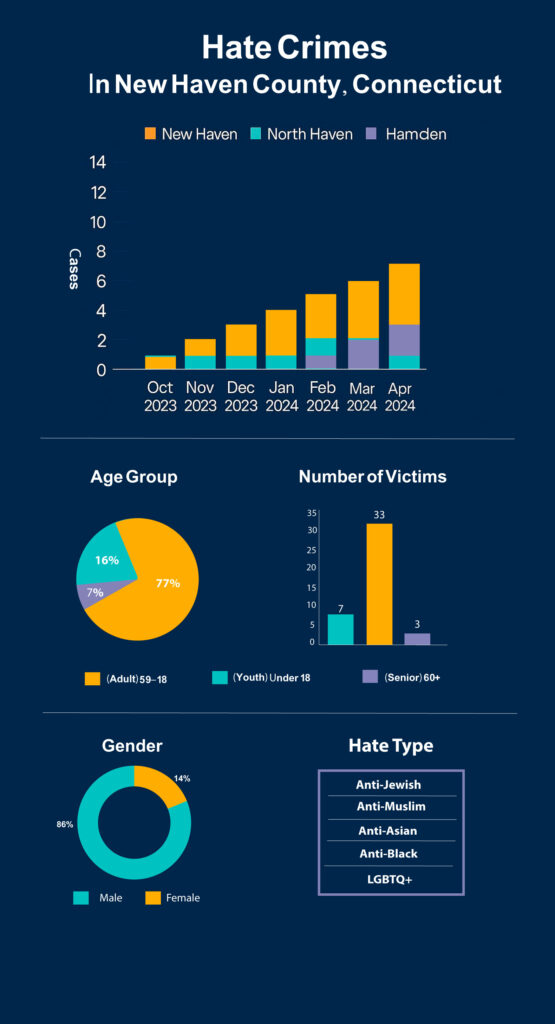
Data from the New Haven Police Department shows that hate crimes in New Haven County, Connecticut, rose steadily between October 2023 and April 2024, with 43 cases reported during that period.
The majority of incidents occurred in New Haven, followed by North Haven and Hamden. Victim demographics indicate that 77% were adults aged 18 to 59, 16% were under age 18, and 7% were 60 or older.
Men made up 86% of the victims, while women accounted for 14%. The reported offenses targeted various groups, including Muslim, Jewish, Asian, Black and LGBTQ+ individuals. The increase reflects broader national trends following the Israel-Hamas war, with Connecticut communities experiencing heightened tensions and concerns about safety and discrimination.
Despite these numbers, a New Haven police spokesperson doesn’t believe hate crimes are alarming.
“Hate crimes in our region aren’t high,” says Christian Brookhart, a New Haven police officer and spokesperson.
State Rep. Khan says hate incidents against her community are rising, but often go unprosecuted.
“The hate crimes we’ve charged in the state have not increased that much,” she said. “Muslims who experienced acts that would technically be hate crimes often see those charges dropped.”
She attributed the gap to a lack of Muslim representation in crafting hate-crime laws. “Muslim groups aren’t at the table when this legislation is written,” Khan said. “Why would they expect the system to protect them?”
Khan criticized Yale University for calling police on students protesting Israel’s war in Gaza, saying it chilled free speech.
Despite these arrests and real threats, a New Haven police spokesman insists that freedom of speech is protected under the Constitution.
Hate crime investigations require evidence of an underlying criminal act, not just offensive speech, said Officer Bruckhart.
“Someone saying ‘I hate Jews’ is protected speech,” Bruckhart said. “But if they threaten violence targeting someone’s religion or ethnicity, that crosses into hate crime territory.”
Bruckhart distinguished between unlawful conduct and protected speech when asked about arrests at pro-Palestinian demonstrations, including Yale University’s April encampment, where 48 protesters were charged with trespassing.
“They weren’t arrested for their message,” he said. “Like someone refusing to leave a restaurant, it’s about violating property rules.”
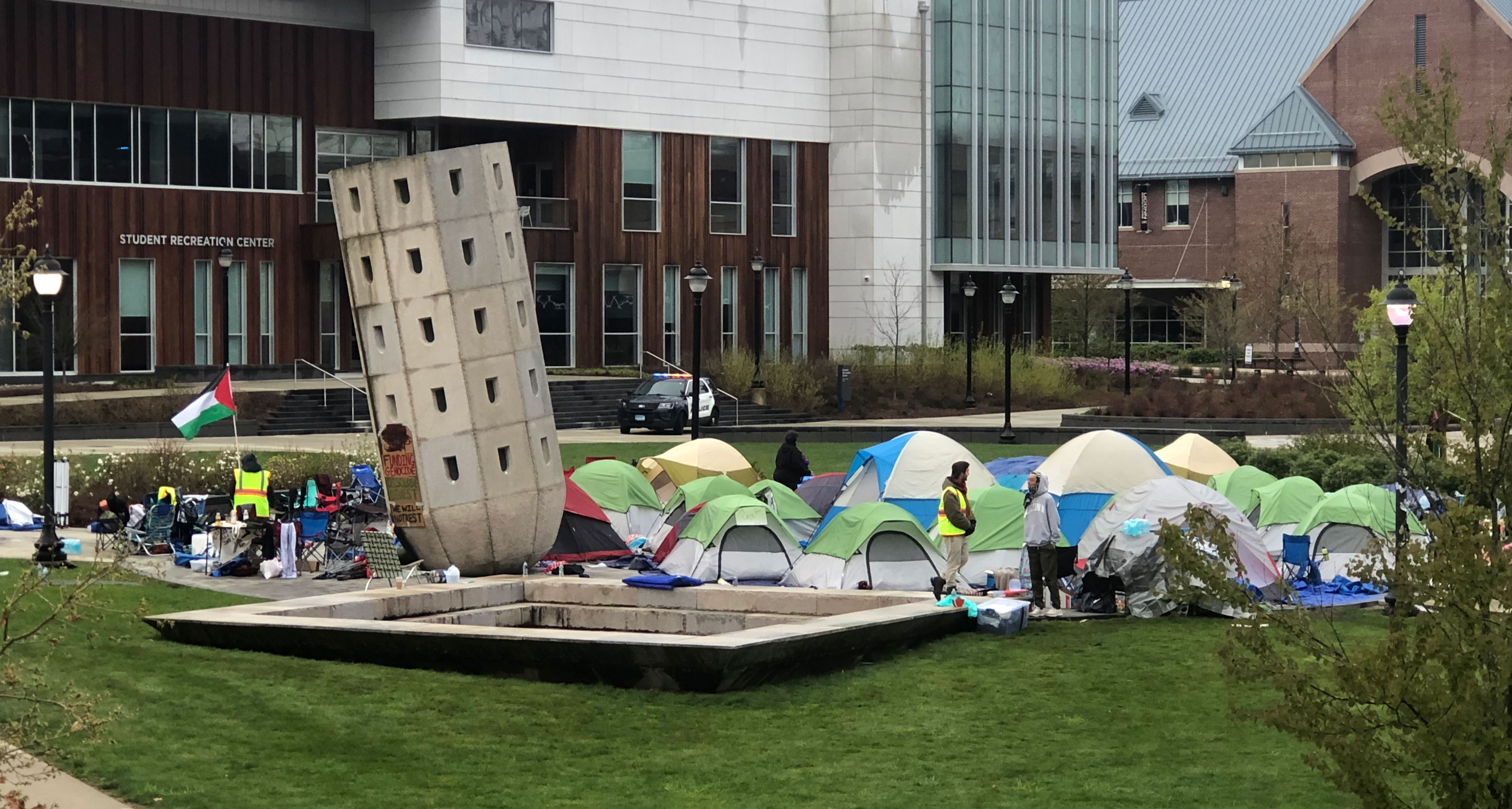
When Connecticut state police moved in to dismantle the pro-Palestinian encampment at the University of Connecticut (UCONN) on April 30. 2024, Muhammad Elsabbal, a 27-year-old political science student, found himself handcuffed to a wall in a holding cell for eight hours—the only protester given metal restraints instead of plastic zip ties.
“I believe it was intentional,” Elsabbal said during Eid’s celebration at UCONN, recounting his arrest during the demonstration calling for the university to divest from companies tied to Israel’s military. His lawyer later agreed, he said.
The incident capped six days of protests that mirrored campus demonstrations nationwide following Israel’s military offensive in Gaza, which began after Hamas’ Oct. 7.2023, attack.
Elsabbal said student activism at UConn began earlier, in 2022, after then-interim President Radenka Maric visited Israel with Connecticut Gov. Ned Lamont. Students distributed flyers criticizing the trip, featuring an image of an Israeli soldier restraining a Palestinian child alongside text reading “UCONN President Supports Apartheid.”
Tensions escalated in March 2022 when a verbal altercation over the flyers in the Homer Babbidge Library went viral. University officials condemned a non-Muslim student’s profane outburst directed at Muslim students but failed to address the harassment claims those students filed, Elsabbal said
The April 25-30, 2024, encampment drew up to 60 participants nightly, Elsabbal said, with about half leaving when warned of impending arrests. Of those remaining, 25 were ultimately detained on trespassing and disorderly conduct charges.
“We weren’t obstructing movement,” Elsabbal said, noting basketball fans previously camped outside games without incident. “This was a First Amendment protest.”
University spokesperson Stephanie Reitz said in a statement that tents violated campus policies, creating safety concerns. She confirmed 25 arrests but declined to discuss Elsabbal’s handcuffing, citing pending litigation.
State police surrounded the encampment at dawn, giving three warnings via loudspeaker before officers began removing protesters from tents.
“They weren’t violent,” Elsabbal said. “We stood up when told and put our hands behind our backs.”
While most detainees received plastic restraints, Elsabbal was metal-handcuffed to a wall in the holding area. He spent the time reciting Quranic verses about patience, particularly the story of Prophet Joseph’s imprisonment.
Female Muslim protesters expressed discomfort being searched by male officers, Elsabbal said, despite previous requests for gender-sensitive policing. Reitz said UConn Police follow standard arrest procedures but “strive to accommodate religious needs.”
The university has since revised its protest policies, requiring prior approval for temporary structures. Elsabbal and other arrested students face disciplinary hearings this fall.
“At Yale and Columbia, protesters faced worse,” Elsabbal said. “But watching Gazans thank us on social media for standing with them—that mattered most.”
Imam: Anti-Semitism ‘A Western Construct’
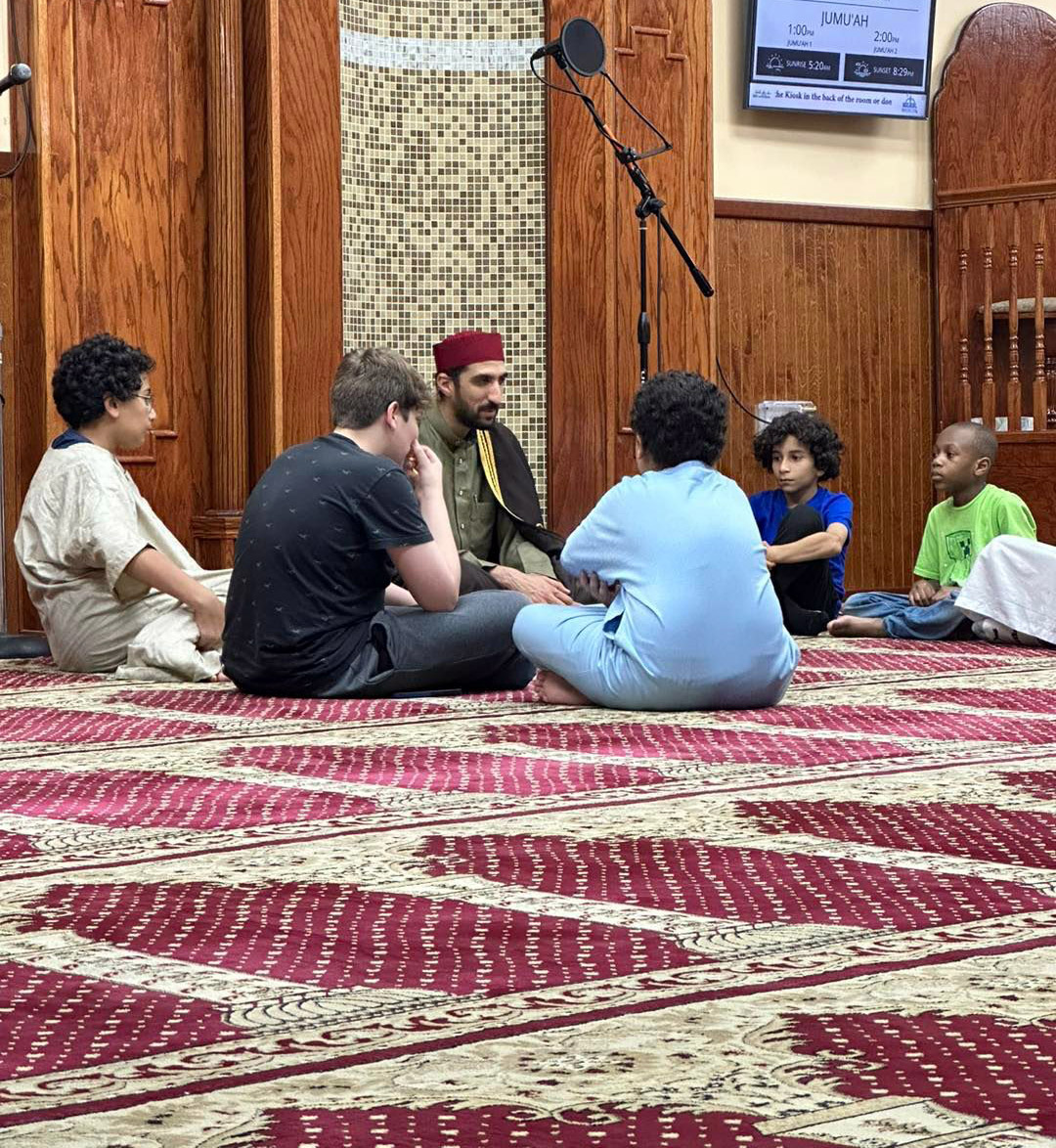
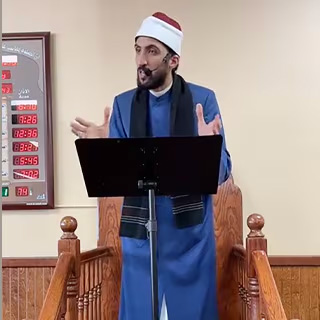
Imam Mahmoud Kamal of the New Haven Islamic Center believes anti-Semitism did not originate in Islamic societies but in the West, specifically in Europe.
“The term ‘anti-Semitism’ was never part of our discourse—not in our Islamic lands, nor in our Arab societies, nor even in our folk culture,” Kamal said. “History shows that Jews lived peacefully in our countries and were not subjected to persecution or discrimination as they were in the West.”
Kamal recalled a statistic indicating that the Jewish population in Morocco once reached around 150,000, and in Egypt, approximately 80,000. “They lived in well-known neighborhoods, had their own synagogues, schools, and institutions, and were an integral part of the social fabric,” he said.
“Hate speech was never part of our culture; rather, it is a Western construct whose consequences Muslims ultimately bear,” Kamal added. “Rarely is someone accused of anti-Semitism unless they are Muslim. We have become the perpetual accused, put on trial merely for defending ourselves-as—if our very existence is a crime.”
Kamal emphasized Islam’s teachings of mercy and justice, citing Quranic verses and the Prophet Muhammad’s example. “Islam is a religion of peace, yes—but above all, it is a religion of justice. Because justice is what brings peace, not the other way around,” he said.
He also criticized the portrayal of Muslims after 9/11, calling Islamophobia an “explicit policy” in certain media and political circles. “Muslims became the scapegoats,” he said. “War was waged against us—our lands destroyed, our people displaced—and we bore the consequences of crimes we had no part in.”
Despite tensions, Kamal said his mosque has not witnessed direct hate speech since October 7.2024. “Our lands have never exported hatred,” he said. “They have always been lands of welcome, tolerance, and mercy.”
Credit: Ismaeel Zafer
Coffee Shop Owner Bets on Unity Over Division
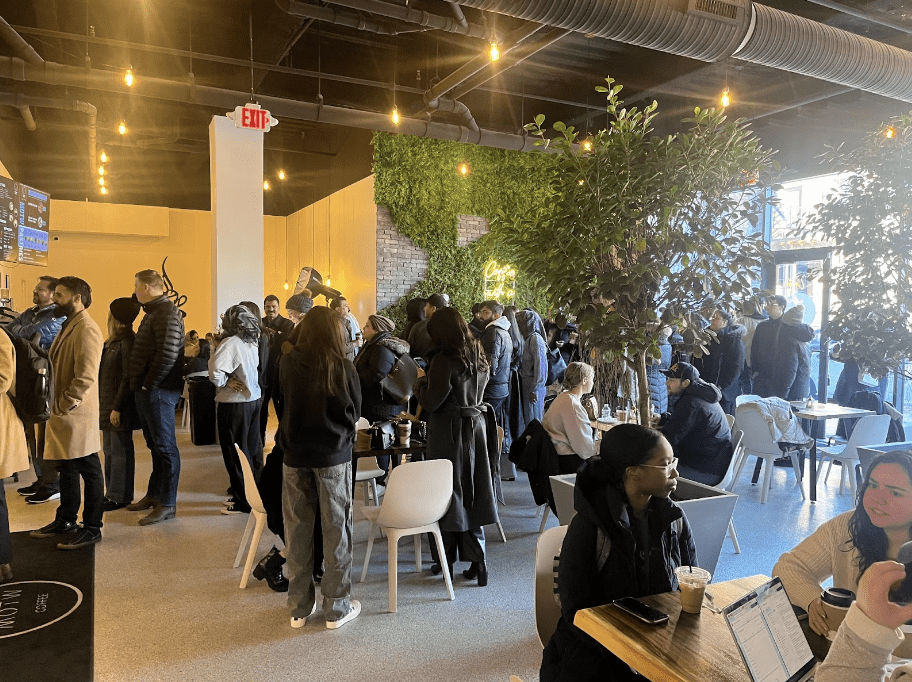
At a time of rising global tensions, Adam Sohail’s “Muslims of the World” coffee shops are betting on unity over division.
“We wanted to combat Islamophobia,” Sohail said at his New Haven flagship store. “But ironically, most of our customers aren’t Muslim.”
The shops—with their Arabic calligraphy decor and hijab-wearing baristas—attract Jewish, Hindu, atheist, and Catholic patrons alongside Muslim regulars. Sohail credits the appeal to avoiding politics: “We’re not debating religion. We’re serving great coffee with a smile.”
Sohail, who was in elementary school during the 9/11 attacks, recalls classmates labeling Muslims as terrorists but says his business has faced little overt racism.
“After 9/11 was the peak of Islamophobia in America,” he said. “Now? At our shops, we’ve seen overwhelming support.”
Still, tensions emerge. Some Jewish customers objected to “Free Palestine” merchandise, prompting delicate conversations.
“We tell them MOTW is for everyone—whether you’re from Israel, Jeddah, or France,” Sohail said.
As geopolitical strife tests U.S. social cohesion, Sohail remains optimistic.
“Hate exists everywhere—against Chinese after COVID, against Jews historically,” he said. “But we’re proof people crave connection.”
His next goal? Expanding to the Middle East.
“Inshallah,” he smiled, “we’ll bring this to Saudi Arabia too.”
Rabbi Reena Judd believes in the power of dialogue and sitting at the same table to create opportunities for peace and to curb hate speech. When asked about the potential for normalized relations between Saudi Arabia and Israel — the country that hosts Islam’s two holiest sites and welcomes millions of Muslim pilgrims annually — she declined to comment.
“Dialogue opens the door to peace,” Judd said. “In more than 20 years at Quinnipiac University, you are the first Arab and Muslim to knock on my door.”
Rabbi Judd describes her student community as unique and diverse — something, she said, that cannot be found in traditional Jewish circles.
“In my small Jewish home, I have students from all walks of life — members of the LGBTQ+ community, ultra-Orthodox Jews, and atheists. And now, you, a Muslim, have entered my home,” she said. “This kind of diversity doesn’t exist in other Jewish communities.”
When asked about a controversial photo of U.S. Defense Secretary Pete Hegseth during a visit to the Pearl Harbor-Hickam military base, Rabbi Judd did not hold back. In the image, Hegseth is shown participating in fitness drills with service members, displaying a tattoo on his arm that reads “kafir” — the Arabic word for “infidel.” Beneath it is the Latin phrase Deus Vult, or “God wills it,” the rallying cry used by Christian crusaders following Pope Urban II’s call for war against the Muslim world in 1095.
“I’m not surprised at all,” Rabbi Judd said. “This is the legacy of the Trump administration — one that has fueled division and normalized hate speech in this country.”