
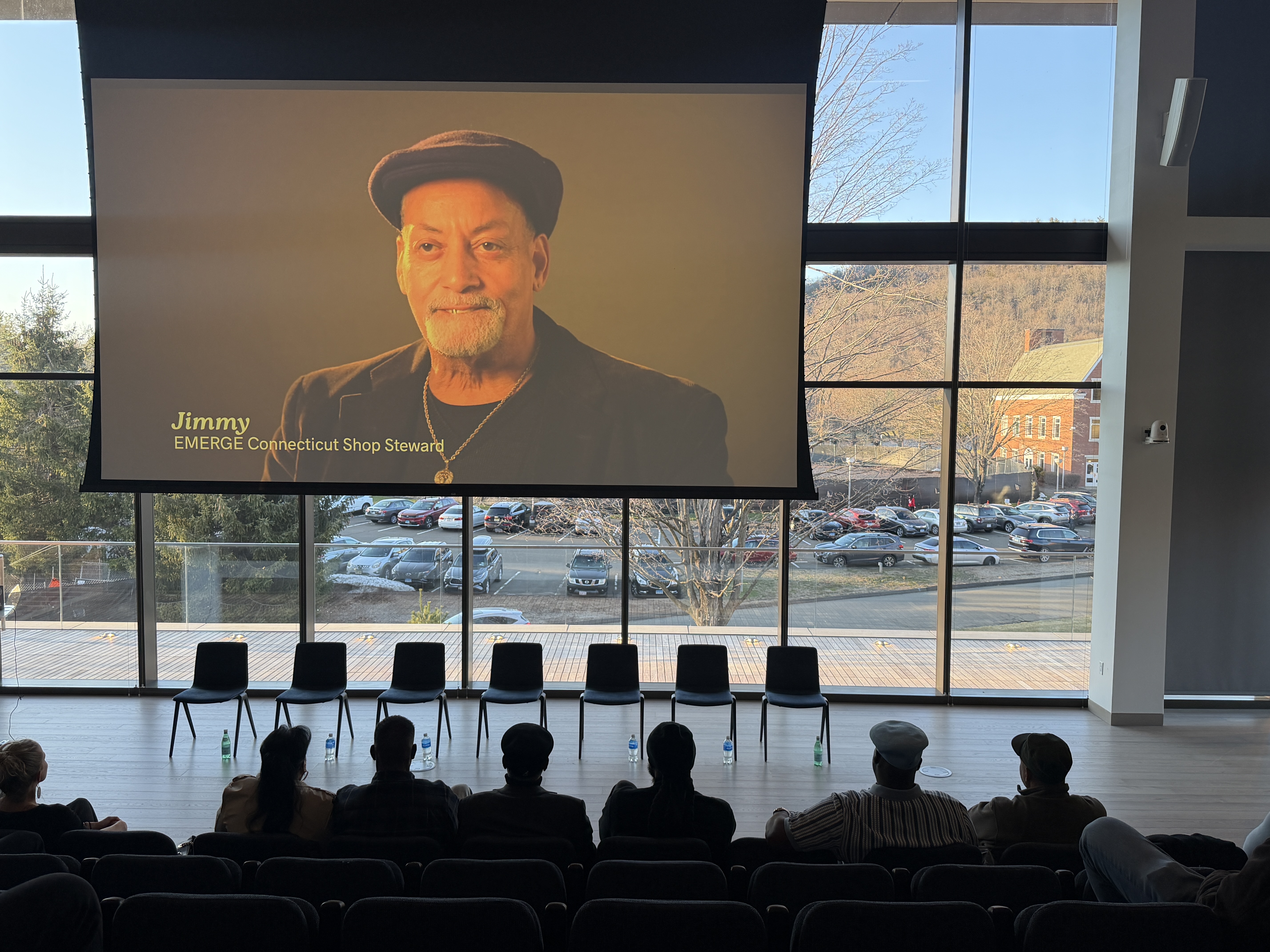
Quinnipiac’s Prison Education and Community Engagement Initiative (PECEI) held a screening for “As We Emerge: Monologues of the Formerly Incarcerated” in the School of Business auditorium March 24.
Before the film was made in 2024, the PECEI had been chugging along for nearly a decade. According to Quinnipiac Professor of Social Work Amber Kelly, the Prison Project (an offshoot of PECEI) has been teaching classes on the inside of prisons for over 10 years, works with separate reentry organizations and hosts roundtables with former prisoners. These initiatives are to help students further understand the impacts of the U.S. prison system on real people.
Kelly works on multiple projects for the organization. One of their most treasured collaborations is with EMERGE Connecticut, a nonprofit organization that assists formerly incarcerated people with getting reintegrated into society.
Associate Professor of Criminal Justice Stephen McGuinn led a class of students to help five formerly incarcerated men by conducting interviews to get to know them and their lives, and formed those interviews into scripts. All five men had spent at least a decade in prison, with 40 years being the longest sentence. The documentary aimed to show the difficult lives of the men, but also how much they have grown and healed.
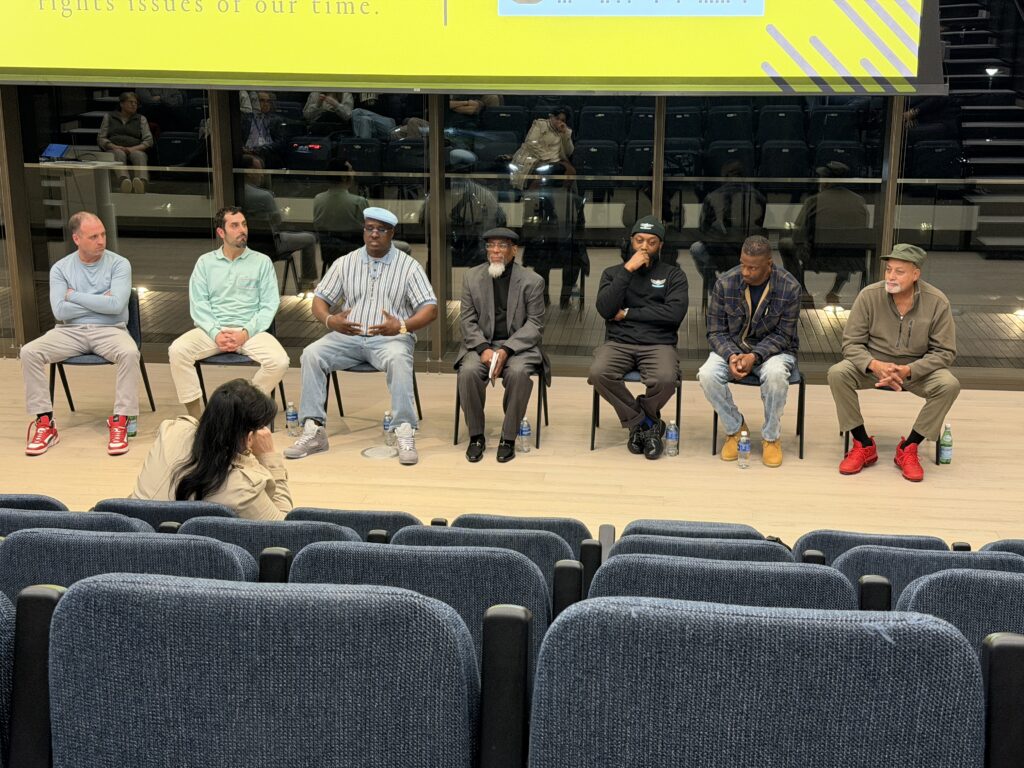
All five men: Babatunde “Baba” Akinjobi, Tabari “Ra” Hashim, Abdullah Shabazz, Jimmy Robinson and Vance Solman, were in attendance for the post-screening Q&A. Before we heard about their progress from them, we got to see them blossom in the film itself.
Director Travis Carbonella has been a freelance videographer in the New Haven area for over a decade, working mostly on short films, but got a crack at his first feature-length project. He had worked with EMERGE before, so he realized that this opportunity was going to be worth it.
“I was interested in telling a story about space,” Carbonella said. The space that’s needed to be vulnerable, and how that is created. To find the intentionality behind it, and also the people in it.”
The film mostly took place inside the Quinnipiac Theater Arts Center’s Black Box Theater. The film took its time establishing the relationships between the five main characters, but also showed how McGuinn’s class interacted with them.
“As I was filming, I also thought, I wanted to film them in their home lives,” Carbonella said. “That’s where you saw Shabazz in his home, and seeing them all rehearsing and reflecting in their own space. I wanted to show them in their space, and them in this more public space, and how they came together.”
Carbonella situated the film so that the moments in the home were scattered throughout its runtime, but all those moments showcased the normalcy that they all longed for.
“I’m enjoying that moment right in this present time,” Robinson said. “You were able to see that the guys in this documentary are human. We didn’t go to prison for 40 years and become some kind of ferocious, vicious animal. I’m really appreciative you could see it, and I’m celebrating that.”
It’s so impressive that these men sustained all this pain, physically, mentally, spiritually, and still have the fight to try to love again and to heal. And not just themselves, but they’ve all committed to helping other people heal, whether in the prison system or outside of it. Their lasting goal in prison was so inherently human. They wanted to be free.
“Every time I step out of my house now, I look up,” Akinjobi said. “When I used to look up outside, I saw a fence, I saw cameras, I saw walls. Now I can look up and breathe in the air. I can look at the clear sky. There’s nothing impeding my vision.”