

How current and former athletes define themselves outside of sports
For many athletes, identity forms well before it’s fully understood and it transforms into a tool that their survival is contingent upon. Over time, it metamorphosizes more than just a part of who they are; it becomes the foundation they stand on. The lens through which they see themselves, and, eventually, something their sense of worth— and even survival feels tied to.
Erika Osherow, a Certified Mental Performance Consultant and health and wellness coach based in New Jersey and Connecticut, says athletes often begin tying their sense of self to their sport at a young age—whether through routine, external pressure, or a lack of exposure to anything beyond it.
Over time, that connection can feel like the truest version of who they are.
To better understand this complexity, Osherow points to the ‘ADDRESSING’ framework. This is a tool used to examine cultural identity across multiple dimensions including age, race, gender, socioeconomic status, and more. Rather than viewing identity as one fixed trait, the framework reveals how layered and evolving it truly is, especially for athletes whose lives are often shaped heavily by a single role.
While identity drives motivation and success, it is also quite limiting. Athletes can face injury, adversity, or an end to the playing career, and their sense of identity develops rigidity. Unexpected challenges make it grueling to adjust to new roles and realities. The absence of structure, routine, and consistent reinforcements leave athletes feeling abandoned with the burden of redefining themselves. At its core, athletic performance is not solely that—it’s about identity.
When that moment comes, many are faced with a difficult question: Who are you without the game?
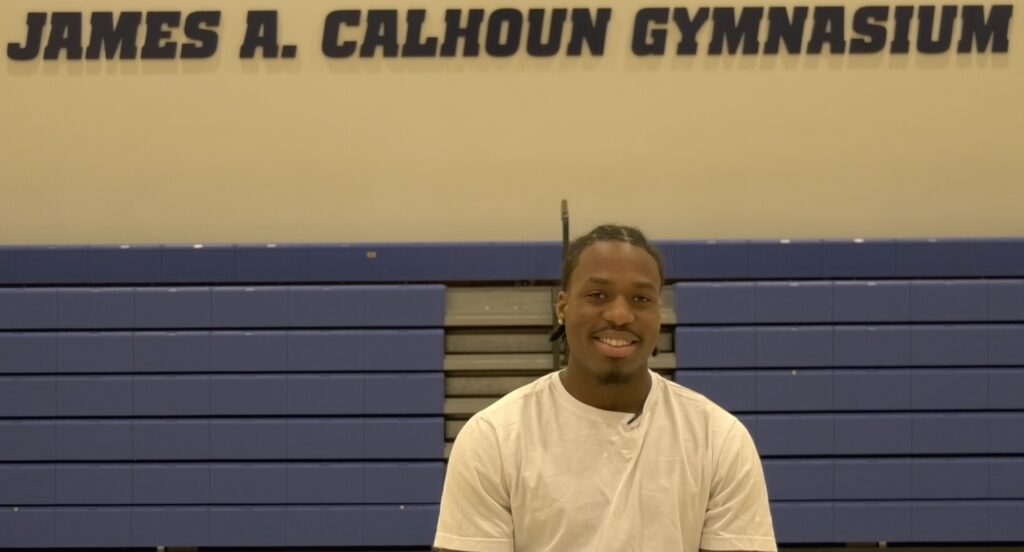
Lance Altenor is a graduating senior and captain on the basketball team at the University of Saint Joseph. As a freshman, he appeared in 31 games with nine starts. Altenor fueled an undefeated regular season and fought for a No. 1 national ranking and a trip to the NCAA Division III Sweet 16. A year later, he directed his team to the Great Northeast Athletic Conference (GNAC) Championship and another NCAA tournament run, closing out his sophomore season with the kind of career most athletes desire. He earned his coaches’ trust and established himself as a key contributor for the Blue Jays.
Outwardly, he was building a successful career in basketball.
Internally, Altenor was battling another competitor. The opposition came in the form of constant self-criticism, the pressure of perfection, and a lingering appetite for approval which stalked him from game to game. What once defined him was beginning to transform into an excessive weight.
The following year, he felt a spiritual shift.
“It wasn’t until junior year that Christ started to become the foundation of my life and my career,” Altenor said. “This [senior] year I really committed and surrendered to Him. It wasn’t easy, and it wasn’t perfect, but this is the year I fully surrendered.”
For Altenor, that realization did not come through failure or injury, but when he walked forward in faith. This reshaped how he saw himself and the game. Entering his final year during August 2025, he was paired with a new roommate, Ben Carroll. Carroll was a fellow basketball player who shared his faith in God. What began as a simple living arrangement quickly grew into something far more impactful.
This matchup forced the two to push each other’s growth on and off the court.
“God placed us together. It was lowkey an answered prayer,” Altenor said. “He has just been a huge blessing in my life, especially this year. He helped me stay accountable, and I held him accountable. We just sharpened each other like iron sharpens iron.”
“As iron sharpens iron, so one person sharpens another,” is a well-known verse from the Book of Proverbs illustrating metaphorically how relationships with others through accountability, challenge, and encouragement— help us grow stronger and become better versions of ourselves.
Carroll saw the change firsthand.
“What stood out to me about Lance was how he started to handle everything, whether it was good or bad,” Carroll said. “He used the Bible as a weapon to deal with those issues, and as a shield when bad thoughts crept in. Lance has always been joyful, but I saw even more joy and humility from him. I saw him grow as a person, a leader, and a player through those daily cycles.”
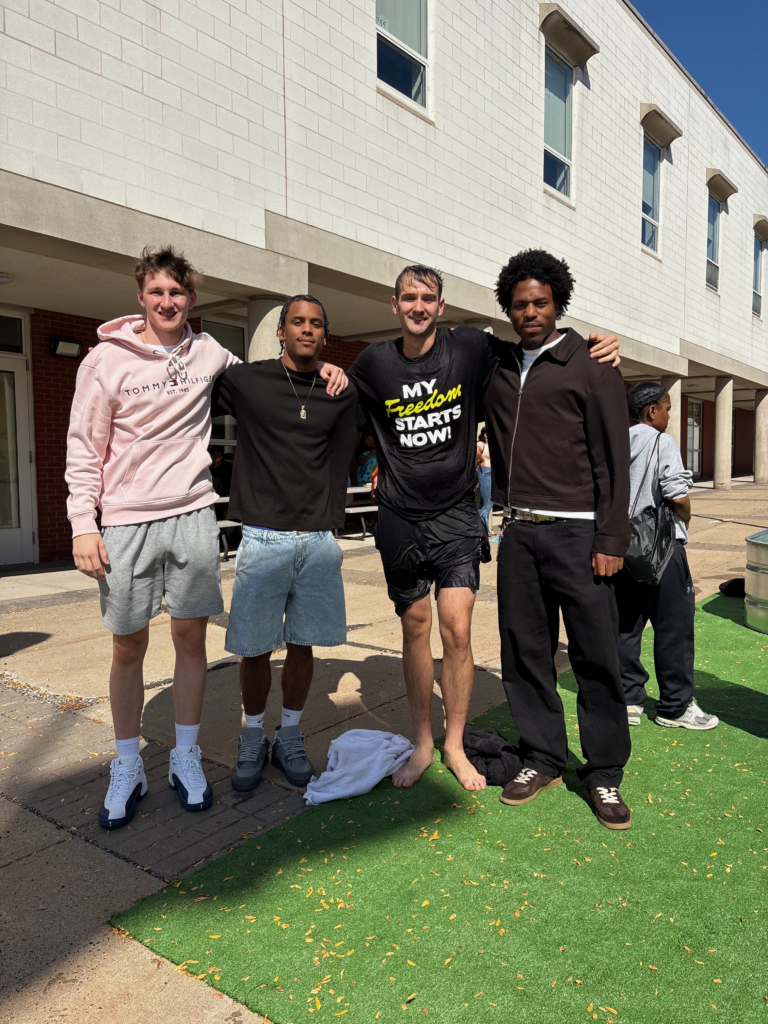
Their bond was built through a shared routine—wake up at 5 a.m., read the Bible, journal, and pray together—maintaining an unspoken discipline for nearly 90 straight days. During that time, Altenor said he experienced a progression unlike any other.
As his faith deepened, his relationship with the game revamped. At one point, Altenor admitted he was his own biggest critic, constantly evaluating his performance and placing added pressure on himself to be flawless. His transformation forced the pressure to fade and allowed him to play effortlessly. For the first time, the game no longer defined him; instead it became something he could enjoy on and off the court.
While this journey reshaped his mindset, it didn’t eliminate the struggles that once defined him. One of the prominent challenges for Altenor was learning to let go of the need for validation—whether from his father, his coaches, or himself.
A verse that continues to guide him is Galatians 1:10: “Am I now trying to win the approval of human beings, or of God? Or am I trying to please people? If I were still trying to please people, I would not be a servant of Christ.”
“When I read that verse it allows me to take the pressure off and just play for the Lord. As long as I’m playing hard, being a good teammate, that’s what gets me through it,” said Altenor.
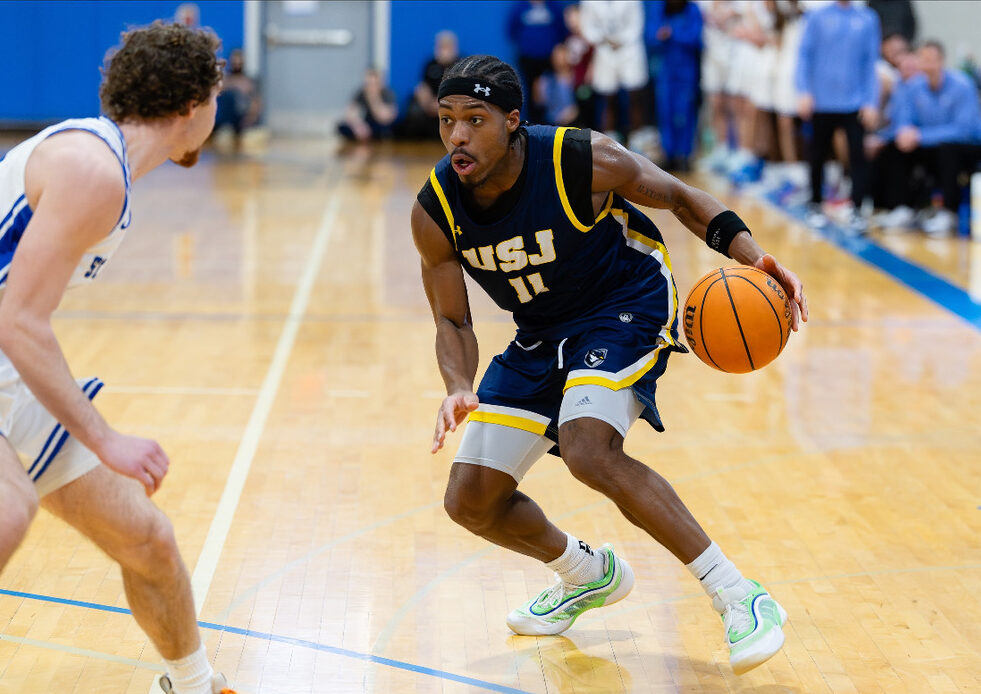
For years, the urgency for approval shaped how Altenor approached the game, often adding pressure to every possession and performance. Instead of playing to meet others’ expectations, he began to focus on playing with purpose—rooted in his faith rather than in external validation. Change authorized submission, and Altenor was now capable of healthily approaching the game with greater freedom, confidence, and peace.
When asked how he would feel if basketball were taken away from him today, Altenor didn’t hesitate. “I’d actually be really confident,” he said.
Approaching commencement in May, Altenor plans to continue his basketball career overseas. Whether the game remains part of his life or not, his sense of self no longer depends on it.
“Christ showed me who I am. I’m a light, I’m there to encourage, to lift, to bring others up. I can do that with or without basketball.”
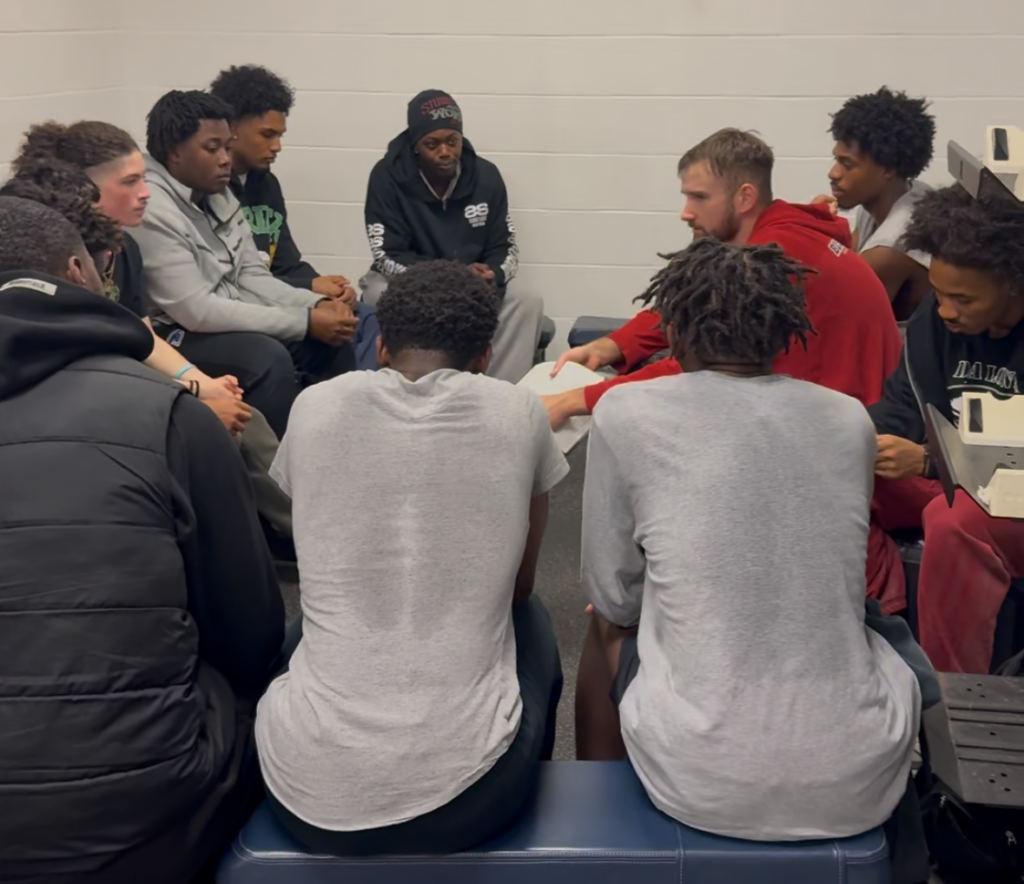
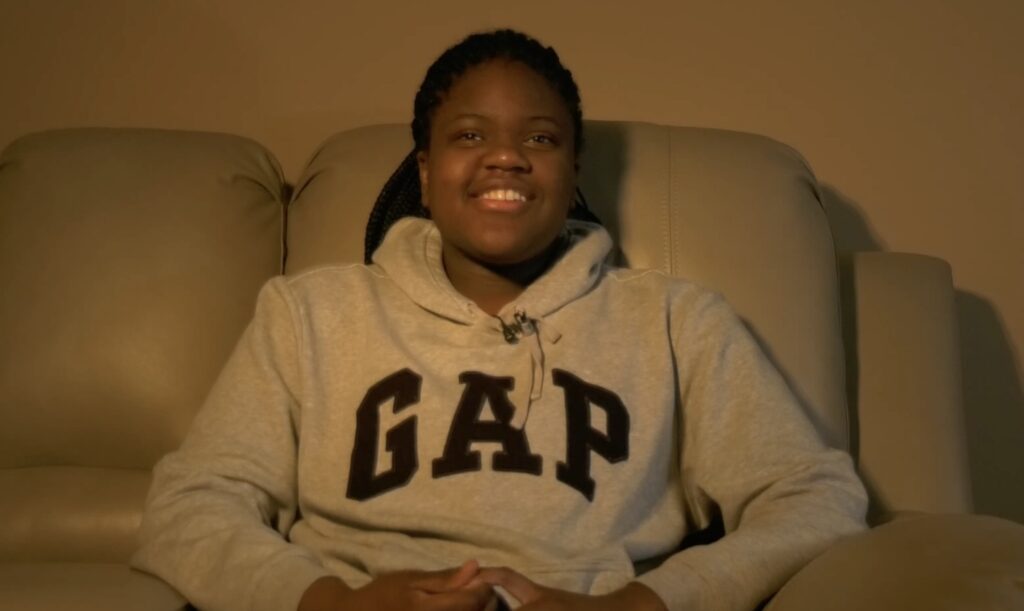
For athletes like Tiara Tyson, identity is not something defined. Instead, it is a litmus test in real time.
Tyson began her career as a guard at Central Connecticut State before transferring to Post University, a path shaped by early adversity. After suffering an foot injury she was forced to redshirt, forfeiting an entire season of competition to recover. Despite this, she was able to save a year of eligibility.

“It impacted me a lot,” Tiara said. “I felt like I had to get back in shape as a basketball player. I kind of lost myself through it all. Just having to bounce back on days I wanted to give up and keep fighting through it.”
The injury didn’t just take her off the court, it forced her into a space many athletes struggle to navigate.
Her mother saw that struggle up close.
“The moment she learned she fractured her midfoot was emotionally, mentally and physically devastating,” said Mrs. Tyson. “There were times she didn’t know if she could continue her journey. But through it all, she leaned on her support system and found her way back. The resilience she’s shown has overshadowed any doubt that once clouded her vision.”
“100%,” Tiara said, when asked if she ever felt disconnected from the game. “Going into physical therapy, doing solo workouts, going on runs by myself—I felt like I lost myself a couple times.”
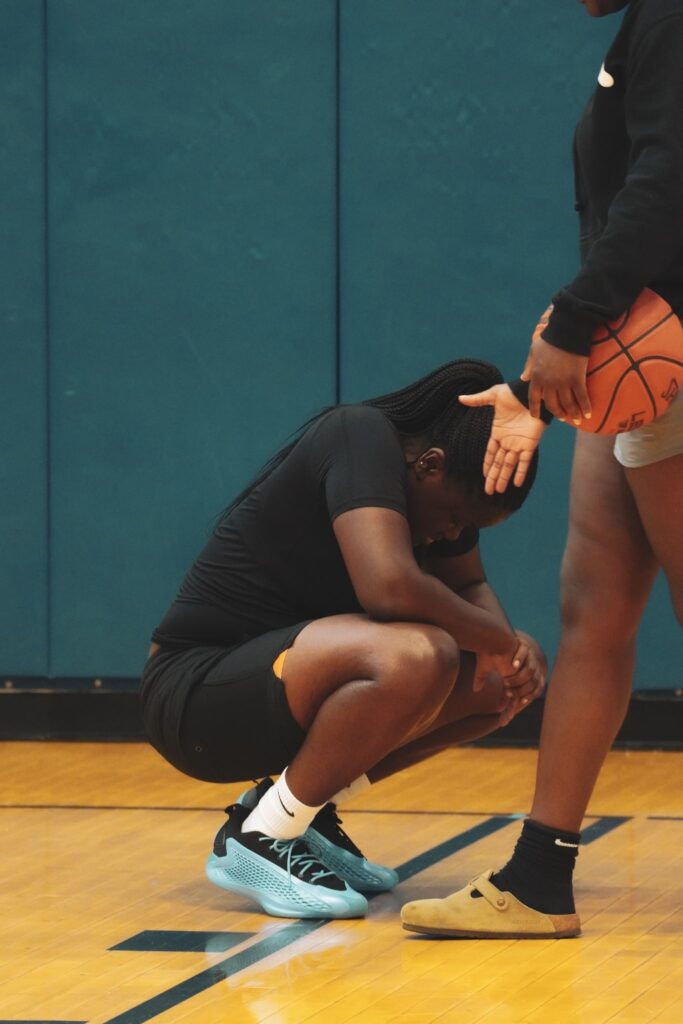
Another major transition followed her season of uncertainty. After transferring to Post, Tiara had to make vital adjustments to the new environment, new teammates, and a new role while simultaneously working her way back physically.
“It was really hard to adjust,” she said. “I came in ready to play, and then suddenly I heard a snap—I knew it was over.”
Even after returning, the recovery process strained her with its own challenges.
“Coming off an injury, I expected myself to be exactly where I used to be,” she said. “But I had to learn you’re not going to be where you were right away. You have to work through it and get better over time.”
The journey ebbs and flows, and Tiara claims she is beginning to understand herself deeply as a player and as a person.
“When I was younger, I would crumble when things didn’t go my way,” she said. “But now I’ve learned how to face adversity and move on.”
That mindset is reflected in a saying her team lives by: “duck.”
“Like a duck in water, you just glide and let things go,” she said. “That’s something I’ve had to learn.”
While her identity as a player evolves with each passing quarter, Tiara has also learned how to separate who she is from how she performs.
“Off the court, I’m very laid back,” she said. “But on the court, I try to bring out a different side of me—a little more edge.”
Now in her first full season of college basketball, where she appeared in 25 games, started five, and averaged 10 points per game, Tiara continues to adapt to her role while navigating the demands of being a student-athlete.
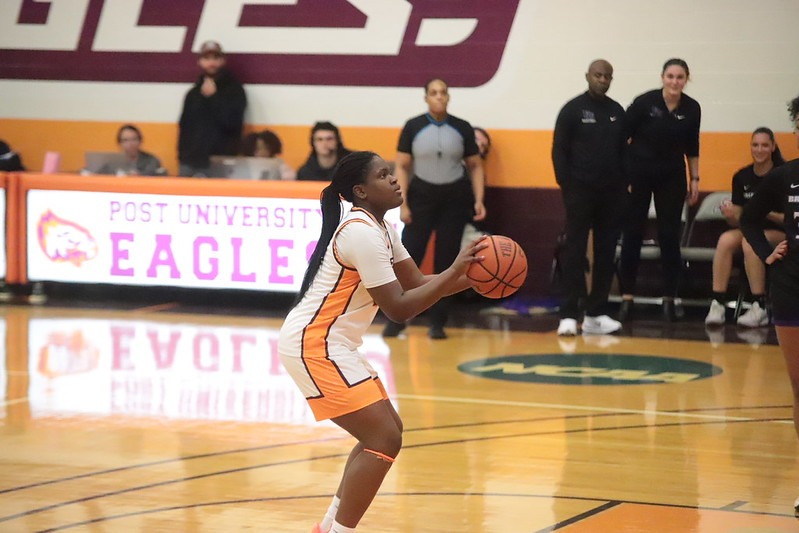
“Being a student-athlete is very hard,” she said. “Balancing school, practice and everything else you just have to find your way.”
Through it all, one lesson has stayed with her.
“Just keep pushing,” she said. “If it’s something you love, don’t let anyone take that away from you. Stay true to yourself—it will get better.”
For Tiara, the journey is still unfolding.Through injury, transition, and growth, she is beginning to understand that who she is extends far outside the game. Just after her first year of playing college basketball she received female rookie of the year throughout Post athletics.
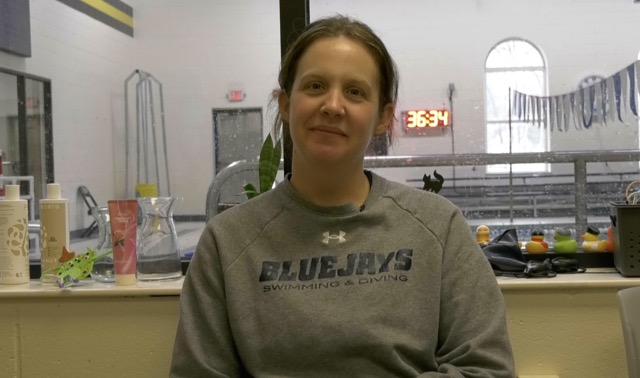
For coaches like Alex Albert, that responsibility doesn’t come after the game, it’s part of the day to day roles and responsibilities.
Now in her fourth year as the head coach of the men’s and women’s swimming and diving programs at the University of Saint Joseph, Albert has built a culture centered on balance, growth, and understanding. A former Division I swimmer herself, she knows firsthand how sports carve young identities and the difficulty behind redefining it.
“A lot of my identity was tied to being a swimmer,” Albert said. “So I think that is a big reason why, when you graduate, especially being a student-athlete, it can be pretty difficult to find yourself in a new way.”
After her own playing career ended, Albert said she struggled to adjust. Without swimming, something that had defined her for years, she had to explore new ways to find fulfillment. Over time, that meant trying new activities, joining running clubs, and gradually building a life beyond the pool.
Coaching evolved into a way to reconnect with the sport while also approaching it differently. At the Division III level Albert emphasizes balance, encouraging her athletes to develop identities apart from swimming.
“…There’s much more balance,” Albert said. “Sports are a part of their identity, but not their full identity. They’re going to be nurses, lawyers, or go into sports management. That’s part of who they are too.”
That philosophy shapes the way she leads her program. Albert prioritizes communication and flexibility, working with athletes to manage their academic and athletic responsibilities while making sure the sport remains a positive outlet—not a source of stress.
“I want swimming to be a place where they can take a deep breath,” Albert said. “I don’t want them to feel overwhelmed. If they need to step away and focus on school or life, we work through that together.”
“Coach Alex’s coaching style is different because she individualizes her approach to each athlete,” said former swimmer and assistant coach Joseph Guerin. “She knows when to push someone and when to step back and provide support. She holds athletes to high expectations in the pool, but also takes the time to understand what’s going on in their lives. That balance builds trust and keeps athletes motivated, because they know she genuinely cares about them.”
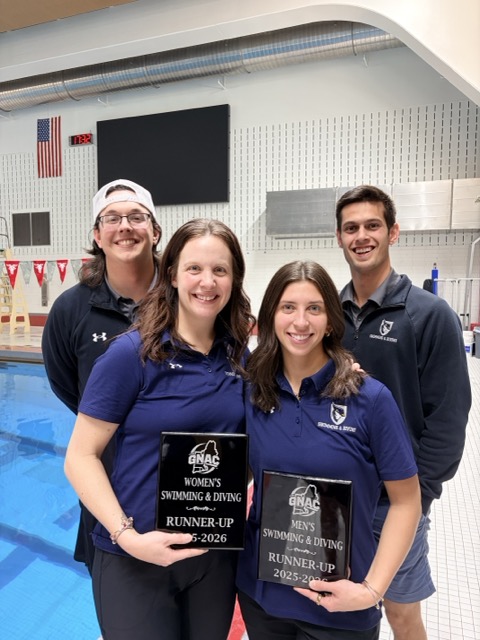
At the same time, Albert continues to push her athletes to reach their full potential, carefully balancing performance with personal development.
“I’m going to push them to their limits, but I’m going to make sure I know that limit,” Albert said. “I’m not going to push someone to a point where they can’t handle it.”
That approach has translated into success. In 2025, Albert was named GNAC Coach of the Year for men’s swimming, while her athlete Henry Pennell earned Men’s Diver of the Year honors. On the women’s side, freshman Sara Omar made history as the first GNAC champion under Albert’s leadership.
Omar credits that environment—and Albert’s belief in her—as a driving force behind her early success.
“I’ve known Coach Alex since I was around 13, and she’s always believed in me,” Omar said. “When I transferred, she made the environment both welcoming and competitive. What stood out most was the confidence she had in me—she trusted me to pursue the events where I could make the biggest impact and pushed me to raise my standards every day. Even after tough races, she stayed constructive and focused on long-term growth.”
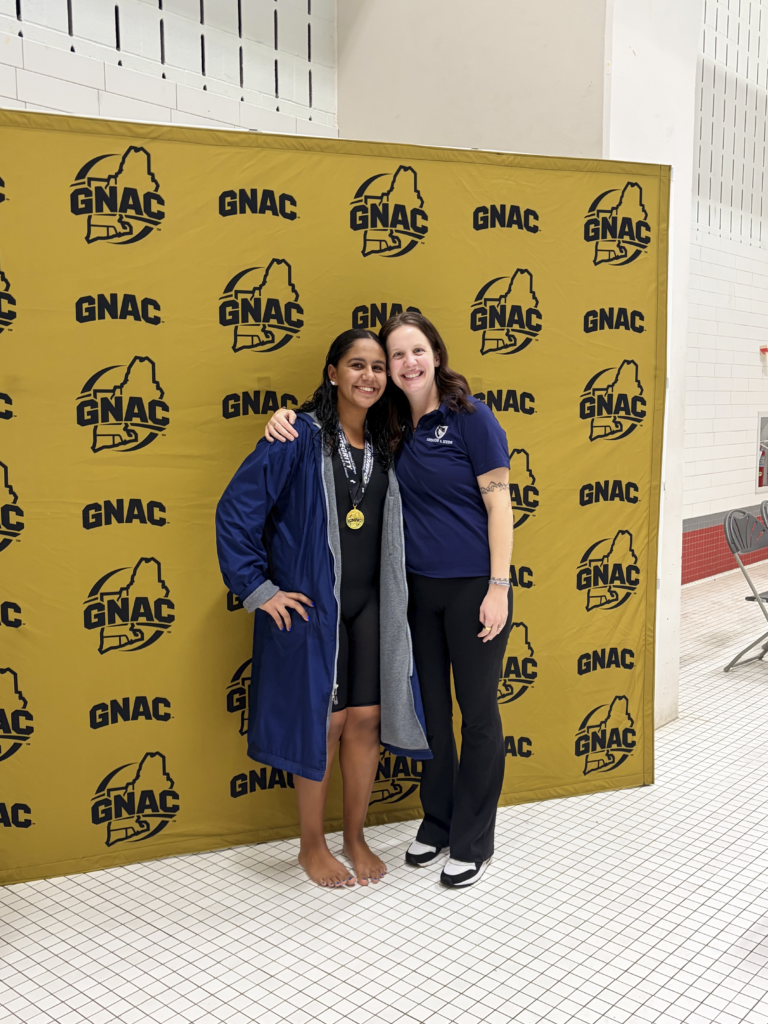
That support, she said, extended beyond the pool.
“This program has shaped me as a competitor and as a person,” Omar said. “We’re competitive, but we genuinely want to see each other succeed. That pushed all of us to perform at a higher level. It taught me accountability, resilience, and what it means to be part of something bigger than yourself.”
Under Albert’s leadership, both the men’s and women’s teams finished second in the GNAC, and the program has continued to break records and reach new milestones.
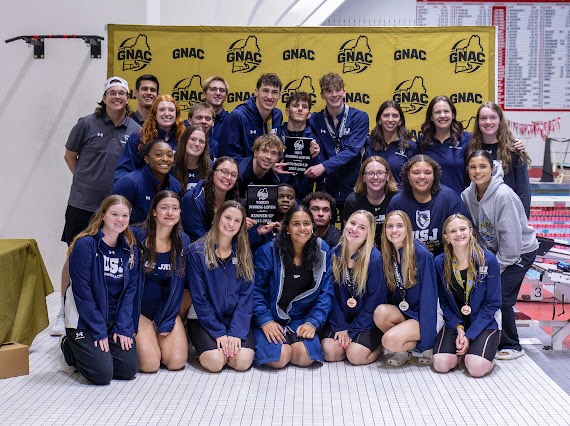
For Albert, it’s evident success transcends time and results.
“It’s really important for my athletes to know that they are people outside of the pool,” she said. “Their sport doesn’t define them.”
That mindset is something she has worked to develop in her own life as well.
“Being a swim coach is definitely a big part of my identity, but it’s not my entire identity,” Albert said. “I’m a mom, a coach, and I make time for other things I enjoy, like yoga.”
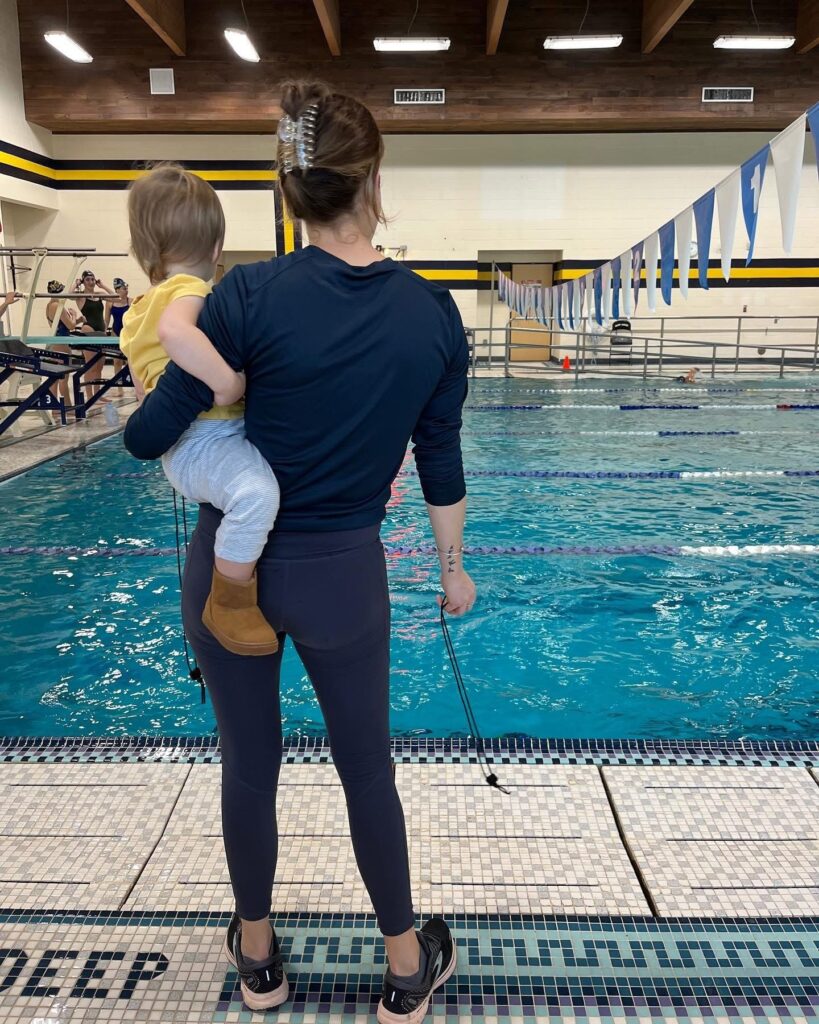
Through that balance, Albert has not only redefined her own identity but also continues to push her athletes to do the same. She ensures who they are extends farther than the boundaries of the water.
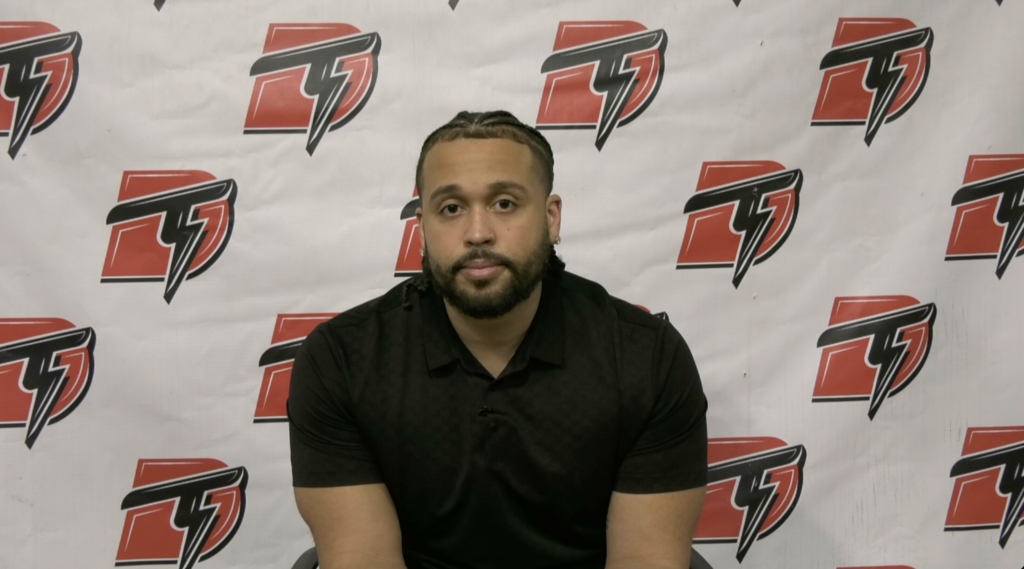
For individuals like Terrell Huff, purpose has grown into something far greater than the game itself. A former Division I football player at Central Connecticut State and Merrimack, Huff now serves as the chief operating officer for Diligence Training and the president of DT Cares, an organization based in Hartford County, Connecticut, dedicated to supporting underrepresented high school senior student-athletes transitioning to college and life after sport.
Through his work, Huff is giving back to the same community that once gave him an opportunity, helping guide the next generation of athletes through a journey he’s quite familiar with.
“Coming from an underfunded community, sports was my vehicle,” Huff said. “It allowed me to go into doors, rooms, and places that without it, I wouldn’t have been able to. For me, sports was a navigator. It allowed me to get to where I am today.”
His experiences now shape the way he leads. Through DT Cares, Huff focuses on building relationships and steering young athletes with similar hardships he once faced—providing under-resourced athletes with the tools and opportunities to build futures outside of the game.
“I just hope that when athletes leave this program, they understand that there’s no difference between them and the rest of the world,” Huff said. “If anything, they have to understand that their story is their superpower. I want them to figure out who they are at the core, what they want to do, and then use that to serve while they walk in their purpose.”
Huff’s realization came prematurely in his career. After his first year, he began to understand how his identity extends past athletics. Despite early success, his role in the game shifted, forcing him to adapt and see himself differently. Through the experience, he learned to respond to adversity, pivot when necessary, and grow independent of the expectations he once placed on himself.
That mission is also reflected in “More Than an Athlete,” a program developed through DT Cares. Huff, alongside his business partners Raishaun McGhee and Devontè Dillon, developed an initiative to help athletes see themselves as more than their sport. The program operates as a network, connecting high school athletes with college students and professionals already established in their professional careers. By creating those relationships, young athletes can see themselves in spaces they may not have previously imagined, whether that’s competing at the highest collegiate levels or pursuing careers beyond the game.
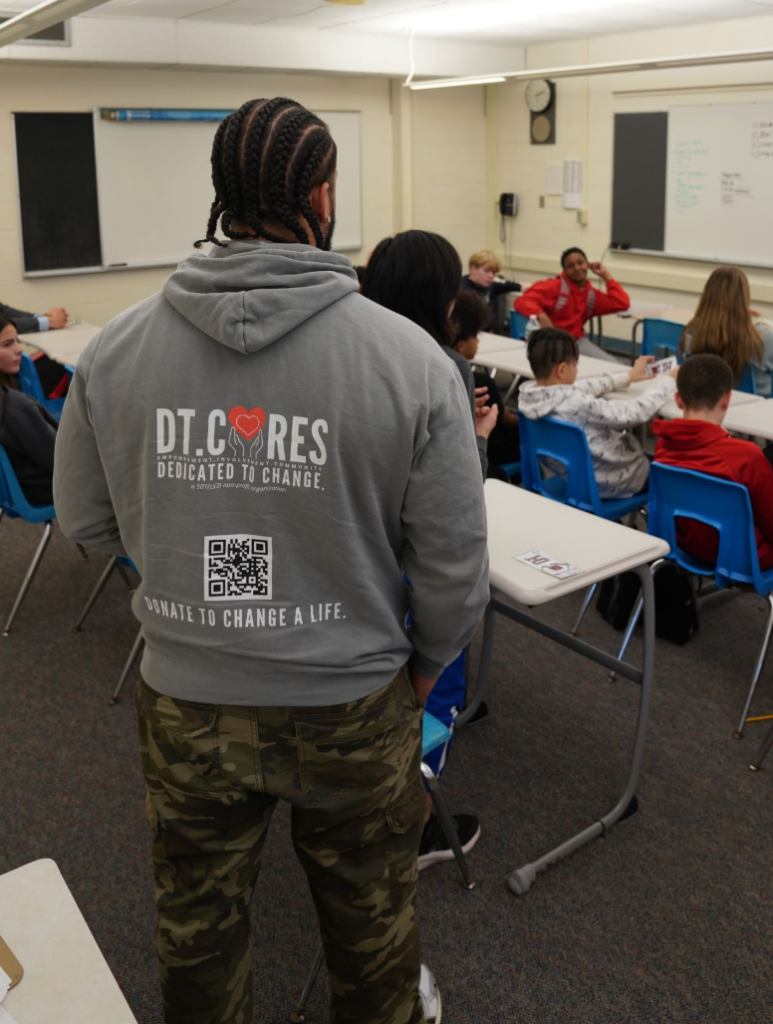
At its core, “More Than an Athlete” is about expanding young students’ possibilities on and off the field. This window provides a platform for athletes to navigate their futures with the resources and representation needed to understand how their potential reaches far beyond sports.
That impact extends outside of his work with DT Cares. Huff also serves as the head coach of the Windsor High School girls flag football team, a program reflecting the rapid growth of the sport and its considerable opportunities for young athletes.
From a coaching perspective, the same philosophy carries over.
“Girls flag football has taught me that you have to meet people where they are to get them where they’re capable of going,” Huff said. “Every athlete is different—different learning styles, personalities and experiences. Each one has to be coached, communicated with and led in a way that makes them feel seen, heard and understood.”
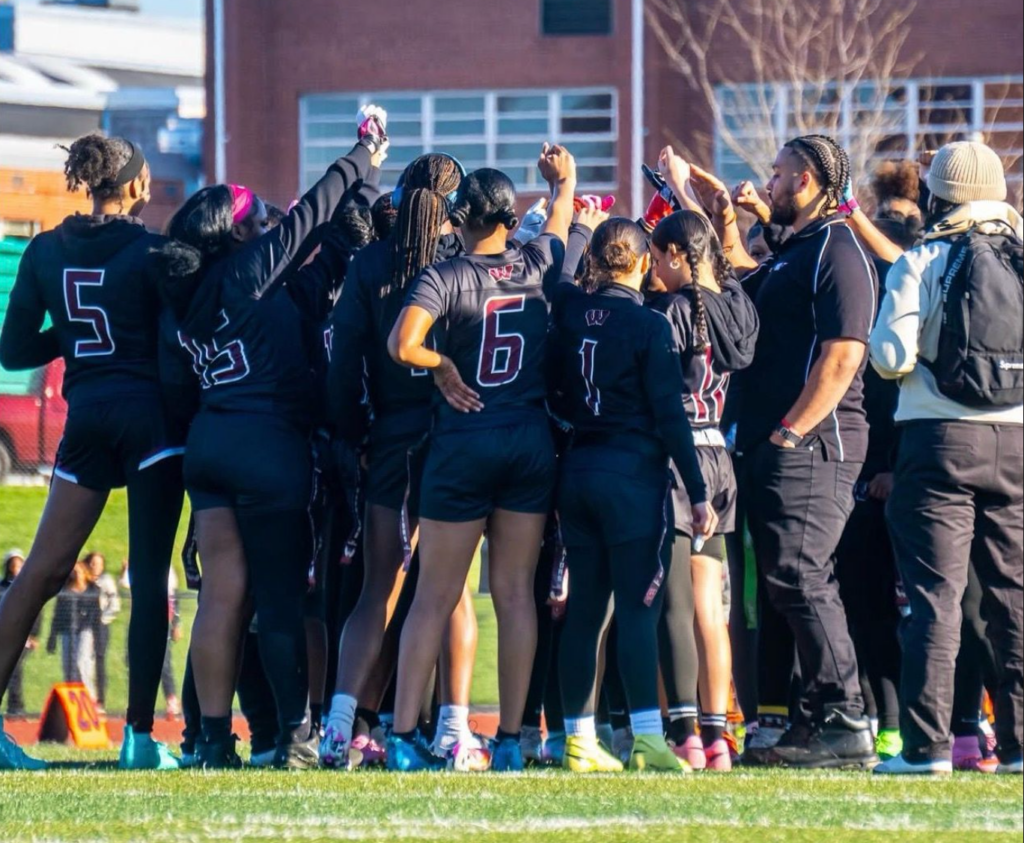
From there, Huff and his staff focus on building a culture rooted in accountability and trust.
“We call people in, not call them out,” Huff said. “We emphasize that the best teams are player-led, not coach-led, and that accountability is the highest form of love. Our athletes learn that correction isn’t personal—it’s a reflection of someone wanting the best for you.”
That environment has already made an impact on his players.
“Flag football taught me how to lead by example, stay confident under pressure, and always support your teammates,” Windsor athlete Syniah Harding said. “These are powerful because they translate to anything I do in life.”
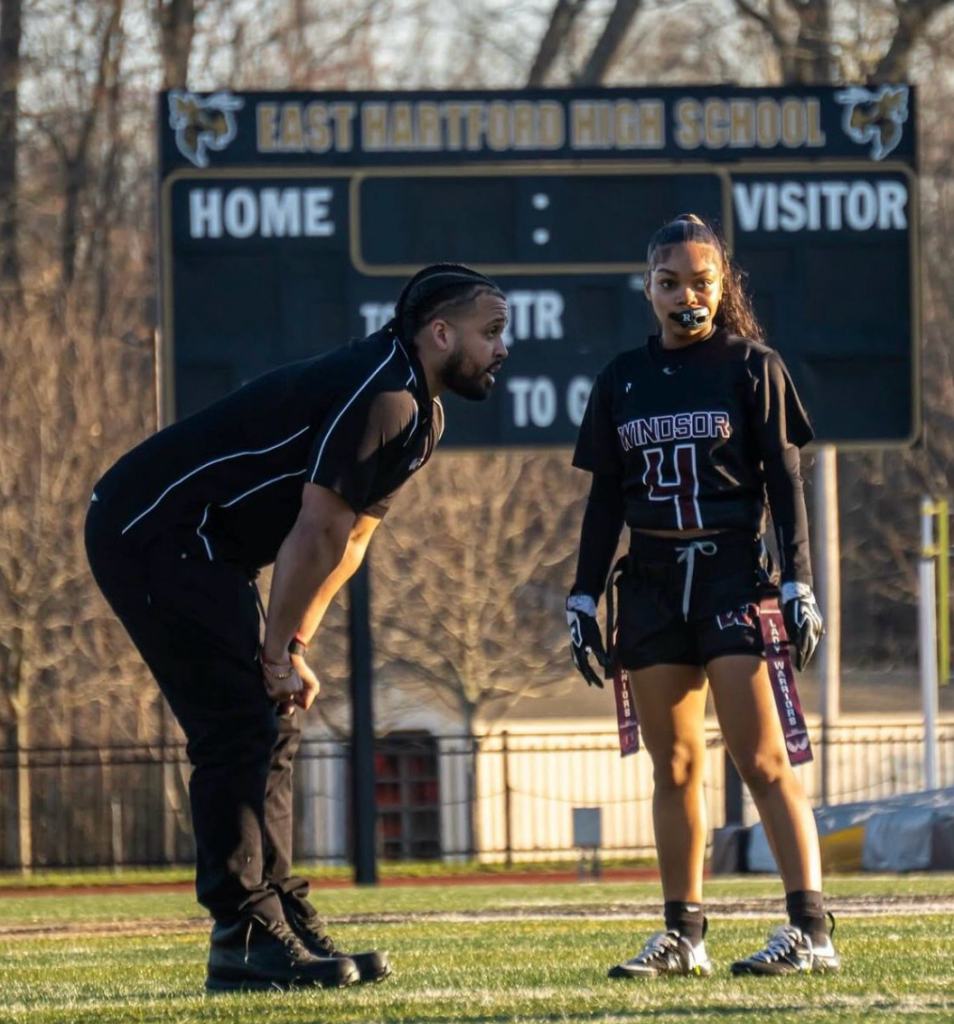
Through that culture, Huff has seen growth not just in performance, but in confidence and identity.
“Our motto is ‘How you do anything is how you do everything,’” Huff said. “We constantly reinforce that the game itself doesn’t define them. It’s simply a vehicle that helps them learn who they are through challenges, adversity and growth, so they can carry that foundation into life beyond football.”
For Huff, the game may have opened the door but what matters most now is helping others discover who they are beyond it.
And in different ways, that’s the lesson each of them has had to learn: the game may shape you, but it was never meant to define you.
For athletes, identity is rarely fixed, it evolves. It’s tested in moments of success, challenged in moments of adversity, and redefined in the spaces where the game no longer provides the answers.
When the structure of sports is removed, athletes often struggle to recreate that sense of purpose, direction, and belonging in other areas of life.
In the end, who they become has less to do with the sport itself and everything to do with who they choose to be beyond it.