

Before the national media caught wind of what was about to happen, a small group of Ivy League student-athletes got a ding on their phones.
“I sent a quick text to our executive team … ‘Hey, check your emails,” said Alec Dominguez, Ivy League assistant executive director of compliance and governance. “They also knew what was going on. Well, the decision was going to be made that day.”
Leah Carey’s girlfriend saw that text first.
Why were Carey, a Brown softball player, and her girlfriend so excited? For the first time in 80 years, the Ivy League would be allowing its eight football programs to compete in the postseason.
That means – cue the trumpets – for the first time since the 1920s a national championship is in play for the football programs that constitute the Ivy League. For over a century, the conference’s regular season winner would remain just that. A trophy would be raised, a banner would be hung and a successful season would end abruptly. Now the top team in the regular season will earn an automatic bid to the national tournament.
As millions of Americans returned from service as World War II ended in 1945, the presidents of Brown Columbia, Cornell, Dartmouth, Harvard, Penn, Princeton and Yale, forged an agreement to ban their football teams from bowl games. They feared the continued commercialization of college football would interfere with their academic mission.
In 1954, the presidents decided to fully deemphasize football with the formation of the Ivy League, which would begin play in 1956.
Now some 80 years after first banning post-season play, the schools have decided that post-season participation in football can return. The league champion will receive an automatic bid to the Football Subdivision Championship (FBS) playoffs. Even though it is a tier below the big guns of the game in the Football Bowl Subdivision, a national championship can now be had by an Ivy League school.
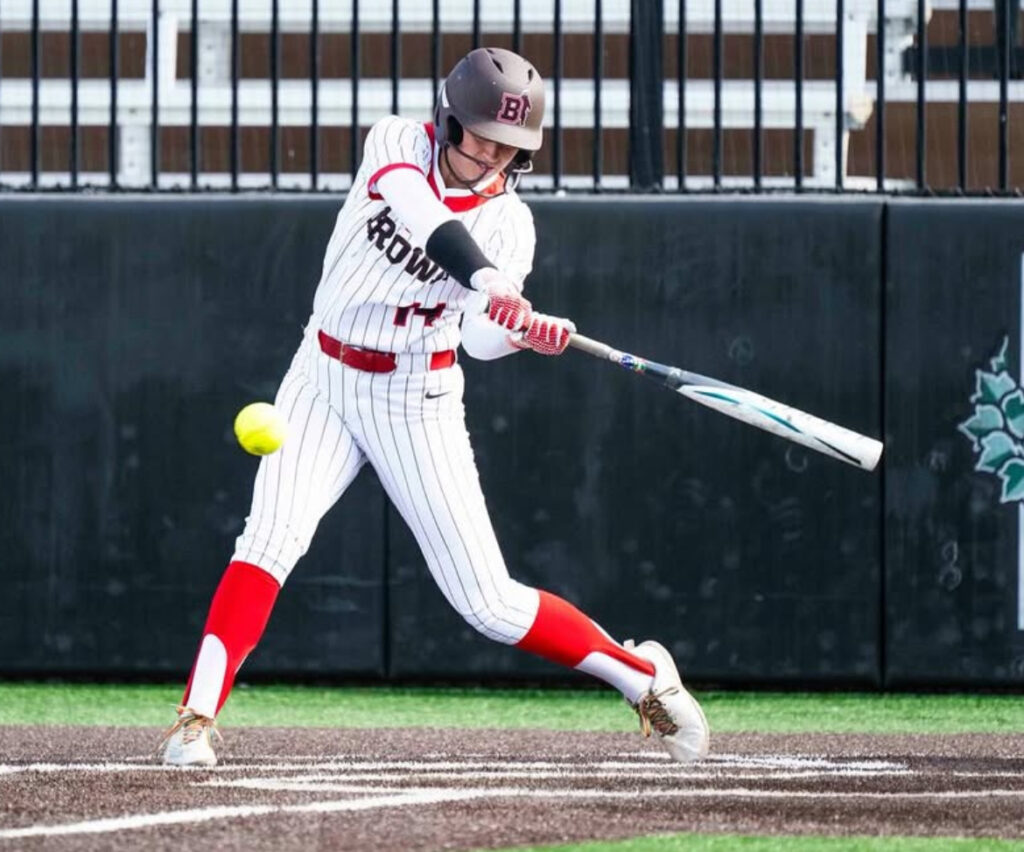
As a member of the conference’s Student-Athlete Advisory Committee (SAAC), Carey was a part of this history-making decision — despite being forced to keep quiet.
“You wanted to tell everybody,” said Carey, who admitted she spilled the news to a close friend. “But also at the same time, you were like, this is my fun little secret, and then once it comes out, people are going to be so shocked. It’s going to be way more fun that way.”
And now, the Ivy League will be more fun as well. Yale, Harvard and Princeton — the blue bloods of the league — have been crowned national champions before, but since 1928, the historic institutions haven’t reached the pinnacle. Away went the voter polls, typically how the national champion was decided. The Ivy’s final championship team — the 1927 Yale Bulldogs — went 7-1 as an independent team en route to splitting a share with Illinois, capping off a historic run of trophies that started in late 1869 when Princeton and Rutgers met in the first collegiate football game.

As the polls that determined that year’s winner went away, and bowl games and brackets emerged, the initial luster over the college football landscape dulled. Since its founding in 1954 and eventual kick off two years later, the Ivy League has been one of America’s most culturally relevant institutions. It’s older than Walmart, and far older than Google or Amazon. And yet, despite constant changing in the wild west landscape that is college athletics, the conference that houses the oldest universities in the country remained a ghost town.
Harvard University is more than a century older than the country itself, but the Crimson, along with the rest of the “Ancient Eight,” weren’t eligible to compete in any postseason bowl games for years. That’s what this proposal aimed to change.
“I think this was correcting what was probably a little bit of an overreaction in league rule, like an overreaction to the national landscape and, prior to 1956 was bowl eligibility,” Brown football head coach James Perry said. “So I think this is more of righting the wrong, and most of the time when we’re slow to change, it’s for good reason, because we’re doing things well. … I’m very happy that we are (changing) because we’re doing it right.”
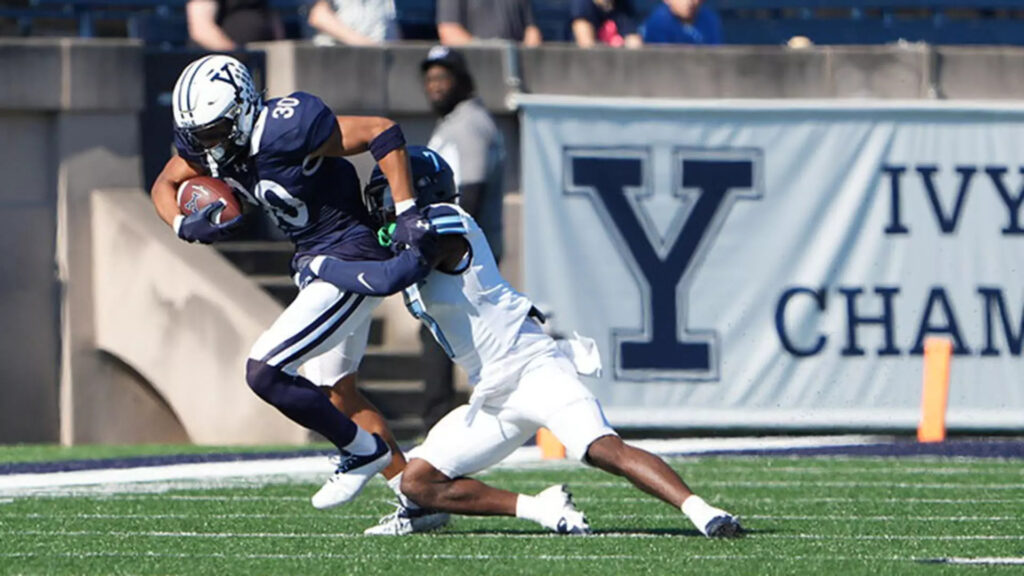
That slow pace needed to be picked up, said Mason Shipp, a four-year wide receiver for Yale and chair of AAC. He joined as a junior, citing his goal to make a lasting impact off the turf. The number one issue his team wanted to tackle would hopefully be one that would change the Ivy League for good.
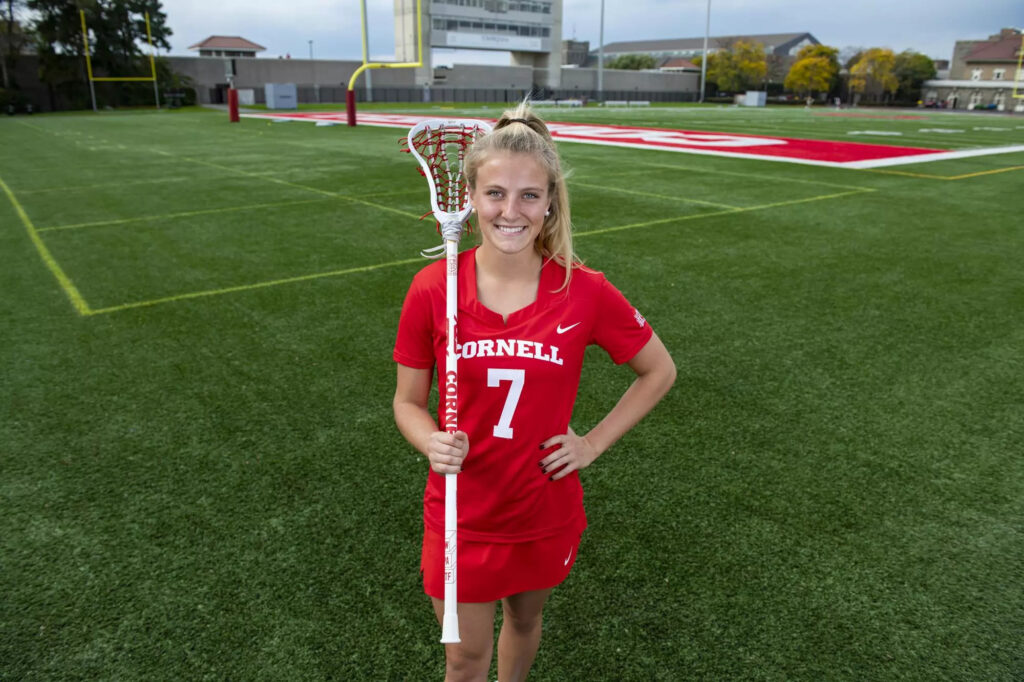
His core team included Carey, Cornell women’s lacrosse’s Chloe Maister and Dartmouth football’s Zyion Freer-Brown. They determined that despite the continued excitement of football (this year’s national title game between Ohio State and Notre Dame drew in 22.1 million television viewers), the casual fan was struggling to enjoy the Ivy’s product that gets clumped into rivalry week in November.
But that’s getting fixed with this decision, giving the league higher stakes at the turn of the calendar.
“The Ivy League community now has some investment at stake … because you’re playing for a national championship,” Shipp said. “For alumni and for people who are fans of the Ivy League community, (they) are a lot more invested in the product now, and I think that, on a base level, that makes the league better.”
That overall lack of excitement was felt across each of the eight campuses, even by those who aren’t suiting up for a football game every week. So a text chain was created between Ivy League football players after months of campaigning.
“It was our duty to get in touch with our campus, see what the student athletes, and specifically football players on our respective campuses, how they would feel about this, if they were for it, if they were against it,” Maister said. “A lot of it was getting feedback from everyone. It was a few months into the process that we put together a group chat of football players from all the different schools who were able to (provide) immediate feedback.”
The lack of a postseason tournament isn’t the only black eye that the Ivy League had. Student-athletes aren’t eligible to transfer once they commit to a program, and those commitments also come without any scholarship money. Don’t like it and want to transfer? These athletes have to wait until a potential fifth season before packing their bags, as the league until recently didn’t allow students to play past a fourth season.
Not all these changes can get implemented immediately, but the feeling of adapting is needed.
“You have to evolve a bit, right? I see that we’re evolving here,” Dominguez said. “We’re never going to reject modern everything, but we’re also going to stay true to our values, and I think this is a step that stays true to our values as the Ivy League, while still modernizing and giving our football players, our teams, the shot for the national title.”
It was a long-winded effort for the initial SAAC proposal to even make its way onto the desks of the university presidents. First there was the campaigning across eight campuses that the students had to do. The proposal — all penned by the student-athletes — then was introduced to the athletic directors, who voted and passed it up the ladder to the Ivy League policy committee. It was this committee who dove into the financials and conditions behind the proposal before it made its way to the presidents’ desks.
SAAC members worked behind the scenes for eight months before letting the school presidents know about their proposal, confident the proposal would be approved. Gone are the days of the stigma surrounding this issue, as Dominguez put it. Now the proposal really got legs and has a chance.
“There’s no way this will pass,” Dominguez recalled saying. “Once everyone got over that stigma, that’s when it went really, really smooth. I keep giving credit to the students. … It was a super long shot, probably a 1% chance and they said ‘We’re going to go through it. We feel passionate about it. What do we need to do to give this the best chance to go through?’ and that’s what they did.”
Then the text was sent and the ensuing email came. Soon after, the media frenzy followed.
While Carey might have slept through the initial text, Freer-Brown remembered what happened when he (and then his team) found it had passed.
“It was just amazing to see, and that’s when our football group started to blow up and go crazy because they just got the word,” Freer-Brown said. “This is real and it’s happening, so it was just like a big flow of emotions and people were just happy and excited.”
So will this impact the recruitment of high school football players? The coaches sure think so.
“When you lean into your team, and the motivation of your team, being able to play on the national level is very helpful, and honestly, it’s more a little more front and center on the recruiting piece of this,” Perry said. “It matters to those recruits so and then it’s a great motivator for the current players.”
For students looking to compete at a high level, the FCS offers that. There’s 129 teams across FCS, with 24 of them making the national tournament. With the Ivy League becoming the fourteenth conference to send its champion to the big dance, a larger net of opponents will be available to play. But not even that came without issue.
“We don’t want to play against North Dakota State, and obviously we’re not playing against Alabama,” Shipp recalled from an early discussion with an Ivy League decision maker. “They want a school that’s comparable to a Yale on the academic side. They want us to play against a Stanford or a Texas. They don’t want us to play against a Montana. … That’s the stigma of the Ivy League.”
The last time a private institution won the tournaments was Villanova in 2009. Since then, North Dakota State and South Dakota State have combined for 12 national titles — just highlighting another layer of difficulty for a smaller-sized football program to compete against the powerhouse state schools that lurk in the midwest.
There’s still also a quirkiness to the Ivy League. Teams will win — or share — the regular season crown and will all get rings. Each program claims themselves to be the conference champion, even if there’s a three-way tie. Schools will hang a banner, like what Harvard, Columbia and Dartmouth will all do for its 2024 seasons.
But that’s where the season has always ended.

“The opportunity and the ability to compete for a title and a championship, that has meant everything to me throughout my experience,” Maister said. “So taking into consideration the way the football players must have been feeling … Being able to compete on and against other conferences on a national stage like that is what keeps me driving.
“A huge thing for us was equity, and we just didn’t think it was fair that football didn’t have that same opportunity that so many of us have.”
Now with the national title equity balanced out, the drive to bring home a national title is something that’s finally being realized by the current student-athletes gearing up for the season.
“It just really just put things in perspective that we got to work even harder,” Freer-Brown said. “Securing the Ivy League championship is already hard enough, but getting to that next step … to get into a playoff spot, that’s even more challenging. It just speaks for all eight Ivy League teams that we’re up for the challenge.”
For the football players, the goal of a trophy looms large. For the SAAC members who won’t be suiting up in helmets and pads, they just take pride in the process — even being promised free tickets to the Ivy League’s first FCS tournament game next winter.
“I was just so lucky to be able to be a part of it and work alongside other people who were as excited about it and passionate and driven, and really just motivated to do things so that our league could progress into the modern age of athletics,” Maister said. “I think what our institutions do is really special, because it really embodies being a student-athlete, so you’re able to get this awesome education, but also can compete at the highest level.”
Shipp will stay in college for his final season, following up a year with the Bulldogs that saw him record a career-high 431 yards. The Ivy League finally allowed athletes to compete for another season if they applied for a waiver — another example of the conference adapting to the realities of the 21st century. Another year at Yale was something he couldn’t pass up, and in light of recent events, he now has something much larger to play for.
“It’s gonna be pretty cool, I get a little bit of it, kind of nice,” Shipp said. “You want to leave Yale as a better place than when you came, and I wanted to make sure, if there’s something I could do — I knew this was one of those things — I wanted to find a way to help the future generations of athletes here.”
Now just over five months away from the start of his final collegiate season, Shipp has the chance to do something no Ivy League player has ever done: clinch a national tournament berth.
“We’re old school,” Shipp admitted. “Now it’s time to start changing root by root. Does that mean give us scholarships tomorrow? No, but that means you’re having these conversations because I think it’s time, and I think student-athletes deserve it.