
The words came first.
Then the tears.
Night after night, Nick Marsan sat at the dining room table in his Connecticut home, writing until the early morning hours. The novel was fiction, but nearly every chapter carried fragments of real life. Military deployments. Friends who never came home. Emergencies that lingered long after the sirens stopped. Memories he had spent years outrunning began finding their way onto the page.
He finished the first draft in six weeks.
“I probably cried more in those six weeks than I had since, ever in my life,” Marsan said.
The emotion surprised him.
The writing did not.
Looking back, Marsan realizes he had been carrying those stories for decades. Putting them on paper gave him another way to approach experiences that had often been difficult to explain aloud.
His experience reflects a broader role that creative expression and clinical creative arts therapies now occupy in veteran care. Across the Department of Veterans Affairs, credentialed therapists use art, music, dance and movement, and drama as clinical interventions aimed at recovery and wellness. The VA places those services within a Whole Health model that considers physical, emotional, cognitive and psychosocial needs together rather than treating one condition in isolation.
The distinction matters. Making art can feel therapeutic without constituting art therapy. Clinical creative arts therapists set treatment goals, document progress and work as part of interdisciplinary health care teams. For veterans such as Marsan, meanwhile, writing or drawing outside a clinical setting can provide another outlet for reflection and expression.
Both approaches challenge an older assumption about trauma: that healing has to begin with finding exactly the right words.
For Marsan, it took years before he understood how much he had left unsaid.
A Life Built Around Service
Today, he serves as chief of the Westport Fire Department. Before firefighting, he served in the U.S. Army, choosing a path he believed would place him between danger and people who needed protection.
“I had this idea of service for others,” he said. “The military became attractive to me at a young age for that reason.”
His grandfather, a World War II veteran, rarely discussed his wartime experiences, but Marsan said the example he set stayed with him. Other veterans in his family reinforced the idea that service required accepting responsibility for something larger than yourself.
Marsan could have gone to college.
Instead, he enlisted.
“I wanted that experience of being in service for others.”
The Army gave him camaraderie, shared hardship and a clear mission. When a divorce later led him to leave military service sooner than he had planned so he could remain close to his young daughter, he lost more than a job.
He lost the identity and sense of purpose that had structured his adult life.
“I was kind of utterly rudderless,” he said.
He worked in his family’s restaurant, tended bar and tried other jobs. None gave him the same sense of direction.
“There was a lot of drinking,” he said. “A lot of hanging out. Not really having any sense of purpose.”
After the Sept. 11 terrorist attacks, Marsan watched firefighters enter the World Trade Center and recognized something familiar in their willingness to move toward danger when others needed help.
A later conversation with a firefighter at a Touch-a-Truck event showed him that he had not missed his opportunity to enter the profession.
Marsan researched the fire service, studied the hiring process and began testing.
The first department to offer him a position became his professional home for the next two decades.
Marsan joined the Westport Fire Department as a career firefighter in 2007 after graduating from the Connecticut Fire Academy.
“I haven’t looked back since,” he said.
Firefighting restored something he thought he had lost.
“I found it again.”
Marsan describes that purpose with the Lakota word “akíčhita,” which he translates as “the man who stands between the enemy and the people.”
“It was so helpful to know that you don’t have to be carrying an M16 to be that warrior for people,” he said.
When Trauma Accumulates
But a life spent moving toward other people’s worst moments carries a cost.
Marsan had already experienced trauma during military service. In 2010 three years after joining the Westport Fire Department, he deployed overseas in support of Operation Enduring Freedom.
In Afghanistan, he responded after an explosion struck a village and killed three young girls.
“It wasn’t our doing,” he said. “But we were there to pick up the pieces afterward.”
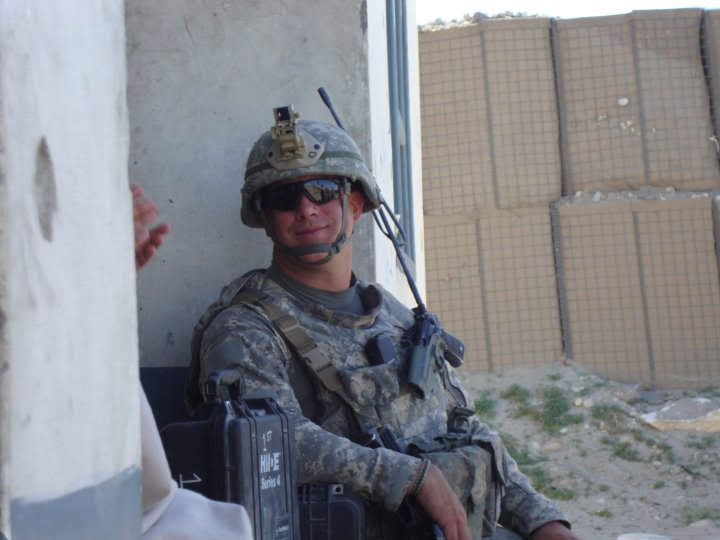
Firefighting added new memories.
Fatal crashes.
Children in medical distress.
House fires.
Families learning, sometimes in a matter of seconds, that their lives had changed.
During an emergency, the job demanded his attention. The reaction often came later.
“You do what you’ve got to do,” Marsan said. “And then afterwards, you start going on loop.”
Some memories returned through ordinary triggers.
A smell.
A voice.
A crowded room.
An unexpected noise.
“You never know what smell is going to stick with you,” he said. “You never know what sight or what sound is going to bring you back to that bad moment.”
Marsan began thinking of trauma as a bucket.
“It doesn’t always have to be an acute experience,” he said. “It could be moments over time that fill up your bucket. You fill up your bucket, fill up your bucket, and you never know when that last drop is.”
For years, the constant pace of emergency response left little time to sit with what had accumulated.
Then Marsan became fire chief.
Professional advancement moved him away from the truck and into an office. Budgets, personnel decisions and meetings replaced much of the adrenaline and immediate purpose of emergency calls.
The quieter pace gave old memories room to return.
“I was struggling,” Marsan said. “Really, really struggling.”
His body often reacted before he had time to explain what he felt.
His palms sweated.
His heart raced.
Loud noises sharpened his attention. In crowded spaces, he found himself looking for exits.
When Trauma Becomes Physical
At the West Haven VA Medical Center, emergency physician Dr. Chris Gennino has seen trauma appear through similar physical complaints.
Veterans do not necessarily walk into an emergency department and identify post-traumatic stress as the problem, Gennino said. They may arrive because they experience chest pain, difficulty breathing, panic, or other symptoms that feel immediately physical.
“Patients with PTSD may be suffering from anxiety, panic attacks,” Gennino said. “This may present as chest pain, difficulty breathing and various somatic complaints.”
Emergency physicians still have to treat those symptoms as potentially serious. They first rule out heart, lung and other medical problems before considering whether mental health could contribute.
“When lengthy workups are unrevealing,” he said, “that may be a time to bring up the issue of mental health as possible causation.”
That conversation can open a door, but it does not guarantee someone will walk through it.
“A lot of veterans, people in general, are hesitant to seek mental health,” Gennino said. “Maybe they feel people will be judgmental of them.”
Learning to Reach for Help
For Marsan, that hesitation followed him to the therapist’s parking lot.
When he first began therapy, he sometimes stayed in his car before his appointment. He worried about younger firefighters seeing their chief enter a therapist’s office and wondered what they might think.
Then one day, he walked out and recognized a younger firefighter sitting in the waiting room.
Marsan could have avoided him.
Instead, he stopped and acknowledged him.
“I hope so,” Marsan said later when asked whether he thought the encounter helped the younger firefighter. “I hope it helped.”
His understanding of leadership began to change.
Strength no longer meant pretending nothing affected him.
“I don’t see my vulnerability as a handicap,” Marsan said. “I think I’m a leader and I’m human.”
As chief, he intentionally gives firefighters space to use peer support without requiring them to disclose their struggles to their boss. He wants them to reach for help before their own buckets overflow.
The shift also required Marsan to reach for help.
He began Eye Movement Desensitization and Reprocessing, or EMDR, a trauma-focused psychotherapy.
The Department of Veterans Affairs and Department of Defense include EMDR, Cognitive Processing Therapy and Prolonged Exposure among the psychotherapies with the strongest evidence for treating PTSD. The treatments use different methods, but each helps patients process traumatic experiences rather than continue reacting to them as though the danger remains present.
Marsan describes what EMDR did for him through a metaphor.
“It doesn’t go away,” he said. “You’re able to put it in a filing cabinet. You have the memory without the physical reaction.”
The memory remained.
Its control over the present began to loosen.
Finding Another Language
Around the same time, a friend suggested Marsan try something that did not initially sound like treatment.
Write.
Marsan had always read. He occasionally drew. He never considered himself someone who would use creativity to work through trauma.
Then he started the novel.
“It wasn’t a war novel,” Marsan said. “It was about afterwards.”
Fiction created distance without requiring avoidance.
He could place pieces of his experiences into characters who were not him. He could approach a memory indirectly, rewrite a scene or stop completely if he needed to.
“I can always tear up what I wrote,” he said. “I can say things in a story that I might not be able to say out loud.”
Sometimes Marsan reread a passage and suddenly recognized its origin.
“I’d look at what I wrote and think, ‘This happened.’”
Writing did not always calm him.
Sometimes it did the opposite.
“When I write,” he said, “I’m conjuring all that stuff.”
Drawing served another purpose.
“When I draw, I feel nothing,” he said. “It’s one of the only things I can do where I don’t have any other stimuli.”
One practice invited memories forward.
The other quieted them.
Marsan found value in both.
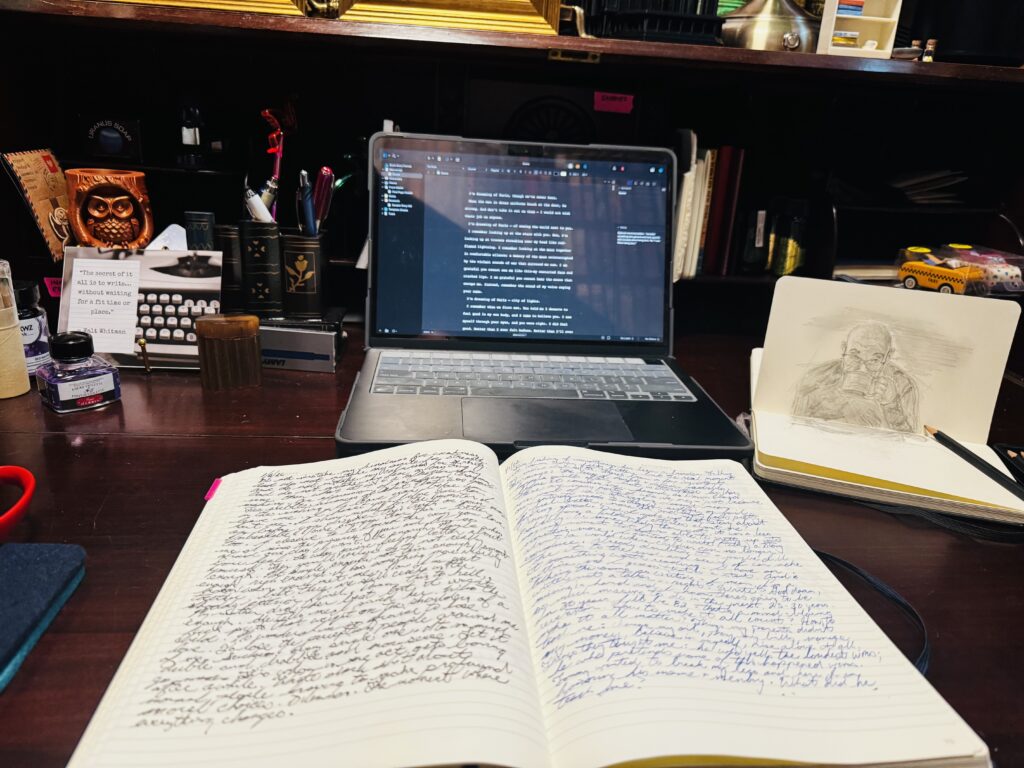
Eventually, he joined local writing workshops and later participated in Fordham University’s Veterans Writing Workshop, where veterans from different generations brought their stories to the same table.
Some had carried experiences for decades before writing about them.
“When you hear them,” Marsan said, “it’s been 50 years, and they’ve just now found a way.”
For Marsan, that mattered.
There was no deadline for finding a way to tell the story.
When Art Becomes Therapy
Inside a clinical setting, Kimberly Heil approaches that same problem through visual art.
Heil, a board-certified art therapist and licensed professional counselor, works with veterans using painting, drawing, and other visual media.
She starts by making one distinction clear.
“I would first say it’s not an art class or arts and crafts,” Heil said.
“Art therapy is about the free expression of self through the art and art process. There is no judgment.”
The veteran does not need artistic talent.
The finished product does not need to look good.
The purpose rests in the process and the therapeutic relationship.
The VA makes a similar distinction in its description of creative arts therapy. Its clinicians use art therapy, dance and movement therapy, drama therapy and music therapy within structured treatment plans. Qualified therapists establish goals, provide interventions, monitor progress, and work with other members of a veteran’s health care team.
For Heil, giving veterans control over the art can become part of the work.
Trauma can leave people feeling powerless. A blank page presents choices.
The veteran chooses the material.
The color.
What to show.
What to cover.
What to erase.
When to stop.
“They’re in control over what direction their art goes,” Heil said. “Having this control helps regulate emotions and gives them the power to tell and rewrite their story.”
Heil does not force an explanation from the person sitting across from her.
“Traumas come out through the artwork when they are ready,” she said. “We never force it. It’s organic and arrives exactly on time.”
Over time, Heil has watched veterans communicate through images before they could communicate through conversation.
She has seen recurring symbols: lighthouses, compasses, trees, military insignia, ships, aircraft, eyes and images from nature.
The symbols never mean exactly the same thing for two people. Their meaning belongs to the veteran who created them.
Sometimes the images change as treatment continues.
A veteran may begin talking about a piece that once felt impossible to explain. Someone may use an image to begin a conversation with a spouse. Others may create a representation of the moment their trauma occurred.
“I’ve seen veterans create the moment their trauma happened,” Heil said, “and them being able to discuss it when they hadn’t before.”
The progress does not always arrive through a dramatic breakthrough.
Sometimes the veteran simply returns.
“Every time a veteran shows up to group is meaningful progress,” Heil said.
That persistence matters because creative arts therapy does not promise to erase trauma or replace established PTSD treatment.
Instead, Heil sees it as another way of approaching experiences that may resist ordinary conversation.
“The creative expression can be so very healing,” she said. “When words aren’t enough, visual symbolism and expression can help move and reveal what may need addressing.”
Research continues to examine how far those benefits extend.
A systematic review published in Arts & Health examined 16 studies involving expressive therapies, including art, dance, drama, music and writing, among military veterans with PTSD. Researchers found encouraging evidence, including reductions in PTSD symptoms and improvements in well-being or quality of life. They also concluded that researchers need more evidence to fully establish the role of expressive therapies in PTSD treatment.
That caution separates promise from proof.
Creative approaches may help. They do not work the same way for every veteran, and no single treatment does.
Writing on His Own Terms
Guillermo “Willie” Vasquez learned that through writing.
Like Marsan, he did not begin with the intention of turning creativity into a mental health practice.
“So I started with music,” Vasquez said. “But that was always a form of writing.”
Songs eventually expanded into journals, personal reflections and other writing.
“I’ve actually been writing consistently my whole life,” Vasquez said. “Even if no one else reads anything, it’s the act of putting thoughts into writing that is the therapy.”
Part of the appeal comes from the freedom writing gives him to work on his own terms.
“I legitimately allow for momentum to be what it is for me, and that keeps my peace,” Vasquez said.
A conversation with another person requires coordination. A missed meeting or interrupted moment can change his ability to engage.
“With writing I feel no guilt,” he said. “I’m free to share.”
That freedom matters because the desire to communicate does not always arrive on schedule.
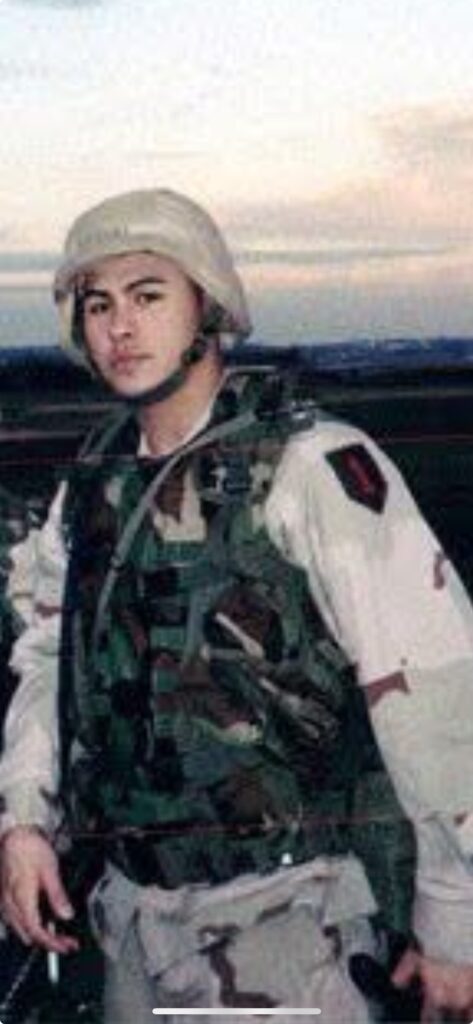
“A missed time or meeting, even once, can throw that momentum off,” Vasquez said. “And once that happens, I can’t say how or when I’m able to lock in again.”
The therapeutic effect does not necessarily happen while he writes.
Sometimes he recognizes it afterward.
“It’s therapeutic afterwards,” Vasquez said. “It’s a constant battle I struggle with and keep to myself mostly.”
His experience illustrates a different side of creative expression.
Writing does not require an appointment.
It does not require another person to be available at the exact moment a thought surfaces.
It can wait until the writer feels ready.
Readiness and Choice
Licensed clinical social worker Dawn Roy sees that readiness as central to trauma treatment itself.
Roy works with trauma and uses EMDR, but she does not assume that every veteran who could benefit from a therapy will immediately want it.
She explains available approaches and allows the veteran to decide when, or whether, to explore them.
Not everyone arrives ready for EMDR.
Some veterans need time before they show interest. Others may connect with a different approach.
For Roy, treatment works best when the veteran has some ownership over the process. A clinician can offer options, explain how a treatment works and create space for questions, but the veteran still has to reach toward the help.
That principle places creative therapies in a more accurate context.
They do not need to compete with evidence-based PTSD treatments.
They can exist beside them.
The current VA and Department of Defense clinical guideline gives its strongest recommendations to trauma-focused psychotherapies, including EMDR, Cognitive Processing Therapy and Prolonged Exposure. The VA also offers other options when veterans do not want or cannot access those approaches.
Creative arts therapy occupies another part of that broader system of care.
VA programs describe creative arts therapies as tools for recovery, wellness, self-expression, coping and rehabilitation. Their Whole Health framework looks beyond a diagnosis alone and considers what matters to the veteran across physical, emotional and social life.
A National Network of Creative Care
That wider approach now extends across a national creative arts network.
In June 2026, more than 100 veterans from across the country traveled to Columbia, South Carolina, for the National Veterans Creative Arts Festival. The Department of Veterans Affairs and American Legion Auxiliary co-present the annual event.
The festival did not begin simply as an arts showcase.
The VA describes it as the culmination of year-round creative arts therapy programs at VA facilities across the country.
Veterans who advanced to the 2026 national festival participated in visual arts, creative writing, music, dance and drama. Throughout the week, they attended workshops, exhibits and performances that highlighted both artistic achievement and recovery.
The national program offers a visible example of how deeply creative work has entered the VA’s broader approach to rehabilitation and wellness.
It also reinforces a distinction that runs through the stories of Marsan, Heil, Vasquez, Roy and Gennino.
There is no single doorway into healing.
For one veteran, the first sign of trouble may be chest pain in an emergency department.
For another, it may come through a therapist’s question.
For someone else, it may emerge in painting.
Or music.
Or a sentence they never expected to write.
The routes differ because the people carrying the trauma differ.
Gennino sees the body.
Roy sees readiness.
Heil sees images that sometimes speak before their creators can.
Vasquez finds freedom in writing when conversation feels harder to schedule or sustain.
Marsan found pieces of himself scattered through fictional characters.
Together, their experiences resist a simple promise of recovery.
Creative expressions do not make every memory disappear.
Neither does therapy.
Marsan no longer expects that.
Mission First. People Always.
What changed was his belief that difficult memories had to dictate what came next.
His understanding of leadership changed with it.
Today, he tells firefighters that struggling does not disqualify them from serving others. He encourages peer support. He speaks openly about therapy. He no longer believes vulnerability weakens the person responsible for everyone else.
His department uses a phrase that Marsan carried forward from his own experiences:
“Mission first.”
“People always.”
“The whole person matters,” he said. “Not just the firefighter who comes to work. The person who goes home to their spouse. Their children. The person taking care of their parents. The person going through grief.”
That same idea sits behind Whole Health.
A veteran does not enter treatment as a collection of disconnected symptoms.
“You cannot separate the person into various pieces,” Gennino said. “Mental health and physical health go hand in hand.”
Neither healing nor creativity follows a predictable sequence.
Marsan knows that now.
Near the end of an interview, he was asked what healing looks like to him today.
He paused before answering.
“Healing is never going to be a linear thing,” he said. “You’re not going to go from unhealed to healed. It’s a process, and it’s work, but it’s doable.”
Later, Marsan returned to the place where so much of that work had taken shape.
His dining room table.
The pages waiting there were still unfinished.
So was the work.
“As you begin to heal,” Marsan said, “keep hope and grace as two of your best friends.”