
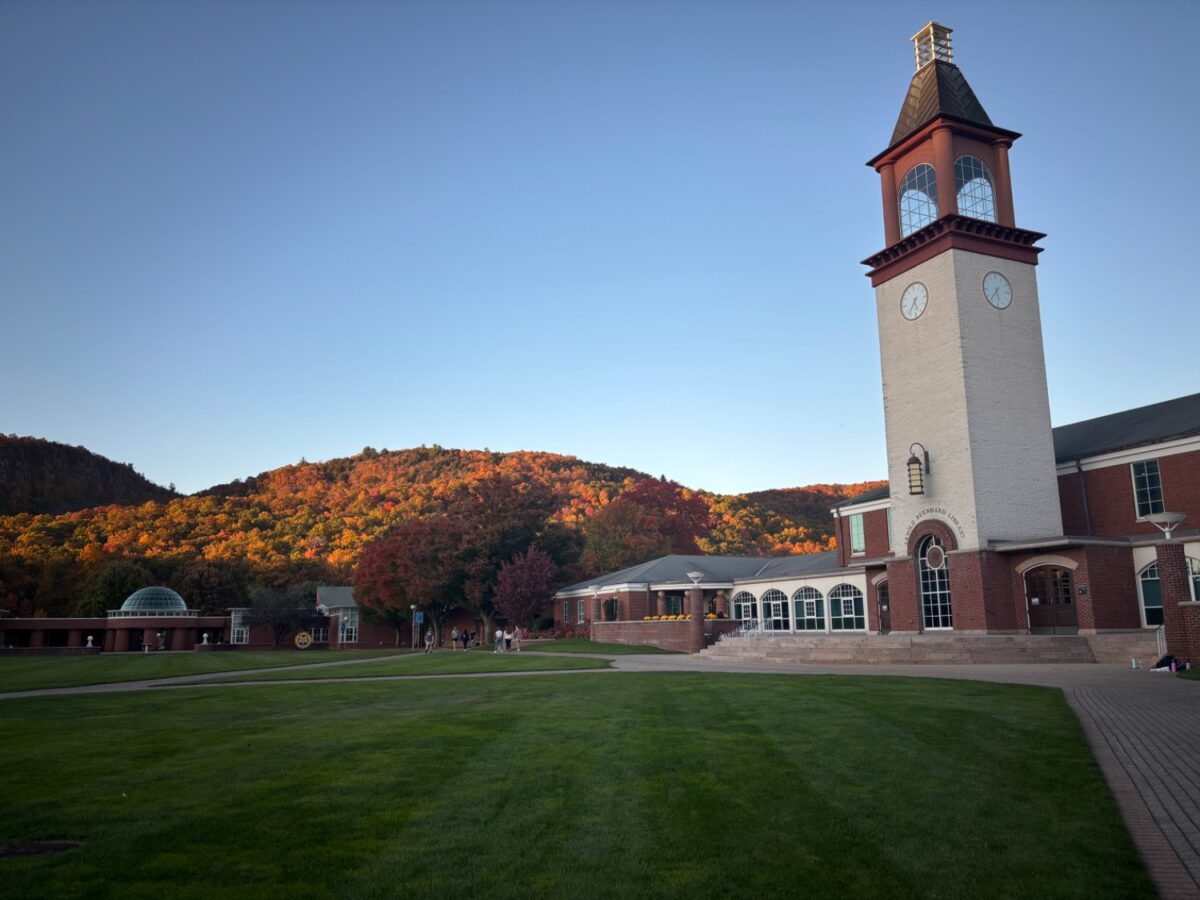
Inside the divide of a university and its town
Quinnipiac University and the town of Hamden share more than just a border.
With thousands of students entering the area each year, the relationship between the university and the surrounding community plays a significant role in shaping both campus life and the town itself.
As Quinnipiac has expanded over the past two decades, the relationship has brought economic benefits, increased activity in community spaces and, at times, friction between students and permanent residents.
In Hamden, conversations about being a host community are often centered around off-campus housing, traffic, safety and the economic impact of the university. To residents, the connection can feel inconsistent.
“I’m not negative towards the university, and I’m not really negative towards the town. I’m kind of neutral. Do I feel things could be better? Yeah, they could be better—but every situation could be better,” Christy Palumbo, resident of Gaylord Mountain Road said.
Students, however, see themselves as part of the community but acknowledge the disconnect they experience.
“Quinnipiac is kind of my only relationship with Hamden,” Tim Patrick, third year public relations major and commuter from Cromwell, Conn. said.
As both the university and the town continue to grow, the relationship between the two remains an ongoing conversation — a conversation shaped by shared spaces and different priorities on both sides.
Enrollment and campus expansion
Quinnipiac has grown significantly in both size and scope. The institution, which was once a small commuter school, has expanded into three campuses: Mount Carmel, York Hill and North Haven. With that growth comes an increase in enrollment, campus development and student activity beyond university property.
In fall 2025, Quinnipiac enrolled 6,610 undergraduate students and 3,090 graduate, law and medical students, according to the university.
Statistics from the class of 2028 also reflect the continued demand with 24,713 total applicants. Of those applications, 1,917 first-year students and 193 transfer students ultimately enrolled.
“Quinnipiac University and the Town of Hamden share a deep, long-standing partnership rooted in mutual investment, service and community pride,” Bethany Zemba, Quinnipiac’s vice president for community and government relations said. “Quinnipiac views its relationship with the town not simply as proximity, but as a responsibility and an opportunity to grow together.”
The university’s growth has translated into a significant economic presence in the town. Updated figures shared by the university with the town of Hamden showed more than $1.4 billion in total economic activity tied to Quinnipiac. This number includes $185 million in employee spending, $100 million in student spending and $64 million in direct university purchasing, according to the 2025 Town of Hamden Economic Development Commission Annual Report.
“We have very high taxes here, so we have to be focused constantly on growth… being open to things that can create opportunity,” Hamden Economic Development Director Steve Fontana said.
The university’s physical expansion has influenced town planning and development as well. New residence halls like The Grove, academic buildings like The SITE and the School of Business have altered the landscape over time.
Additionally, increased enrollment has led to more students seeking off-campus housing after their three-year on-campus housing requirement expires.
Both Hamden and Quinnipiac have expressed interest in strengthening coordination and improving their relationship.
The economic relationship
Quinnipiac’s role in Hamden extends beyond enrollment and infrastructure due to its deep ties to the town’s economy.
“As Hamden’s largest institutional partner, Quinnipiac contributes meaningfully to the town’s economic vitality, public safety, workforce development and quality of life,” Zemba said. “Collaboration with Hamden is not episodic, but central to the University’s mission and its shared future with the town.”
Fontana echoed Zemba’s sentiment, describing the university as both essential and full of potential.
“It’s a partner… a symbiotic partner, and represents a huge, underutilized opportunity… many communities around the country would love to have Quinnipiac University,” he said.
Fontana also pointed to the university’s role as a major employer and economic driver in the region.
“Quinnipiac is a large employer. So Quinnipiac, as a growing university, plays a very large role in Hamden’s economy… I think overall it’s a great positive, net positive for the town, and its future and the town’s future are very, very bright,” Fontana said.
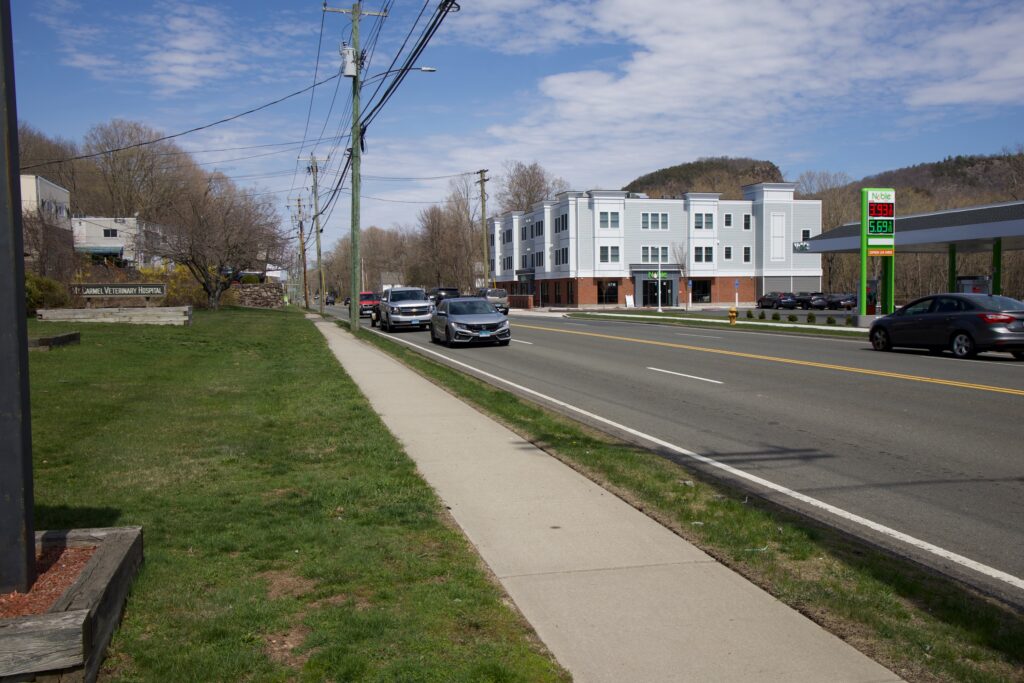
This economic partnership is reflected in local development projects, like the newly built Noble gas station on Whitney Avenue. According to Quinnipiac Today, the project was a collaboration between the university and the Hamden business community. This was made possible through a land swap between Quinnipiac and Noble.
Because of this partnership, the project expanded into a larger development to include EV charging stations, a gas station, a convenience store and luxury apartments.
Housing and neighborhood tensions
The most visible friction point between students and residents often appears in residential neighborhoods.
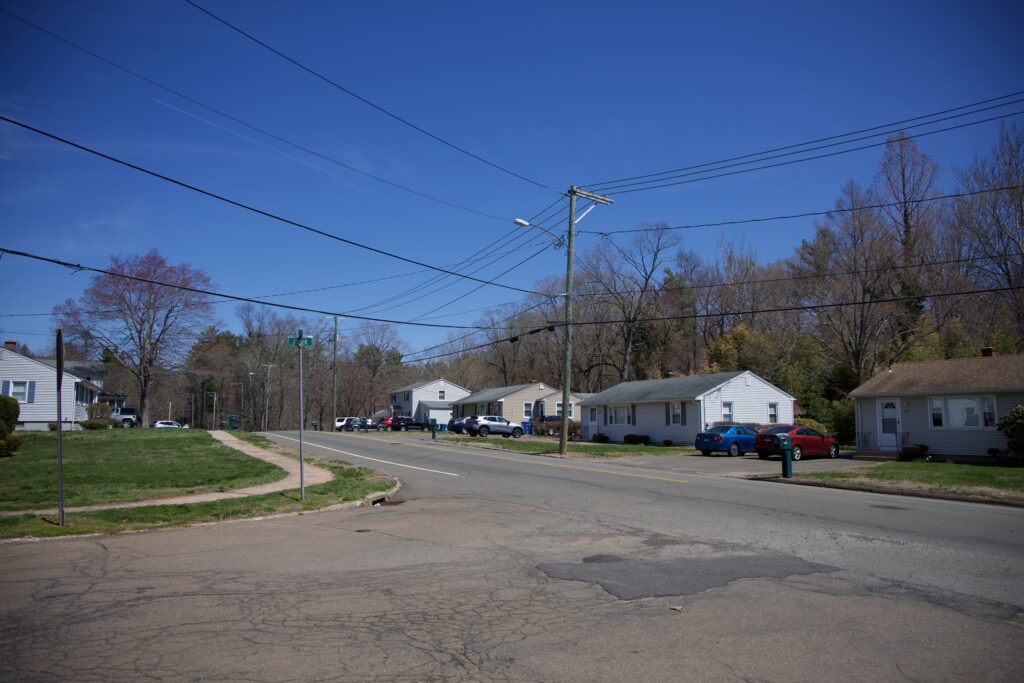
In neighborhoods surrounding campus, especially in the West Woods area, the growth of student rentals has changed the character of residential life. For some residents, that shift has created both connection and frustration.
“In the past, it hadn’t been so good. There were a lot of issues with disrespect—trash all over the place, loud music… more than an academic-type environment,” Palumbo said.
In recent years, Palumbo pointed to her experience with increased communication between neighbors and students. “I think the relationships have gotten better,” she said.
Some residents, like Kathleen Axelrod, a landlord and resident of West Woods Road, describe an unexpected positive relationship with students who rent.
“I’ve communicated more with them in the last eight months than I have with any neighbors on the street for the last 20 years,” she said.
Still, not all experiences are consistent. Kerry Garea, a Quinnipiac alum and Hamden resident, said the presence of student housing in residential neighborhoods can create frustration.
“A lot of residential houses have now become places where Quinnipiac students rent… it stinks that some students ruin it for everyone,” Garea said.
Olivia Gizzi, resident of Eramo Terrace, recalled that a majority, if not all, of her experiences with Quinnipiac students have been negative.
“I have had to deal with a student peeing on my front lawn while heavily intoxicated after leaving a party,” she said.
Aside from noise complaints, she noted the unsafe driving conditions many Quinnipiac students create in Hamden.
“I hate having to be hyper-vigilant when driving or even just crossing the street because of students, many of whom are in expensive and fast cars, who are going almost double the speed limit and distracted driving or aggressively tailgating,” she said.
Gizzi emphasized that these issues are not just occasional disruptions, but ongoing concerns that affect residents’ sense of safety in their own neighborhood.
“I love my town and my neighborhood, but myself as well as other neighbors and family members have frequently discussed that our favorite parts of the year are times when QU is on break and students aren’t living in off campus housing,” she said.
The student perspective
For many students, Hamden exists mostly in the background of campus life rather than as an integrated part of it.
“The only business I would really interact with is a gas station, to be honest,” Patrick said. “Coming off the highway, you kind of go right to Mount Carmel, right to campus.”
This limited interaction heavily shapes how students view the town overall.
“I think Hamden is definitely more of a town with a college in it, not so much a college town,” Patrick said. “You don’t see Quinnipiac signs anywhere else besides campus, and there’s not really much connection or pride about Quinnipiac in parts of the town that aren’t associated with the school.”
Undergraduate students who reside on the Mount Carmel Campus and do not have cars on campus often experience the greater disconnect.
Even among students who do venture off campus, experiences with Hamden tend to be defined by convenience and accessibility rather than deep engagement.
“I think overall, from what I’ve seen and like what I’ve been around, I think it’s a relatively safe place,” Taylor Huchro, a first year marketing major said. “I think as you kind of get maybe towards the city or some of that stuff, it gets definitely a little bit more sketchy.”
Walkability and limited transportation options also shape how students interact with nearby businesses.
“I’m glad that we have some of the sidewalks and some of those things to be able to get around, especially for like, Sweetgreen and Latte Soul and some of those, to be able to walk to,” Huchro said.
Still, when students do enter local spaces, the reception is generally positive.
“For the most part, businesses, I feel like it’s a very welcoming atmosphere,” Huchro said. “But I feel like overall, the vibe is very much respectful. [The residents] are not overly against us or judgy.”
Efforts to bridge the gap
Both the university and the town acknowledge that there is room for improvement, especially when it comes to communication and coordination.
“Quinnipiac University is intentionally deepening its partnership with Hamden through sustained collaboration, continued investment and shared problem-solving,” Zemba said.
At the same time, that partnership is often highlighted on a broader stage. During Hamden Day at the Connecticut Capitol, Quinnipiac leaders and local officials pointed to the university’s role as a major economic driver and a key contributor to the state’s healthcare workforce.
While this reinforces the university’s position as a central institution in both the town and Connecticut as a whole, some residents still believe connection at the neighborhood level remains inconsistent.
“It could be better on both sides,” Palumbo said. “I think they’re about 75% there. They’re just missing a connection. There needs to be a community liaison on both ends, making those connections. You can’t talk to somebody if you don’t know who to call or who to ask for.”